- AI
- A
The Best LLMs in 2026: Which Neural Network to Choose Today
Okay, I’ll be honest: when I started writing this material, I had nine tabs with chatbots open at the same time. Each claimed to be the “best,” each wanted to help me, and they all gave slightly different answers to the same question. This is, in fact, 2026 in the AI world – an abundance that makes your head spin.
➪ “Something important is happening, but I don’t understand what exactly” – that’s how the average user feels when they open yet another news article about AI and see those three letters again: LLM.
The LLM market right now resembles that moment when you walk into a big supermarket for yogurt, and there are 47 kinds of yogurt, and you’ve been standing in front of the shelf for six minutes. Only the stakes are higher: the quality of your code, texts, analytics – and ultimately your working time – depends on choosing the right model.
This article is an attempt to bring order to chaos. No abstract rankings “based on feelings”: only concrete facts, benchmarks, real use cases, and an honest opinion on when a particular model is truly useful.
We will review 14 relevant solutions – from the aggregator BotHub to local open models: BotHub, Gemini 3 Flash, Gemini 3.1 Pro, Grok 4.20, ChatGPT 5.4, ChatGPT 5.4 Pro, Claude Opus 4.7, “GigaChat,” “Alice AI,” DeepSeek v3.2, Perplexity Sonar, Gemma 4 26B A4B, GPT-OSS-120B.
1) BotHub – all models in one window
Let’s start with the main secret of this article. Accessing most of the models described here from Russia turns into a separate quest: changing IPs, foreign cards, blocks. BotHub eliminates all this at once.
BotHub – a Russian aggregator of neural networks, and its main superpower is accessibility. It has gathered almost everything currently available in the market under one roof. Right now it includes: Gemini 3 Flash, ChatGPT 5.4 Pro, Claude Opus 4.7, Claude Sonnet 4.6, ChatGPT 5.4, Gemini 3.1 Pro, Grok 4.20, DeepSeek v3.2, Perplexity Sonar – and dozens of other models. In fact, everything discussed in this article can be tried in one interface without a VPN and foreign cards.
In addition to text models, the platform offers image generation (Midjourney, Flux, DALL-E, Stable Diffusion), audio processing (transcription and speech synthesis), and video generation through Runway and Veo. There is also Easy Writer – a tool for creating structured content – and a Telegram bot-moderator based on LLM.
For developers, BotHub provides a full-fledged API compatible with the OpenAI format. The endpoints are identical, and documentation is available in Russian. This means that if you already have an integration with the OpenAI API, switching to BotHub will take just minutes.
Tariff | Included | For whom |
Free (via link) | 300,000 caps | First steps, testing |
Basic | 2,000,000 caps / $3 | Everyday tasks |
Premium | 5,000,000 caps / $7 | Regular content |
Deluxe | 10,000,000 caps / $14 | Teamwork |
Elite | 35,000,000 caps / $49 | Large projects |
Enterprise | Individually | Corporate clients |
Tokens (more precisely, the internal currency caps) do not expire, and the validity of the package is unlimited – which is fair and pleasant in itself.
I would like to highlight the prompt library: these are ready-made templates for advertising texts, headlines, newsletters, scripts. For those who are just starting to work with neural networks, it literally saves several hours of ramp-up time.
2) Gemini 3 Flash – fast and smart
In December 2025, Google released Gemini 3 Flash – a lighter version of Gemini 3 Pro, created through the technology of knowledge distillation. This means that Flash was trained on the responses of the more powerful Pro – resulting in a model that thinks almost as intelligently but works significantly faster and cheaper.
What's under the hood
Parameter | Value |
Context window | 1,000,000 tokens |
Speed | High |
SWE-bench benchmark | 76.2% |
MMLU-Pro | 88.59% |
GPQA Diamond | 90% |
Humanity’s Last Exam | 35% |
A million tokens of context is almost 750,000 words. You can load an entire work repository, an annual archive of correspondence, or a multi-year diary – and the model will keep all this in mind.
Why Flash and not Pro?
If you need to quickly: summarize a document, translate text, draft a first version of an article, respond to 20 similar queries – Flash will handle it excellently. Where Pro would think for 30 seconds, Flash will respond in 5.
Practically: if you are writing content for social media, doing initial processing of incoming documentation, or using the model as a smart autocomplete – Flash is the ideal option.
Gemini 3 Flash is available through Google AI Studio and Gemini Chat.
3) Gemini 3.1 Pro – Google's flagship
February 2026 will be remembered in AI history for a long time. First, on February 5, Anthropic released Claude Opus 4.6, which instantly topped the rankings. It seemed – that’s it, Google would take a long time to catch up. Then, on February 19, Google launched Gemini 3.1 Pro.
The result was sensational: +46%Δ in the ARC-AGI-2 test (77.1% versus 31.1% for its predecessor). This is the largest gain in reasoning ability in a single generation in the history of advanced models. The development took only three months from the release of Gemini 3 Pro.
The main innovation is the deep thinking technology, which was previously available only in a special mode, now built directly into the core of the model. Gemini 3.1 Pro thinks deeper by default and costs the same as the previous version.
What benchmarks say
ARC-AGI-2 (logic, new patterns): 77.1% – first place by a margin
GPQA Diamond (complex PhD-level scientific questions): 94.3%
Humanity’s Last Exam: 44.4% (compared to 40.0% for Claude Opus 4.6 and 34.5% for GPT-5.2)
MMLU (general knowledge): 92.6%
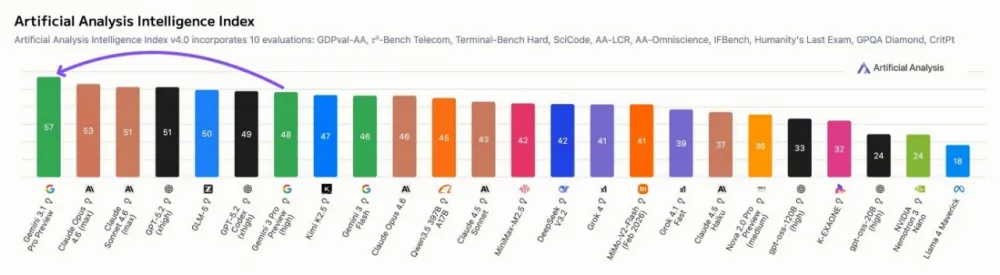
First place in Artificial Analysis Intelligence Index, ahead of Claude Opus 4.6 by 4 points
At the same time, Gemini 3.1 Pro is approximately 6.5 times cheaper than Claude Opus 4.6 – which raises the question of when the premium for the Anthropic flagship is justified.
Three Levels of Thinking
Gemini 3.1 Pro introduces a three-tier system for managing the depth of reasoning:
Low – lightning-fast responses, almost zero power consumption. Classification, autocomplete
Medium – balanced mode for most tasks: code review, data analysis, document questions
High – “mini-version of Deep Think.” The model simultaneously explores several solution paths and selects the best one
According to experiments, about 80% of requests are fulfilled in Low or Medium modes. High is reserved for 20% of tasks that require deep reasoning. This approach reduces API costs by 50–70%.
The Hidden Superpower: SVG and Animations
Gemini 3.1 Pro can create ready-made animated SVG files directly from textual descriptions. This is more important than it seems: an SVG file is very lightweight, scales without loss of quality, and deploys without additional tools. Ask the model to draw an animated logo or infographic – and you’ll receive clean code ready for use on a website.
Where Gemini 3.1 Pro Falls Short
In GDPval-AA (financial modeling, legal analysis), Claude Sonnet 4.6 outperforms Gemini 3.1 Pro by almost 300 Elo points – this is a gap worth noting if you work in expert fields.
Available via Google AI Studio, Gemini Chat (not accessible in Russia).
4) Grok 4.20 – four agents instead of one
Elon Musk knows how to make announcements. On February 17, 2026, he simply posted on X that Grok 4.20 is already in beta – and went on with his business. Meanwhile, as everyone was reading the post, it turned out that this number hides something fundamentally new.
Meet the team
Grok 4.20 is not just one model. It is a council of four specialized AI agents that work in parallel and discuss in real time before giving a final answer:
Grok – captain-coordinator. Breaks down tasks into subtasks, routes them to specialists, resolves conflicts between agents, synthesizes the final answer
Harper – researcher and fact-checker. Has access to tweets on X in real time
Benjamin – mathematician and programmer. Strict step-by-step reasoning, verifies calculations, stress-tests logical chains
Lucas – creative generalist. Unconventional angles, discovery of blind spots, balance between technical and human aspects
The key difference from simply “launching four different API calls” is that the agents discuss answers among themselves, iterate, and correct each other – before you see the final text.
In Heavy mode, the system scales up to 16 agents. This mode is designed for the most complex tasks.
Record for honesty
The independent organization Artificial Analysis recorded a record score for Grok 4.20 on the Omniscience test: 78% without hallucinations – the best result among all tested models. Meanwhile, on the Composite Intelligence Index, the model ranked only 8th place (48 points), falling behind Gemini 3.1 Pro and GPT-5.4.
This is an interesting case: xAI apparently consciously optimizes reliability instead of chasing benchmarks. In practical tasks – especially where it’s crucial not to make mistakes (medicine, law, finance) – this may prove to be more important.
Context window: 2 million tokens
This is almost the largest context window among Western closed models. Most competing models (GPT-5.4, Sonnet/Opus 4.6, Gemini 3 Flash, 3.1 Pro) have so far only reached 1 million tokens.
Integration with X
Access to the real data stream from social network X is a structural advantage that no competitor has. This makes Grok indispensable for tasks where relevance is important: news monitoring, trading, audience sentiment analysis.
In the Alpha Arena Season 1.5 competition (real exchange trading with an initial capital of $10,000), four variants of Grok 4.20 took four out of the six top places, becoming the only profitable model among competitors.
Grok 4.3 on the horizon
For those who want to stay at the cutting edge: on some accounts, SuperGrok Heavy already offers a test drive of Grok 4.3 (announced on April 17, 2026). The new version can generate PDF documents, filled tables, and PowerPoint presentations directly from chat, as well as understand video input. For now, this is a beta for subscribers ($25…30/month), and version 4.20 remains stable for everyday use.
Available at grok.com, in the X mobile app, through SuperGrok ($25…30/month), and in the X Premium subscription.
5) ChatGPT 5.4 – the new standard
The model from OpenAI that everyone knows. The new series 5.4 has brought a number of significant improvements – and this is not just another marketing "slightly better".
The contextual window has increased to 1 million tokens. The model has become significantly better at searching for information on the internet and handling requests that require synthesizing data from multiple sources.
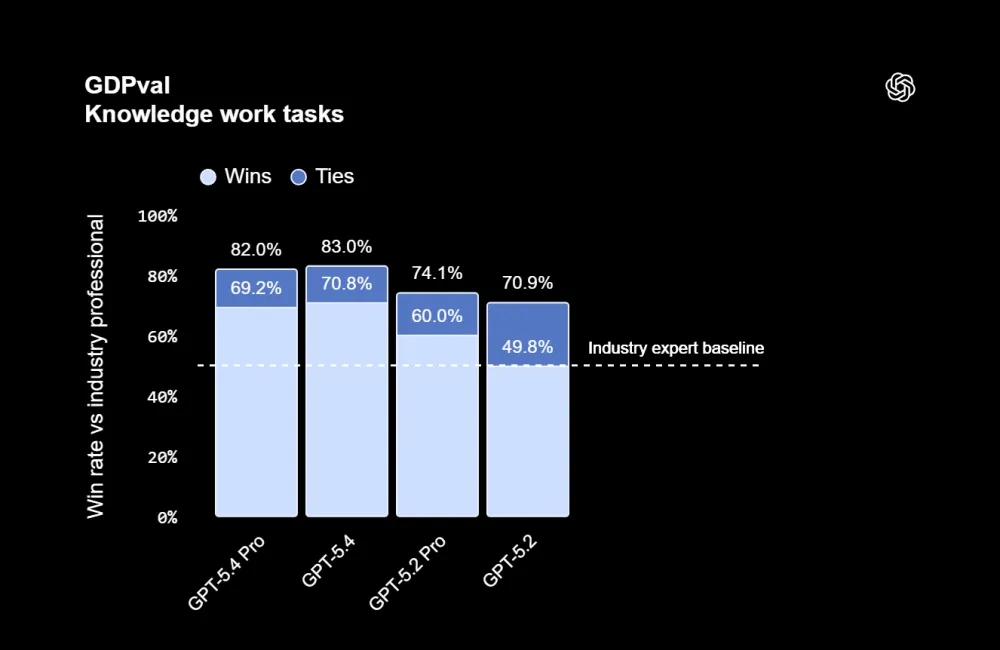
Agent capabilities: GPT-5.4 can analyze screenshots, use a browser, perform actions with a mouse and keyboard, call APIs and tools. In the OSWorld-Verified test (navigating the desktop through screenshots, mouse, and keyboard), the model showed a 75% success rate compared to 47.3% for GPT-5.2. The average result for a human in this test is 72.4%. AI is officially better than the average user in using a computer.
In the BrowseComp test (searching for hard-to-find data), GPT-5.4 scored 82.7%.
When ChatGPT 5.4 is a good choice
According to the results of comparative tests (coding, text generation, analysis), ChatGPT 5.4 confidently ranks among the top models, although it lags behind specialized competitors in certain niches. However, it has good speed and, importantly, an ecosystem – plugins, Assistants API, integrations.
For everyday tasks: writing and editing text, quick questions, working with code, document analysis – ChatGPT 5.4 will be powerful enough for 90% of cases.
6) ChatGPT 5.4 Pro – for PhD-level tasks
“Pro” is not just marketing. ChatGPT 5.4 Pro is actually a different model.
ARC-AGI-2: 83.3%
The main figure: 83.3% on the ARC-AGI-2 test. In comparison, the previous GPT-5.2 Pro had only 54.2%. A jump of almost 30 percentage points. This makes 5.4 Pro one of the most “thinking” models on the market.
Specifications
Parameter | Value |
Context window (API) | 1,050,000 tokens |
Maximum output | 128,000 tokens |
Knowledge as of | August 31, 2025 |
Speed | ★☆☆☆☆ (very slow, but accurate) |
128,000 tokens in output is about 90,000 words. A medium-sized novel. You can ask it to write a full technical report, a detailed business plan, or document the entire API of a whole product – in one request.
FrontierMath and Physics
GPT-5.4 Pro set a record on the FrontierMath test – a set of problems created by practicing mathematicians and physicists based on their own research. In the first three levels of difficulty, the model handled half, and at the “grandmaster” fourth level – achieved 38%. The best result among open-source systems is only 4.2%. The gap is ninefold.
One of the notable moments: when solving a FrontierMath problem, the model independently found a scientific preprint from 2011 on the internet, which allowed it to cut down the process and bypass much of the calculations. The paper never underwent formal peer review – but the neural network unearthed it and utilized it.
In the physics test CritPt (research level, unpublished problems), Pro achieved 30% – three times higher than the results of the best models from six months ago.
“Tool search” technology
The new tool search technology has allowed for a 47% reduction in resource consumption for complex tasks. Previously, it was necessary to "push" descriptions of all tools into the system prompt. Now the model finds the necessary specifications on its own as needed.
Benchmarks (summary table)
Test | GPT-5.2 | GPT-5.2 Pro | GPT-5.4 | GPT-5.4 Pro |
Humanity’s Last Exam (with tools) | 45.5% | 50.0% | 52.1% | 58.7% |
ARC-AGI-1 | 86.2% | 90.5% | 93.7% | 94.5% |
ARC-AGI-2 | 52.9% | 54.2% | 73.3% | 83.3% |
When is Pro specifically needed?
There are scenarios where 5.4 Pro operates at a level unattainable for cheaper models:
Complex physical or mathematical analysis
Legal tasks with many nuances
Financial modeling with complex dependencies
Any tasks where the cost of error is high and a model that double-checks itself a hundred times is required
Available in the ChatGPT Pro plan ($100…$200/month) and through neural network aggregators.
7) Claude Opus 4.7 – the latest flagship from Anthropic
If there is a model in the world of LLM that “thinks like a human,” it is Claude. Not because it says so in the Anthropic press release. But because you can feel it in every response.
Claude Opus 4.7 is the current version of Anthropic's flagship. It is an upgrade from Claude Opus 4.6, retaining all its strengths and adding important new capabilities.
What's new in 4.7
High image resolution. Opus 4.7 has become the first Claude to support images at resolutions up to 2576 px/3.75 Mpixels (previously the limit was 1568 px/1.15 Mpixels). This opens up new opportunities for working with screenshots, documents, and computer vision tasks. The model's coordinates are now 1:1 with real pixels – no scaled mathematics.
New xhigh level. A new level xhigh has been added to the effort parameter – for coding and agent scenarios that require maximum precision.
Task Budgets (beta). The new task budgets feature allows you to set an approximate number of tokens for the entire agent cycle in Claude. The model sees a decreasing counter and prioritizes work on its own – this is critical for long autonomous tasks.
Context Window: from 200K to 1M tokens
This is one of the turning points in Claude's history. In version 4.5, the context window was 200,000 tokens (already an impressive figure). Claude Opus 4.6 expanded it to 1 million tokens – initially only through API, then made available to everyone.
What does this mean in practice? You can load the codebase of an entire small project into the model and work with it as a whole. Or load the entire archive of correspondence with a client over two years. Or an 800-page PDF.
Opus 4.6 in the MRCR v2 test (finding 8 “needles” in a haystack of a million tokens) showed an accuracy of 76% even at maximum scale – while Sonnet 4.5 only achieved 18.5%.
Character as a Competitive Advantage
The main impression of Claude is what you would call “intelligence that adheres to principles.” While other models chase speed, Claude slows down, weighs options, and explains why it does so. This makes responses more “three-dimensional,” especially in tasks where nuances and uncertainty are important.
In the user rating on LMArena (blind voting by real people), Claude Opus 4.6 held the first place for text quality – even when other models outperformed it in technical benchmarks.
Agent Mode
Claude Opus 4.7 is the best choice for autonomous agent scenarios: endless agent sessions, Agent Teams, top scores in Terminal-Bench 2.0.
In the SWE-bench Verified test (real bugs from GitHub), Claude Opus 4.6 scored 80.8% – one of the best results in the industry, meaning the model can fix real bugs in real code.
Benchmarks
Test | Result |
SWE-bench Verified | 80.8% |
Terminal-Bench 2.0 | 65.4% |
ARC-AGI-2 | 68.8% |
GPQA Diamond | 91.3% |
GDPval-AA | +144 pts Elo vs GPT-5.2 |
Claude is available at claude.ai and through the Anthropic API.
8) Claude Sonnet 4.6 – the Golden Mean
If Opus 4.7 is the flagship, Sonnet 4.6 is that daily working tool you want to have on hand. Not because it’s cheaper (though that’s true), but because for most tasks, the quality difference compared to Opus is negligible, and the speed is higher.
In the GDPval-AA test (professional tasks in finance, law, analytics), Sonnet 4.6 with a score of 1633 Elo outperforms both Gemini 3.1 Pro (1317 Elo) and Claude Opus 4.6 (1606 Elo). In other words, for expert office work – writing business documents, legal texts, financial reports – Sonnet 4.6 is literally better than the flagship.
The main conclusion of the February LLM market review: the gap between Sonnet and Opus is only 1–2% on key benchmarks, with a fivefold difference in price. For most tasks, Sonnet has become “smart enough.” On LMArena (blind tests by real users), Sonnet 4.6 and Opus 4.6 together dominate in expert tasks, leaving Gemini 3.1 Pro behind.
In the OSWorld test (controlling a computer via screenshots), Sonnet 4.6 showed 61.4% – the best result for this category of tasks. Moreover, Sonnet is five times cheaper than Opus. If you need agency scenarios with a computer, Sonnet is the optimal choice.
A notable point. Internal documents from Anthropic show that in certain situations, Claude may exhibit something resembling its own preferences. This makes working with it qualitatively different – more “alive.”
Sonnet supports the effort parameter, with the recommended level medium as the optimal default. The model itself decides how deeply to think within the specified level.
Available at claude.ai, as well as through the Anthropic API.
9) DeepSeek v3.2 – a Chinese open wonder
At the beginning of 2025, DeepSeek created what is known as the “DeepSeek moment,” when the Chinese company released a model with reasoning levels akin to ChatGPT, but at significantly lower training costs. This shook the market. Version V3.2 builds on this success.
DeepSeek V3.2 is a model with open weights under the MIT license. It can be downloaded and run independently, integrated into your products, and fine-tuned on your own data.
Results
On SWE-bench Verified (real bugs from real repositories): 67.8%. This is close to Kimi K2 (65.8%) and slightly below Qwen-3-Max (69.6%) – all three open models surpass GPT-OSS-120B (62.4%).
On AIME 2025 (olympic mathematics): 89.3% according to internal assessments by DeepSeek.
On MMLU-Pro (broad knowledge test): 85%, placing V3.2 among the top open models.
On GPQA-Diamond (PhD-level questions in physics, chemistry, biology): 79.9%.
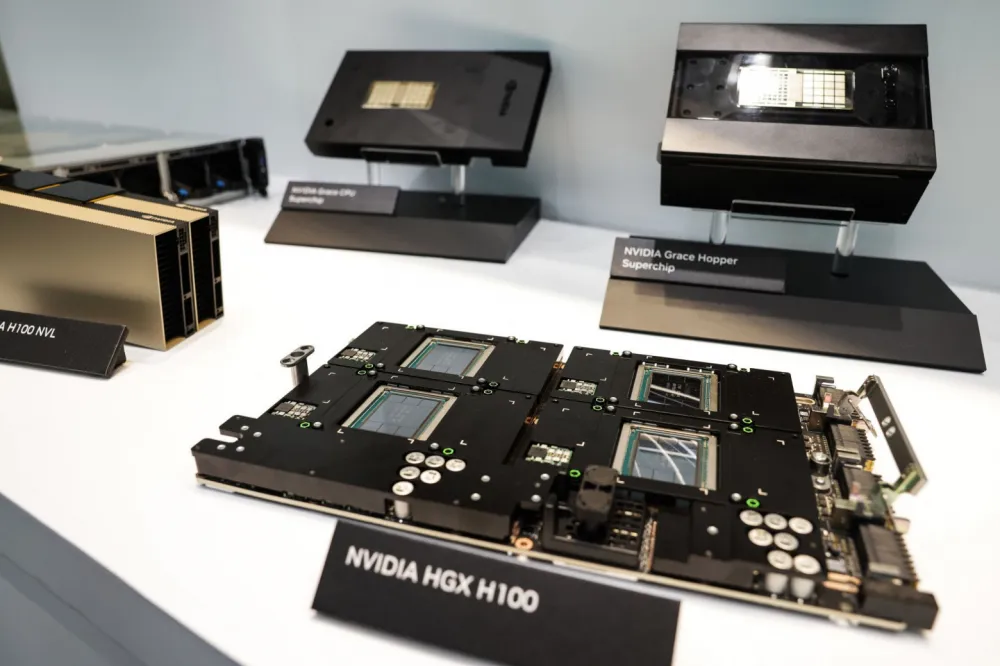
To run the full-sized V3.2, serious hardware will be required: 8 Nvidia H200 graphics cards (each with 141 GB of memory). This is not something you can "run at home," but cloud deployment is quite feasible.
What users are saying
The community has appreciated the sharp drop in API price: $0.28 per million input tokens compared to $0.56 for the previous version, as well as the quick response time and throughput.
Users who tested the multilingual capabilities noted that the responses sound (smoother and more stylistically natural) than expected, – DeepSeek has been deliberately working on eliminating language errors.
Available at deepseek.com, API through platform.deepseek.com, open weights on HuggingFace.
10) Perplexity (Sonar) – next-generation search
Perplexity is not a classic chatbot or a search engine in the usual sense. It is a hybrid: a system that goes online with each answer, gathers up-to-date data, filters it, and returns a structured response with links to sources.
Under the hood is a mix of several models (including Claude and ChatGPT), as well as its own Sonar model, optimized specifically for search with citation.
Operating modes
Search – quick answers with links. You can choose the type of sources: Web, Academic (scientific articles), Finance (financial information), Social (social networks and forums).
Research – deep investigation. Sends dozens of subqueries, reviews hundreds of pages, compiles a detailed report. Takes several minutes – but produces a document with cross-references.
Labs – project mode: set a goal, get a dashboard, table, graphs.
Pages – generation of a full-length article or guide with source selection.
Comet – a dedicated AI browser that analyzes pages on the fly.
Research on Reliability
Independent studies provide an ambiguous picture.
On one hand, Perplexity leads in source reliability: the study Assessing Web Search Credibility (arXiv:2510.13749) recorded an 86.3% credibility rate with minimal use of unreliable sources.
On the other hand, in a paper analyzing the accuracy of academic citations (arXiv:2505.18059), Perplexity showed a high level of “link fabrication” (hallucination). Only 26.5% of citations are completely correct.
Conclusion: Perplexity is great for information retrieval, but for academic and legal tasks where citation accuracy is critical, additional verification is needed.
Pricing
Free: basic search, limited features
Pro (~$20/month): extended answers, Labs, file uploads, GPT-5 and Claude Sonnet
Max (~$200/month): everything from Pro + early access, priority support, unlimited Research
Enterprise Pro (~$40/user/month): team collaboration, Google Drive/SharePoint integration, SOC 2 Type II
Available at perplexity.ai. When accessed via API, Perplexity models may be referred to as sonar-pro, sonar-pro-research, sonar-reasoning-pro, sonar-deep-research.
11) Gemma 4 26B A4B – on your laptop
Google can do amazing things: releasing both the closed flagship Gemini 3.1 Pro and the open, free Gemma 4 simultaneously – and both turn out to be good.
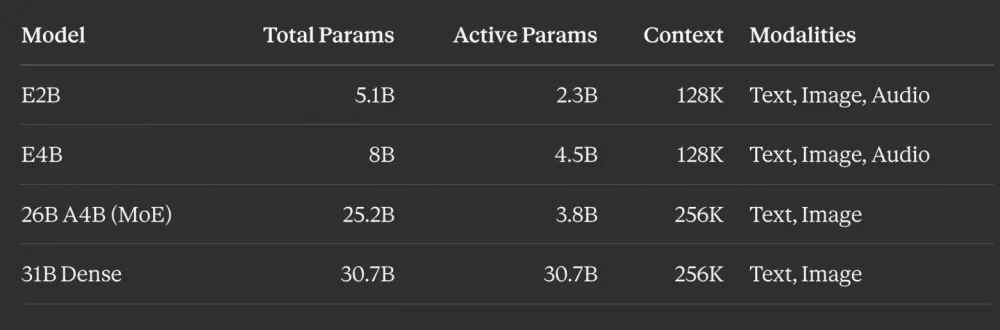
Gemma 4 is a family of open models licensed under Apache 2.0 (commercial use, fine-tuning, modification – all allowed). We are interested in a specific version: 26B A4B – an MoE model with 25.2 billion parameters, but only 3.8 billion active per token.
Architecture: Hybrid Local and Global Attention
Gemma 4 uses a hybrid mechanism: a local sliding window of attention (1024 tokens) alternates with full global attention, always concluding with a global layer. This makes the model efficient for long contexts without losing depth of understanding.
The flagship version 31B supports a context window of 256,000 tokens – one of the largest figures among dense open-source models of this size.
Why “A4B” is an Interesting Deal
The characteristic "25.2 billion parameters, 3.8 billion active" means: you get quality close to that of a 4B-model in terms of energy costs for generation – but with the capabilities of a model six times larger. This is smart engineering architecture.
Gemma 4 26B A4B confidently runs on a single GPU with 48 GB of memory (for example, Nvidia A6000 or A100). For comfortable parallel work with other resource-intensive programs, it's better to have 64 GB.
Language support: trained on 100+ languages, official support for 30+.
Native features: tool invocation out of the box – without additional prompt engineering.
Available on Hugging Face, in Google AI Studio.
12) GPT-OSS-120B – OpenAI reveals its cards
For a long time, OpenAI was synonymous with "secrecy". While DeepSeek, Llama, and Gemma shared weights freely, OpenAI maintained a closed model. Everything changed with the release of GPT-OSS-120B – the first major open model from the company in a long time.
What it is
GPT-OSS-120B is an open model weighing 117 billion parameters (active – only 5.1 billion, MoE architecture). License Apache 2.0, commercial use is allowed without additional conditions.
Benchmarks
Test | Result |
MMLU-Pro | ~80% |
GPQA Diamond | — |
SWE-bench | 62.4% |
On the MMLU-Pro benchmark: 80% is lower than the leaders but competitive with more modest open counterparts.
GPT-OSS-120B operates significantly slower than familiar chatbots, and the model often falls into lengthy reasoning. For tasks where speed is important, this can be frustrating. If you're willing to wait, that's fine, but if you're used to the instant responses of ChatGPT, the first sessions with GPT-OSS-120B may come as a surprise.
Prompt format: OpenAI Harmony
The model uses the same prompt format as the proprietary ChatGPT models (role separation system/developer/user). This means: if you already have systems on the OpenAI API, switching to GPT-OSS-120B can be done with minimal changes to the code.
The model is available on the official site gpt-oss.com – access requires a Hugging Face account.
Comparative table: what to choose for your tasks
Model/Service | Strengths | Limitations | Context |
BotHub | All-in-one, no VPN, available in Russia | – | Depends on the model |
Gemini 3 Flash | Speed + large context | Not for deep reasoning | 1M tokens |
Gemini 3.1 Pro | Top in reasoning, cheaper than competitors | Worse in expert texts | 1M tokens |
Grok 4.20 | 4 agents, minimal hallucinations, real-time data | Slower than single models | 2M tokens |
ChatGPT 5.4 | Balance of speed/quality, agent mode | More expensive than Gemini | 1M tokens |
ChatGPT 5.4 Pro | Complex tasks, PhD-level | Very slow | 1.05M tokens |
Claude Opus 4.7 | Best in agent coding, visual tasks | Price | 1M tokens |
Claude Sonnet 4.6 | Best for expert texts, speed/price | – | 1M tokens |
GigaChat | Russian language, MIT, corporate security | Requires hardware for 702B | Depends on the version |
Alisa AI | Availability, Russian-language Yandex ecosystem | Small context (32K), weak code | 32K tokens |
DeepSeek v3.2 | Open-source, cheaper, powerful coding | Requires serious hardware | 128K tokens |
Perplexity | Current information with sources | Not for text generation | – |
Gemma 4 26B A4B | Local, Apache 2.0, MoE efficiency | Needs 48+ GB RAM | 256K tokens |
GPT-OSS-120B | Open weights from OpenAI, Apache 2.0 | Slow generation | – |
Conclusion: how not to get lost in 2026
The LLM market now resembles a mature industry: there is no single leader, but there are specializations. Here’s my personal cheat sheet:
If speed is important with acceptable quality – Gemini 3 Flash.
If you need top reasoning for reasonable money – Gemini 3.1 Pro.
If the task requires maximum accuracy (facts are debated by agents, fact-checking is built-in) – Grok 4.20.
For everyday coding and document work – ChatGPT 5.4 or Claude Sonnet 4.6.
For complex research, physics, financial modeling – ChatGPT 5.4 Pro.
For serious development and agent coding – Claude Opus 4.7.
For a powerful open-source model – DeepSeek v3.2.
For research with current sources – Perplexity.
For local deployment – Gemma 4 26B A4B.
For experimenting with OpenAI weights – GPT-OSS-120B.
The race continues. Already on the horizon are Grok 4.3, the next versions of Claude, and the inevitable DeepSeek v4. In three months, this list will be partially outdated – which is why it’s important not to look for the “best neural network forever,” but to understand what you need right now.
A familiar developer said: “A year ago, I thought that one good neural network was a luxury. Now I have five, and I use different ones for different tasks.” This is the right approach. LLMs today are not a single universal solution. They are a set of tools: there’s a hammer, there’s a screwdriver, there’s a drill. And then – experiment. Neural networks are evolving so quickly now that the best advice is just to start.





Write comment