- Security
- A
Messages from Angels and the First Step to Computers: Steganography of the Middle Ages and Renaissance
The ancient Greeks and Romans invented almost everything—from democracy to aqueducts and… steganography, which was discussed in the previous publication.
With the fall of antiquity, a decline in culture and technology occurred in a significant part of the world. However, the steganographic 'Olympic flame' did not go out but merely faded temporarily: soon it was picked up and reignited with new strength in the Middle East and Europe. Some methods of secret writing from the Middle Ages and Renaissance were ahead of their time and even created a deferred prerequisite for the emergence of computers and the transition to the digital age.
In the Bastion blog, senior researcher at the Moscow Museum of Cryptography, Candidate of Historical Sciences Anastasia Ashaeva, visited again. In the previous article, the expert talked about steganographic methods and containers of antiquity. This time we will talk about secret writing from the Middle Ages and the Renaissance. So, let's go.
Secret Writing of the Middle East
In the Middle Ages, the Arab Caliphate launched a real hunt for ancient heritage. The caliphs from the Abbasid dynasty put on stream the purchase and translation of works in Ancient Greek, Latin, Ancient Egyptian, and Persian. Including, the Arabs acquired works on mathematics and cryptography, from which they drew in their own research.
Steganography ("hidden writing") is mentioned as early as the famous "Manuscript on Deciphering Cryptographic Messages" by Al-Kindi (9th century), which described the method of frequency analysis. However, in the Arab Caliphate, secret writing remained subordinate to cryptography and did not gain widespread use.
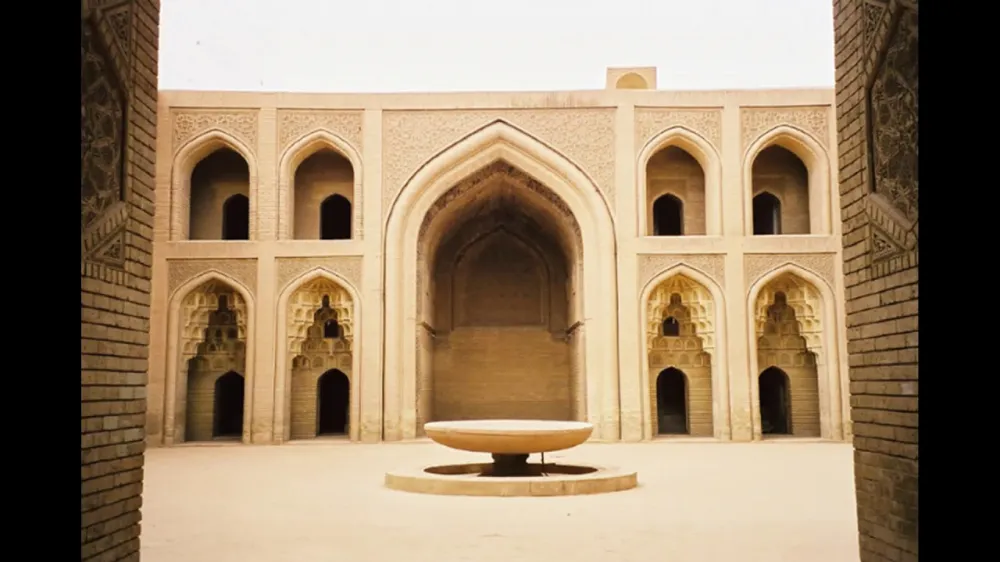
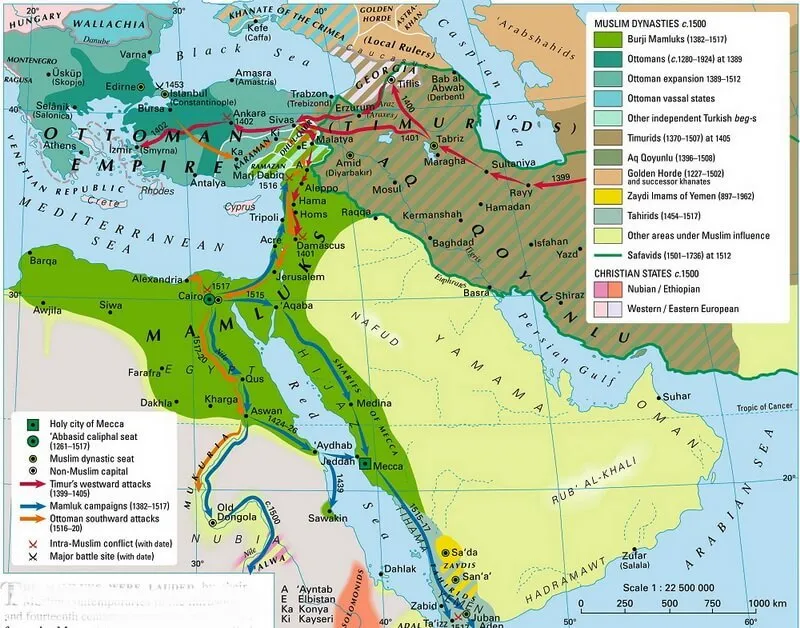
The main popularizer of steganography in the Middle East was the Egyptian scholar, encyclopedist, and official of the Mamluk Sultanate's chancellery, Al-Qalqashandi (1355–1418). His 14-volume encyclopedia on state record-keeping contains valuable information on secret writing. In his work "Subh al-A'sha" ("The Dawn for the Blind"), Al-Qalqashandi dedicated an entire section to steganographic concealment of secret messages in letters. The author proposed applying such methods in military and diplomatic correspondence to protect it from prying eyes.
Invisible ink in the Eastern style
In general, two types of invisible ink are distinguished:
Organic liquids: milk, vinegar, fruit juices. Usually, such ink becomes visible when slightly heated.
“Sympathetic” chemicals. They have more complex compositions. To read the message, one needs to treat the paper or parchment with a special chemical reagent, expose the text to sunlight, or, conversely, place it in complete darkness.
Following Philo of Byzantium and Ovid, Al-Qalqashandi offers a series of recipes for invisible ink of both types. So, let's put on our protective aprons and start our chemical experiments.
Al-Qalqashandi's first recipe is writing with an aqueous solution of copper sulfate. Such an inscription becomes visible only if the paper is smeared with gallnuts ground in water.
Another method is writing with alum dissolved in rainwater on sized paper. The secret message needs to be moistened and then dried for the hidden text to become visible.
A more exotic recipe involves ink made from turtle bile. Text written this way is visible only in complete darkness.
The next method is like a dish from a cooking show. It's a mixture of black lemon (what plant this is remains a subject of speculation among researchers), colocynth roots roasted in olive oil, and egg yolk. To reveal the text, the message needs to be heated.
Linguistic Steganography in the Eastern Style
Al-Qalqashandi also describes methods of hiding the meaning of a message within the text itself. For example, the author recounts a cautionary tale from an earlier work — "Ma'alim al-Kitabah" by Ibn Shihab (8th century).
A certain king, whose name is protected by an NDA is not named, decided to capture a guilty courtier. Before this, the ruler ordered his secretary to write a praising letter to the unfortunate man to lull his vigilance. Perhaps the king wanted the courtier to further entangle himself in his dark deeds or to betray his companions.
The secretary turned out to be a friend of the addressee and decided to warn him using steganography. At the end of the letter, above the standard phrase "If Allah wills," the official placed a shadda (a doubling sign) over the letter "nun" in the word "in" (if). Upon reading the message, the addressee deciphered the secret meaning and fled the country. This was a reference to the 20th verse of Surah 28 "Al-Qasas."
"And a man came from the farthest end of the city, rushing. He said, 'O Musa (Moses)! Indeed, the chiefs are consulting about you to kill you, so leave. Indeed, I am to you a sincere advisor.'"
So how exactly did one little "squiggle" over a letter turn into such an Easter egg? Let's figure it out.
Shadda (ـّـ) means the doubling of a consonant (if we draw an analogy with Russian, it's, say, double 'n' or any other consonant).
The word 'in' (إن) in Arabic means 'if'.
Shadda over the letter 'nun' (ن) in the word 'in' turns it into 'inn' (إنّ), which translates as 'verily'.
In verse 20 of surah 28 of the Quran, a well-wisher, warning Prophet Musa (Moses) of danger, uses the exclamation 'Verily!'
Apparently, the suspiciously flattering tone of the letter, combined with the recipient's intuition and knowledge of the Quran, helped him solve this puzzle and draw correct conclusions.
When the king learned of what had happened, he immediately suspected the secretary and ordered him to rewrite the letter. The official exactly reproduced the first message, including that shadda. The secretary was caught red-handed, but he did not justify himself and honestly confessed everything. The king, however, appreciated the resourcefulness, courage, and truthfulness of his servant and pardoned him.
There are other examples of the application of linguistic steganography in the Middle East in the Middle Ages and Early Modern times – most such episodes are somehow related to references to the Quran.
Steganography of the Byzantine Empire
Another successor of Ancient Rome and center of intellectual life became the Byzantine Empire. True, in terms of steganography, the Byzantines did not invent anything fundamentally new.
Several mentions of secret information transmission are found in the Byzantine military treatise with the resounding title 'Tactics of Leo' (turn of the 9th–10th centuries). In the chapter on city defense, it talks about the need to closely monitor residents so that they do not send secret messages to the enemy.
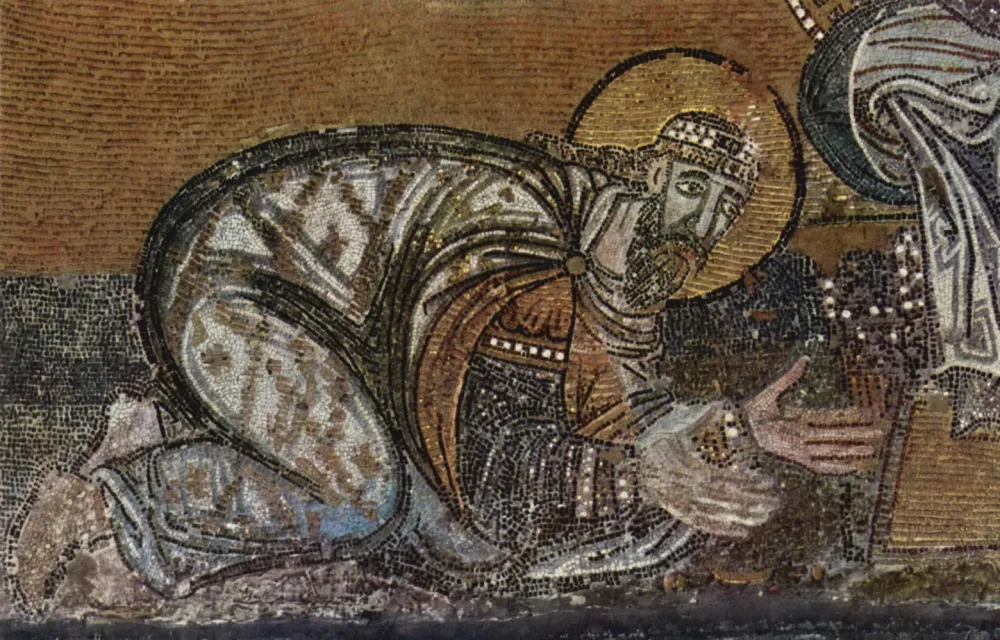
Another military trick described in the treatise is how to punish defectors. In a nutshell, you need to send letters to traitors that expose them as double agents, and add plausible details. Messengers with such messages should 'by pure chance' fall into the hands of enemy sentries. If the trick works, then at the very least the enemies will not believe a single word of the defectors, or even execute them outright.
Yes, this is not steganography in its pure form, but certain elements of it are present here. After all, a fake letter is used as a container for compromising information. Moreover, for greater plausibility, such a message should be veiled with simple cipher that the opponent will definitely decipher.
The treatise describes a method of delivering messages on arrow shafts, already familiar from the first article: with such shots, one could promise people under siege freedom or pardon in case of the city's surrender. The Byzantines also used a trick described even by Herodotus with a secret text on a wooden basis of a diptych (a waxed writing tablet), which was then covered with wax.
Steganography of Western Europe
It's time to open another region on our historical-stenographic map. It would seem that with the fall of the Roman Empire, Europe entered not the best times: mass illiteracy, feudal wars. On the other hand, in the Middle Ages, universities appear, national languages develop, and breakthroughs are made in a number of disciplines.
Steganography also took certain steps toward systematization and a scientific approach. Well, the Renaissance era was marked by a real steganographic boom and the emergence of techniques that are applied in one form or another even today. Let's try to lay out the main achievements of European steganography of this period on the shelves.
From Magic to Science
Roger Bacon, a Franciscan monk and professor at the University of Oxford, was the first in Europe to attempt to place cryptography and, in general, covert communication on scientific tracks. Yes, a professor in a cassock—a quite natural phenomenon for the Middle Ages. In his treatise "De secretis operibus artis et naturae" ("On the Secret Works of Art and Nature," circa 1249), he even anticipated the advent of optical telegraphy: he wrote about the possibility of transmitting news over any distance using certain "igniting mirrors."
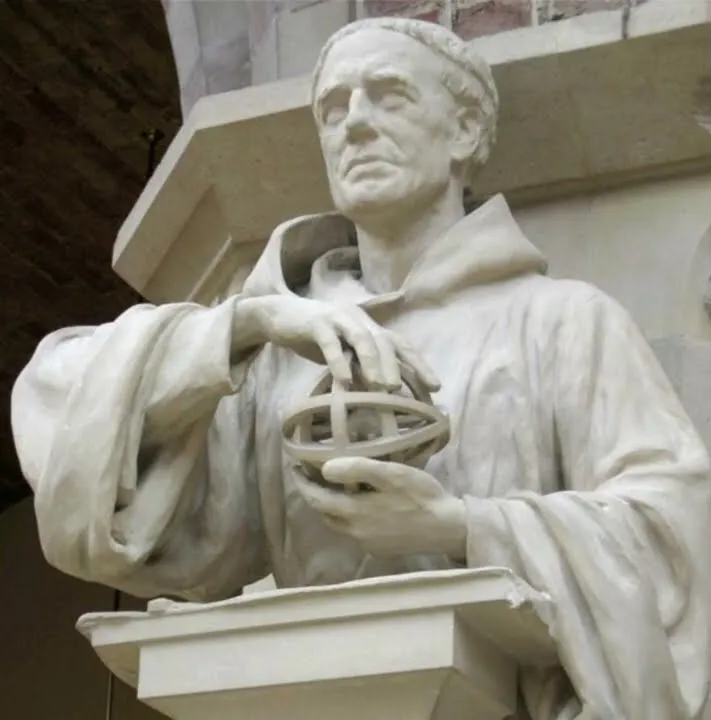
In his work titled "Opus Majus" ("Great Work," 1267), Bacon completely "breaks the mold." According to him, witchcraft is the result of the hidden properties of substances. Building on the work of the Arab scholar Alhazen, Bacon outlines methods for creating texts visible only from a certain angle or through a lens. In his "Letter on Secret Works," he describes glasses that enlarge letters or change their size at various distances. What more could you ask for as a toolkit for reading microscopic or distant hidden messages?
Methods of Disguise: From Trithemius to Mazarin
However, the high-quality transition of cryptography from magic to science occurred a bit later, during the Renaissance era. Steganographic methods of disguise, where a secret message is given the appearance of… anything, saw particular development. Let's describe the techniques that left the most vivid mark in history.
Angels and Psalms as Steganographic Containers
Bacon was Bacon, but the true founding father of steganography (and Western cryptology) as a separate discipline was another scholar in robes — Abbot Johannes Trithemius of the Benedictine monastery of St. Martin in Sponheim. It was he who coined the term "Steganographia" (Latin: Steganographia), titling his book thus, written in 1499.
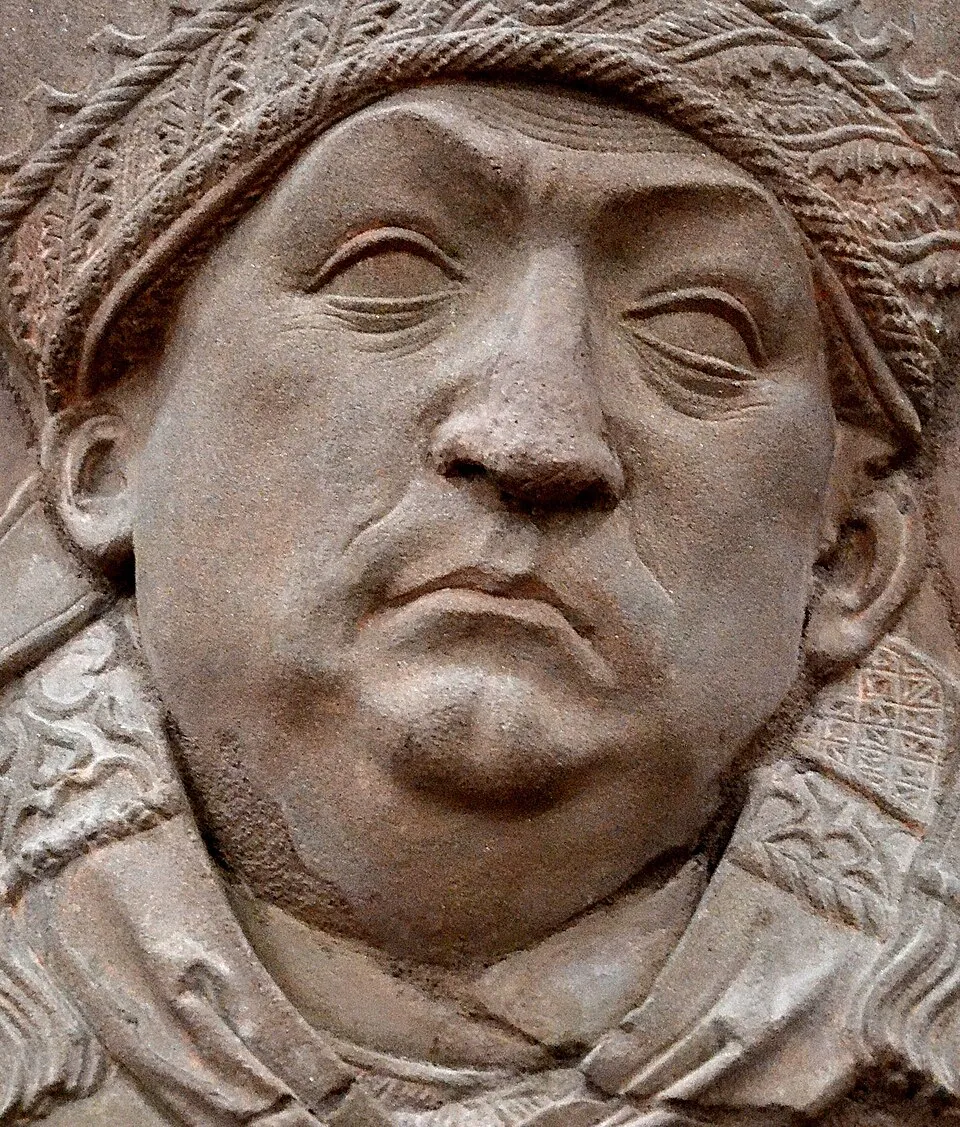
At the time, Trithemius's work seemed to many like a magical heresy and even ended up in the Index of Forbidden Books by the Catholic Church, because the author seriously discussed transmitting messages over distance without physical couriers—with the help of angels. In reality, beneath this "angelic telegraph" and a mass of other eschatological and kabbalistic paschal motifs lay perfectly scientific cryptographic and steganographic methods.
In total, Trithemius's book describes over a hundred different ways to protect information, the most famous of which is the "Ave Maria" cipher.
It is not just a substitution cipher, but also a method for transmitting classified information in plain sight. The cipher book consists of a collection of well-known prayers, where each word corresponds to a specific letter of the alphabet. In this way, the "innocent" text of religious content becomes a stego container for a secret message. We have already described this "steganographic" cipher in detail in one of our previous publications, so we will not repeat ourselves here.
Notes and horoscopes as stego containers
Another method described by Trithemius—also on the border between encryption and steganography—is transmitting a message using musical notes. Here, each letter of the alphabet corresponds to a specific note and its duration. To outside ears, it all sounds like an ordinary Gregorian chant. Think about it, a singer "by mistake" performs an "extra" psalm—they won't send you to the stake for that. Trithemius's musical cipher may be the first documented method in history of using an auditory channel for covert data transmission.
The abbot's book is filled with astronomical tables, where zodiac signs and planetary symbols replace specific letters or words. Moreover, Trithemius described a method for masking messages as horoscopes. To use such a steganographic method, the correspondents must first agree on the rules: say, the position of Jupiter in the sign of Pisces masks the letter "S," and so on.
Messages through bars
In 1550, the Italian mathematician, physician, philosopher, and inventor Gerolamo Cardano (1501–1576) described in his work "On Subtle Matters" an instrument that entered history as "Cardan's grille".
It is a stencil of square, rectangular, or oval shape made of paper or cardboard. Slits (cells) for writing letters or whole words were cut into the blank. The "grille" was placed over paper, a secret message was written into the cells, and the remaining space on the sheet was filled with "innocent" masking text. To read the message, the recipient applied a stencil exactly like the sender's to the letter. In short, the tool is so simple it resembles crafts made by first-graders in labor classes.
There is also a more complex format of the "grille," invented much later—the symmetric-rotational one. This symmetric square stencil could be rotated 90° around its center and thus used multiple times. That is, a single letter could hide as many as four secret fragments, together forming a coherent message. Most commonly, squares with an 8x8 cell format were used, 16 of which had slits for ciphertext letters. Thus, with such a grille, a message of 64 letters could be composed. Not "War and Peace," but a short business message can be conveyed.
This steganographic method remained a favorite tool of diplomats and spies until World War II. In the information field, there is even a version that, among others, Cardinal Richelieu and Alexander Griboedov actively used the 'Cardan grille'. Being the Russian ambassador to Persia in 1828, the author of 'Woe from Wit' allegedly wrote 'harmless' personal letters to his wife, where he hid the secrets of dispatches using a similar template. First, the letters were placed on the desk of Foreign Ministry staff, who easily deciphered the secret messages. Alexander Sergeyevich's wife herself did not even suspect that she was reading diplomatic mail. However, there is no absolute confirmation of this version in the sources.
These days, the 'Cardan grille' is no longer used in diplomacy and intelligence, but it constantly appears in movies and computer games. It can be seen in the credits of an episode of the cult Soviet series about Sherlock Holmes, the American video game Uncharted 4, dedicated to the search for pirate treasures, as well as in the Canadian retro series about detective William Murdoch.
First step to computers or Steganography from "Shakespeare"
And here is that very method that anticipated humanity's transition into the digital age. It concerns the binary encoding system of the English philosopher and statesman Francis Bacon (1561–1626; not to be confused with the aforementioned 13th-century namesake, Roger Bacon). Essentially, such a binary system today forms the basis of computer and programming operations.
Bacon himself christened his method the "Biliteral Cipher." Each letter of the English alphabet was replaced by a five-character combination of 'A' and 'B'. Steganography, meanwhile, involved the use of two typefaces, for example, a regular Roman font for 'A' and an italic for 'B'. In this way, the encoded combinations were imperceptibly added to ordinary text for concealment.
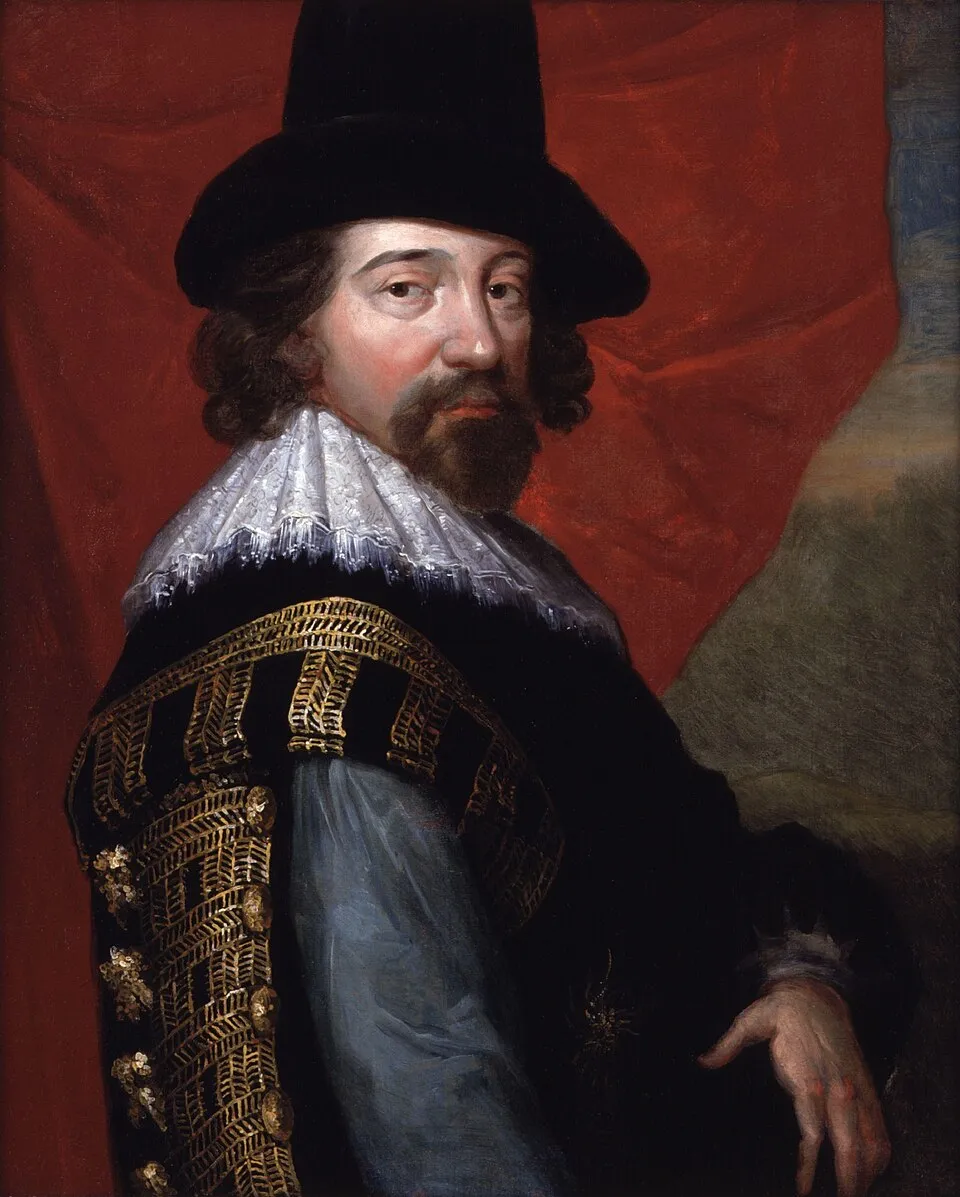
By the way, according to one version, Francis Bacon was also William Shakespeare in his spare time. In the early 20th century, a group of American cryptanalysts discovered examples of the use of the "Two-Letter Code" in the plays of the classic, which became the main argument in favor of Bacon's authorship. The researchers found alternations of fonts, sizes, and even methods of lettering, supposedly characteristic of such a methodology. However, most scholars consider such a version to be "stretching the owl onto the globe," since variations in the appearance of printed characters are a common practice for typographies of that time. So, if you want, you can see encryption and steganography in anything.
European-Style Invisible Ink
In the Middle Ages and the Renaissance, Europeans also experimented with miracle compositions that allowed them to hide secret information. The most extravagant recipe was proposed by the famous cryptographer Giambattista della Porta (1535–1615) in his book "Natural Magic" (Magia Naturalis, 1558, expanded edition 1589).
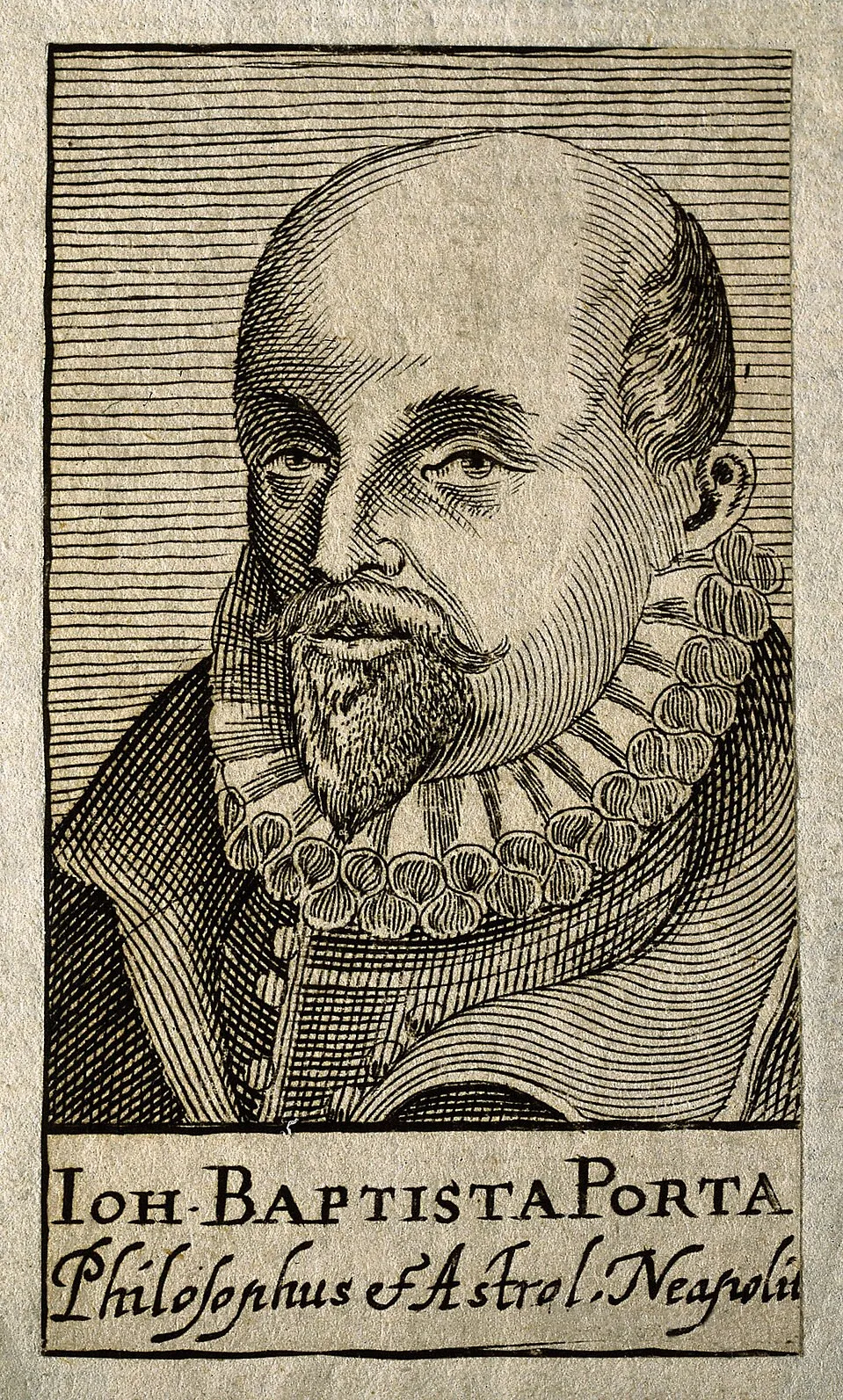
The message was written with a special mixture of alum and vinegar on the shell of a raw chicken egg, which was then boiled hard. During the preparation process, the acidic solution penetrated through the pores of the shell. From the outside, the egg looked completely ordinary—the message appeared inside, on the surface of the cooked egg white. The recipient received both the secret message and breakfast in one fell swoop.
No one has ever managed to create such a work of steganographic-culinary art. Therefore, most likely, della Porta's recipe is a kind of fan fiction rather than a working method of steganography.
Sources also contain examples of the real application of invisible ink. One such episode occurred in France in the 17th century, during the so-called "Fronde of the Princes" (a series of anti-government uprisings by representatives of the nobility).
The rebellious nobles in Bordeaux arrested a Franciscan monk and Cardinal Mazarin's agent named Berton. To their misfortune, the rioters allowed the monk to write a religious letter to a friend in the city of Blaye. The prisoner added a secret message about his situation to the text using invisible ink and made an open postscript that no one paid attention to: "I am sending you an eye ointment; rub it on your eyes, and you will see better." The addressee understood the hint, developed the invisible ink, and received a distress signal. As a result, Berton was saved.
Thus, after the fall of the Roman Empire, the Middle East became the flagship in steganography for a long time, where invisible inks and methods of linguistic steganography were actively used.
In the Renaissance era, Western Europe seized the palm of victory in steganography. The works of Roger Bacon and Johannes Trithemius laid the first scientific foundation for steganography, and the system of another Bacon—Francis—can today be traced in computer binary code.
The main difference of steganography of the specified period from antiquity is its wide scope of application. The art of hiding information in plain sight ceased to be the exclusive domain of the military, spreading into diplomacy and a number of other spheres. In the early modern period, such techniques will become common even among ordinary people, and the list of stego containers will be replenished with new "miracles of technology". But this will be discussed in the next publication of the cycle.
List of References
Finn Brunton, Helen Nissenbaum. Obfuscation: A User's Guide for Privacy and Protest. Cambridge, Massachusetts; London, England: The MIT Press, 2015.
Kahn, D. The history of steganography. In: Anderson, R. (eds) Information Hiding. IH 1996. Lecture Notes in Computer Science, vol 1174. Springer, Berlin, Heidelberg. 1996.
E. B. Chernyak, "Five Centuries of Secret War". Moscow, 1991.
V. Grebennikov, "Steganography. History of Secret Writing". Moscow, 2019.




Write comment