- Security
- A
How a single jammed Xerox printer sheet led to the creation of GNU Linux and the entire Open Source philosophy
It is widely believed that the modern IT world was built by Gates, Jobs or Torvalds. But without one bearded hacker from MIT who had a bitter falling out with a Xerox printer in the 1980s, we would have neither Linux, nor Android, nor the Open Source concept in its current form.
Introduction
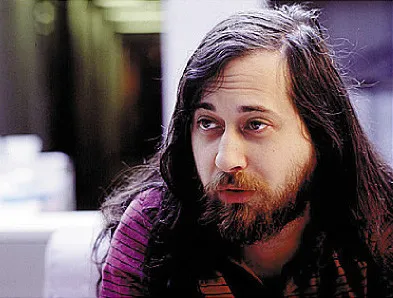
When it comes to the creators of the modern IT world, it's customary to recall Torvalds, Gates, or Jobs. But let's be honest: without one stubborn bearded hacker from MIT, there wouldn't be Android, Linux servers, or a good half of the software we use every day. And no, it's not Linus. It's Richard Matthew Stallman (or just RMS, as he's known in the community).
Stallman made history not just as a brilliant programmer, but as the creator of the philosophy of free software (Free Software). His ideas laid the foundation on which languages like Python, free browsers, the entire open-source movement, and even the concept of open collaborative development, without which GitHub wouldn't exist, later grew.
At the same time, RMS himself is a maximally inconvenient person for the modern industry. He's a radical philosopher who принципиально doesn't use smartphones, doesn't have social media accounts, and only pays in cash. For many years, he was openly ridiculed and called a paranoid. But today, against the backdrop of endless data leak scandals and total corporate surveillance, Stallman's ideas no longer seem crazy. Instead, there's a growing realization: it seems this guy understood everything long before us.
AI Lab at MIT, hacker culture, and Emacs
In school, Richard was a classic geek outcast: while his peers played baseball, he voraciously read encyclopedias and asked teachers too many uncomfortable questions. He didn't fit into society until he landed a summer internship at IBM at 17. Meeting a real mainframe changed everything. The computer didn't judge by appearance and didn't laugh at his quirks - it simply executed instructions honestly. For the introverted guy, this was the perfect partner.
Real life began in the 70s when Stallman found himself at MIT's Artificial Intelligence Laboratory (AI Lab). Back then, the term "hacker" meant a virtuoso engineer, not a cybercriminal, and a true technological utopia reigned within the laboratory walls. Software code was a common asset. Anyone could dig into the source code, see how everything was structured, fix a bug, and share the improvement with others. For Stallman, this free hacker ethics became the meaning of life.
It was at MIT that RMS created his first legendary product. At that time, the primary text editor was TECO - a thing so harsh and unobvious that it required jaw-breaking combinations to simply delete a character. To avoid going crazy, programmers wrote macros for it. Stallman, along with Guy Steele, gathered the best scripts into a unified extensible system - thus, Emacs was born (from Editor MACroS).
The ability to extend the editor to one's needs led to Emacs accumulating a monstrous number of features over time: one could read mail, manage files, code in built-in Lisp, and even play games directly within it. This spawned an immortal IT joke: "Emacs is a great operating system, it only lacks a good text editor". And yes, it was then that the foundation was laid for the epic holy war between fans of Emacs and Vim. The war has been going on for 40 years, and some still seem unable to get out of it.
The infamous Xerox printer: the point of no return
Every technological revolution often begins with some mundane triviality. In the case of free software, that triviality was a printer.
A brand-new Xerox 9700 appeared in the MIT laboratory, which simply loved to jam paper. Programmers would send a document to print, go to the machine, and instead of their texts, they would find a stuck wad of paper and a queue of angry colleagues. Stallman decided to fix the situation in a hacker way: he planned to modify the driver so that the printer would send notifications over the network if it suddenly "choked".
For this, the source code was needed. Richard reached out to Xerox, expecting the usual collegial code sharing, but got a hard refusal. Company representatives stated: sorry, man, this is a trade secret, the code is closed, you won't get any source code.
For Stallman, this was a real slap in the face. He grew up in a culture where code is knowledge, and it is customary to share knowledge. And suddenly some corporation is forbidding him to improve the device he works with every day.
It was then, in the early 80s, that RMS realized the catastrophic shift in the industry: programs were rapidly turning into someone's private property. The old MIT hacker utopia was crumbling before his eyes. Stallman's colleagues were leaving one by one for commercial startups, taking their work with them and closing the code. The world of open development was dying, and Stallman understood that if he did nothing, this process would become irreversible.
GNU: a recursive joke and the birth of a free world
Realizing that the world of open code was heading for a cliff, Stallman made a decision that would forever change the rules of the game. On September 27, 1983, he challenged the entire industry by publicly announcing the launch of the GNU project. The name is a classic hacker recursive joke: GNU’s Not Unix (“GNU is not Unix”).
The goal sounded like absolute madness: to write a full-fledged operating system from scratch, fully compatible with the then-popular Unix, but without a single line of proprietary, closed code. Every person should have the right to run it, take it apart piece by piece, modify it and share it with others. Unix was good for everything, but it cost money and its source code was tightly locked, and Stallman wanted to create a system belonging to all of humanity.
To make his plan a reality, Richard took a radical step. He voluntarily resigned from MIT, losing stability and his familiar environment. Why? So that the university would not even have a theoretical possibility to claim copyright on his code.
The years of hard work began. Stallman turned into an obsessed hermit: he literally lived in the office, slept on a mattress under his desk, ate fast food, and barely communicated with anyone. Alone, he wrote incredibly complex fundamental things: for example, the GCC compiler (without which compiling C programs is almost unimaginable today) and the powerful GDB debugger. He created dozens of basic utilities without which no Linux distribution could later function. The idea was simple: the user should not notice any difference when switching from Unix to GNU, except that now they would have complete control over their system.
The Copyleft Mechanism and the “Viral” GPL License
But enthusiasm and bare code were not enough — harsh commercial reality quickly made itself known. When Stallman left MIT, he took a copy of his Emacs editor with him. Soon it turned out that the company Symbolics, where his former lab colleagues now worked, unscrupulously took MIT's developments on Emacs, polished them up, and began selling them successfully. And of course, they had no intention of sharing the changes and giving the code back to the community.
For RMS, this was a stab in the back. In response, he simply went ahead and rewrote the entire Emacs from scratch to release it as a completely independent and free program. But this incident became an excellent lesson: Stallman realized it was naive to just give the code away to the world. At any moment, a corporation would come along, appropriate your work, lock it behind a proprietary license, and make a business out of it. To keep the code free forever, powerful legal protection was needed.
Thus appeared the GPL (GNU General Public License) — perhaps the most beautiful legal hack in IT history. The idea was brilliantly simple: you can take the code, use it for free, and do whatever you want with it, but with one strict condition. If you use a piece of GPL code in your program, then your entire program must automatically come under the GPL license, and its source code must be open to everyone.
It's like with a pie recipe: bake it, sell it, enjoy life. But if you took an open recipe and added your own commercial "secret" ingredient to it — be so kind as to disclose this secret to all buyers.
Stallman named this mechanism Copyleft (a clever play on the word Copyright). While copyright exists to restrict people's rights to distribute content, copyleft uses copyright laws to guarantee and protect this freedom from corporate privatization.
The business community literally howled in protest over this approach. Top managers and proprietary developers contemptuously dubbed the GPL a "virus" that infects and devalues any commercial code it comes into contact with. To which Stallman calmly retorted: "This is not a virus. It is a vaccine against greed."
Four user freedoms and the conflict with Open Source
For the system to work, it had to be backed by a strict ideology. Stallman wouldn't be Stallman if he didn't turn a technical issue into a philosophical treatise. He formulated four basic criteria that determine whether a program is truly free. Like a true programmer, he started counting from zero:
Freedom 0: Run the program for any purpose. Whether for work, hobbies, or operating a nuclear reactor — no one has the right to forbid you this.
Freedom 1: Study how the program works and modify it to suit your needs. (Without access to source code, this freedom is physically impossible).
Freedom 2: Freely distribute copies. You have the full right to share the program with a friend or colleague.
Freedom 3: Improve the program and publish your modifications so that the entire community benefits from your work.
RMS's position is categorical: if even one of these freedoms is missing, what you have is proprietary software that has no place on your hard drive.
It is important to make a linguistic clarification here. In English, the word free means both 'free' as in liberty and 'free of charge'. Because of this, many people still think that Stallman is some kind of IT communist who wants programmers to work for an idea and survive on sunlight. Nothing could be further from the truth. He always advocated specifically for user freedom, not for the absence of price tags. You can sell free software for any amount of money, but the buyer must become the full rightful owner of the code.
To promote these ideas to the masses and legally protect developers, Stallman founded the non-profit organization Free Software Foundation (FSF) in 1985. It still exists to this day.
Then the late 1990s arrived, and a great schism occurred in the community, which has left Stallman furious ever since. The term Open Source (open source code) emerged.
On the surface, the code is open — what's the problem? But for RMS, the difference is enormous. The Open Source folks wanted to make open code attractive to big business. Their rhetoric was built on pragmatism: 'open code is profitable, reliable, and a crowd of contributors fixes bugs faster'. No ethics, just an efficient development model.
For Stallman, this approach is a betrayal of ideals for the sake of corporate budgets. Software freedom is a matter of morality and basic human rights for him, not practicality. When yet another megacorporation announces from the stage 'We love Open Source!', RMS hears something completely different: 'We will gladly use your code to save on development, but we have no intention of giving anything in return or respecting the freedoms of our users'. And in a way, you have to agree, he is absolutely right.
The drama of “GNU/Linux” and the failure of the Hurd microkernel
By the early 1990s, the GNU project had almost everything: compilers, utilities, libraries. The only thing missing was the most important detail — the heart of the system, its kernel. And it was here that Stallman made his greatest technical (and possibly strategic) mistake.
In 1990, development of the GNU Hurd kernel began. Stallman decided to do everything properly and chose the then-fashionable Mach-based microkernel architecture. In theory, it sounded amazing: instead of one unwieldy chunk of code (a monolithic kernel), a set of small isolated servers that communicate with each other was created. It was supposed to be extremely secure and reliable.
But in practice, development turned into a nightmare. The architecture turned out to be extremely complex, bugs multiplied exponentially, and performance left much to be desired. It took three years alone for the Mach developers to release a proper license. The project was hopelessly stalled.
Then in 1991, an unknown Finnish student named Linus Torvalds entered the scene. He didn't bother with elegant microkernels, he just sat down and wrote his own monolithic kernel, which he called Linux. It was rougher, simpler, but most importantly — it worked right then and there.
At first, Linus released the kernel under his own proprietary license that prohibited commercial use. But Torvalds genuinely respected Stallman and his philosophy. Recognizing the potential of the open community, in 1992 he moved the Linux kernel to the very same GPL license.
It was the perfect puzzle: Linus's kernel + ready-made GNU utilities. This is how the fully free operating system that Stallman had dreamed of for almost 10 years finally came to be.
But then a drama happened that still hasn't died down to this day. The world happily embraced the new OS and started calling it simply "Linux". This deeply offended Richard. He rightfully protested: wait, the kernel is only a tiny part of the system! Without the compilers, shell, and GNU utilities, your Linux is just a useless piece of code.
Stallman launched a crusade for historical justice, demanding that everyone use only the name GNU/Linux. Torvalds just shrugged and said "Call it whatever you want". But RMS on the other hand flew into a real rage. He can literally cut off a speaker at a major conference if they dare to say the word "Linux" without the "GNU" prefix, while the audience sits there awkwardly silent.
(By the way, GNU Hurd is still quietly being developed to this day. You can even run exotic distributions like Debian GNU/Hurd on it. Yes, only a handful of people use it, but the fact that development hasn't stopped for over 30 years is worthy of respect).
Eccentricity, "cancellation," and return
In the 90s and 2000s, Stallman became a true rockstar of the IT world. He traveled the world giving lectures, spoke at universities and parliaments, and drew full houses. His charisma and uncompromising stance were captivating: students would leave his lectures with burning eyes and an irresistible desire to immediately ditch Windows.
But along with his popularity, his eccentric demands grew. You invited Stallman to a conference? Be sure to ensure that not a single byte of proprietary software is used in the auditorium. There was a case where he simply turned around and left when he found out that the presentations were being run in Microsoft PowerPoint instead of the free LibreOffice. At many of his talks, he brought with him a soft toy gnu antelope — a symbol of his movement, and his unkempt, thick beard became a byword. When joked about that beard harboring its own ecosystem, he replied pragmatically: time should be spent on code and the fight for freedom, not on barbershops.
Among Linux users, a humorous utility even appeared called vrms (Virtual Richard M. Stallman). When launched, this virtual Stallman scans your system and, if it finds even a single proprietary package (such as closed-source graphics card drivers), begins to grumble disapprovingly.
Stallman's digital hygiene is a separate art form. He doesn't just preach against proprietary software — he literally lives that way. Richard works exclusively on machines with completely free operating systems and open BIOS (Coreboot). He принципиально не пользуется smartphones because they contain closed communication modules (baseband) that users can't control. He isn't registered on any social networks. Moreover, even regular web surfing is a minefield for him. To avoid running closed JavaScript code from corporations, he views websites through special scripts or terminal browsers, sometimes simply sending a request to a special server that emails him the HTML code of the page.
In 2021, Stallman unexpectedly returned to the FSF board of directors. This caused a new split in the community: some developers (including companies like Red Hat) threatened to stop funding the foundation, demanding his final departure, while thousands of ordinary programmers signed a petition in his support, stating that without Richard, the Free Software movement would lose its essence.
Conclusion
Today, Richard Stallman is over 70. Unlike Gates or Jobs, he did not build an IT empire and did not earn billions. But his influence on the world is hard to overestimate. RMS's philosophy, his GPL license, and the GNU project form the foundation of the infrastructure that modern civilization rests on. The servers that run the internet, supercomputers, Mars rovers, and billions of Android smartphones in our pockets—all of this works because one stubborn hacker once decided that software should be free and devoted his entire life to defending this right.
Every time you freely download a tool for work, read the source code of a library on GitHub, or fork someone else's project—you are using Stallman's legacy.
Announcements of new articles, useful materials, and also if you encounter difficulties in the process, you can discuss them or ask a question about this article in my Telegram community. Feel free to drop by; if something goes wrong, we'll try to figure it out together.
Write comment