- AI
- A
The Industrial Market in the Next 10-20 Years
I present to you an overview of how the industrial market will transform in the next 10-20 years. What changes await us, what trends are already forming, and what will the future of digital industry look like. In this article, I will take you through a series of reflections and conclusions about how the market is changing today, what factors influence this, and what lies ahead.
In my conclusions, I will rely on my personal experience working with integrators in the field of ACS in the technology industry (an industry where we operate with temperatures, pressures, mass, etc.) and energy (an industry where we operate with voltage, current, power, etc.), interactions with product companies, as well as collaborations with chip vendors. I hope that in this material representatives of various engineering and expert fields will be able to find new and useful ideas for business development in the coming years. Some may think about how these changes will affect business strategy, while engineers will consider which technologies should be applied and for what purposes these technologies should be used.
This will cover both classic industrial topics and areas such as IIoT, Edge AI, robotics, and other advanced technologies. My experience has been formed in the field of contract electronics development and is based on many years of interaction with clients, a large number of meetings, and implemented projects in this area. Therefore, the material will be of interest to industrial integrators, manufacturing enterprises, product companies, specialists in embedded systems, and possibly chip developers for industrial applications.
Let me say right away, the article turned out to be suitable for several cups of your favorite drink; the energy sector will be touched upon to a lesser extent, but some technological parallels will exist between the technology industry and energy, as these industries are closely related in spirit, and technology borrowing occurs within them. To keep the reading time for the article under 30 minutes, I had to leave some points aside. I suggest we move on to the article itself.
The food chain in the industry
To understand the direction in which this game will develop, we first need to understand who participates in it, who sets the rules, how the market is structured, how external changes affect it, who the key players are, and who the others look to for guidance. Let's break everything down step by step.
Let's start with who is who here, the first is the factory, which is the end consumer of all industrial solutions; the factory has a need for solutions and technologies.
The second level in this hierarchy consists of integrators. By integrators, I mean companies that work with ready-made PLCs, engage in their programming, develop SCADA systems (for example, based on WinCC), assemble control cabinets, and perform commissioning work. Essentially, they use existing technologies to launch production at the client's site as quickly as possible. Integrators closely interact with factories, and by nature, this is a service business. In contrast, factories primarily focus on product business. This forms the first "food chain" in the industry. However, there is an important nuance: in this context, an integrator can also act as a product company.
For example, when it sells a ready-made solution—a conveyor line, a control cabinet for refrigeration equipment, or another finished product assembled from standard blocks (PLCs, HMI panels, VFDs, etc.). I will return to this when discussing MTP, as it is one of the key triggers for changes in the industry, especially for integrators. The second such trigger is IIoT: digital twins, cloud analytics, and the related processes.
Integrators need to source ready-made solutions and products, and this is where product companies come into play. They are the ones that offer PLCs, HMI panels, frequency converters, as well as SCADA platforms and IDEs for developing SCADA systems. Essentially, these are development environments similar to IDEs for C++ used by high-level developers. These companies create technologies, shape product lines, and ultimately define the market for available solutions. Their key target audience consists of integrators and factories. At the same time, all product companies rely on chip vendors in one way or another: they choose microprocessors, microcontrollers, or FPGAs for their devices and have a team of embedded developers.
Large players often go further and order custom chips from chip vendors for their tasks. This is justified, as in most cases, standard interfaces like I2S or HDMI in PLCs are simply unnecessary, and it makes sense to optimize the composition of peripherals, reducing production costs. Therefore, if companies in the CIS plan to produce products in batches of hundreds of thousands or millions of units, it makes sense to cooperate with chip vendors in advance. RISC-V alliance level platforms are an excellent entry point for finding such partners.
The next link in this chain is contract electronics development companies. They help product companies create solutions for the industry and scale existing products. Essentially, this is a service business: it is extremely rare to find contract developers with a narrow specialization, proprietary technologies, and especially their own products. The main set of services here is standard: electronic design (circuit design, PCB layout), embedded software development (Firmware, Embedded Linux, FPGA bitstream, etc.), as well as the development of enclosures and mechanics for electronics. In their work, such companies primarily rely on ready-made technologies provided by chip vendors. At the same time, the very concept of "technology" is quite broad. Earlier, for example, in materials about electric drives, I wrote that technologies initially appear with product companies. If the market demonstrates demand, these solutions are then picked up by competitors, and later—by chip vendors, who package them in the form of libraries and tools, helping startups to enter the market faster. In other words, innovations are first born at product companies, then replicated by industrial players, and only after that do they reach the level of standard solutions from chip vendors.
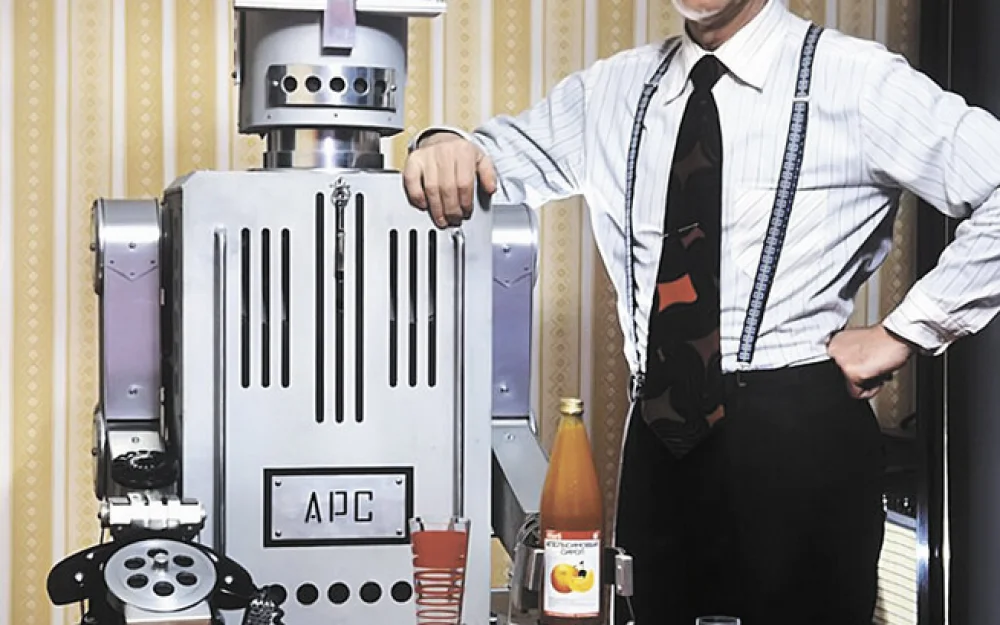
Contract electronics developers connect to this process only at the final stage. When it comes to industrial technologies, this is clearly illustrated by the example of sensorless FOC: chip vendors did not have such solutions until product companies emerged in the market, proving the viability of the approach. Therefore, in industry, it is important to understand: trends and innovations are formed by product companies, then copied by competitors, followed by chip vendors, and only at the very end do they become the “standard” for contract development. To confirm this, it is enough to recall object and text recognition systems that successfully operated in the USSR over 35 years ago (for example, the company ParaGraph, research institutes, etc.)—long before the emergence of NVIDIA and modern neural network platforms. Powerful computing platforms appeared later, but the approach itself existed long before that, so calling it a fundamentally new innovation today is at least incorrect.
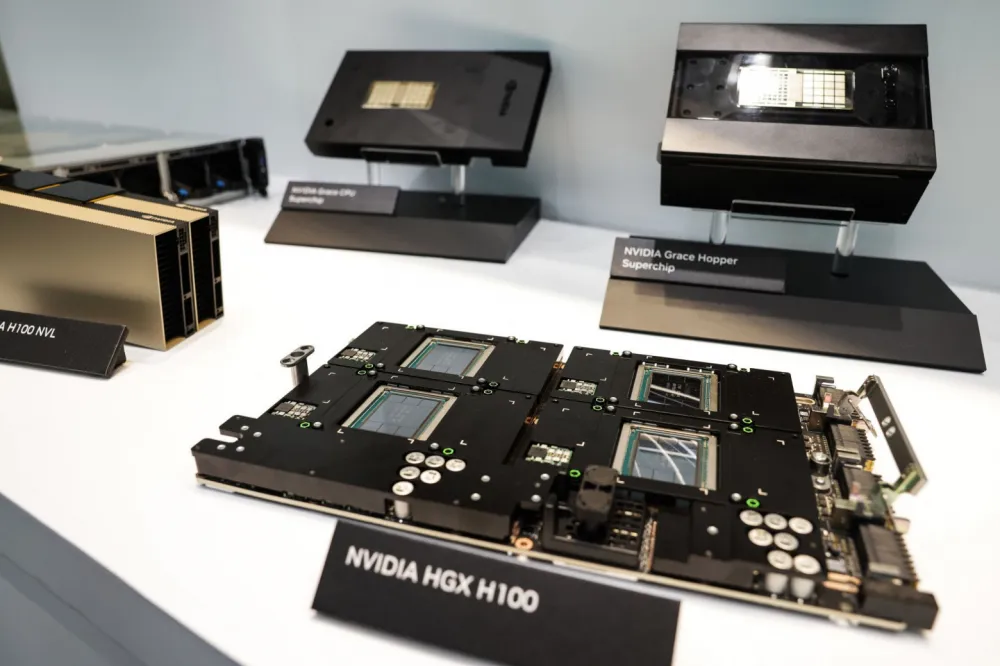
The last link in this chain is chip vendors. They create the platform, a kind of "canvas" for developers of embedded systems, on which industrial technologies are implemented and innovations emerge. At the same time, chip vendors also have a clear specialization. For example, as I mentioned earlier, in the field of electric drives, one of the leaders is TI, while in PLCs, their solutions are often chosen due to the presence of PRU - that is, specialization can be traced even at the architectural level. There is no need to look far for examples: just recall NVIDIA's open specialization and the inflated market bubble around it. Chip vendors develop microprocessors, microcontrollers, and FPGAs, and the market here is extremely dynamic. It has already "digested" Atmel, Freescale, Altera, and Xilinx - high competition makes it complex and aggressive. As mentioned before, the concept of "technology" is very broad. While product companies form industrial technologies themselves, chip vendors create increasingly powerful and specialized chips so that these technologies work faster, show better performance, and ultimately reduce the cost of their implementation and scaling.
When it comes to the business component, where the end consumer is an engineer, such a business is inherently engineering-oriented. There is no room for abstract ideas or "spherical horses in a vacuum," as the industry does not forgive mistakes. It is a harsh environment with high demands, where the cost of a mistake is often disproportionately high. That is why there are regulations, standards, rules, and norms, and real expertise is formed not quickly, but over many years of practical work.
The market can be conditionally divided into European (PI, EtherCAT), American (ODVA), and Asian (CLPA). The industrial network market is not shaped by loud publications about IoT/IIoT or the efforts of marketers. It is formed by key players in the industry - leaders who create specialized organizations (ODVA - EtherNet/IP - Rockwell Automation, CLPA - CC Link - Mitsubishi Electric, PI - PROFINET/PROFIBUS/IO-Link - Siemens, EtherCAT technology group - EtherCAT - Beckhoff, etc.), develop standards, and effectively set the rules of the game. Structurally, this is an oligopolistic market, comparable in many ways to a cartel model: it is the leaders who determine the directions and pace of development. In the industrial segment, it is not the market that dictates to the leaders what to do; rather, the leaders manage the market.
According to analysis data for 2025, industrial Ethernet dominates in new installations: networks based on it account for 76% of the nodes being deployed. PROFINET has strengthened its position, increasing its share to 27% from 23% the previous year. EtherNet/IP holds second place with a share of 23% (up from 21%). EtherCAT continues to grow steadily, reaching 17% compared to 16% in the previous period. Modbus TCP maintains a stable share at 4%, while POWERLINK, CC-Link IE, and other Ethernet solutions demonstrate generally stable dynamics with minor changes. At the same time, the share of traditional fieldbuses continues to decline, accounting for only 17% of new nodes compared to 22% in 2024. More details here.
The task originates on the factory side, while the product manager is already shaping the industrial technology for it. This market is not about hype; it is conservative and extremely selective. It decides for itself which technologies to adopt and which to ignore. Even if a technology is initially not favored by the market, if it has practical significance, it is not rejected but adapted to meet industrial requirements. TSN is a good example: a separate industrial standard (IEC/IEEE 60802) has emerged, and this is certainly not a coincidence. The trends here are set by major players like Siemens and Rockwell Automation. There’s no need to look far: digital twins in conjunction with Siemens + NVIDIA. They are the ones collecting the cream, while others learn to exist and earn within this market. And importantly, it is possible to live well here. But for that, one must find a niche. A striking example is how Siemens regularly acquires companies with fundamental technologies (Milltronics, Mentor Graphics, etc.), and this is not done without reason. Creating fundamental industrial technology is a complex and costly process. Therefore, if you enter this business hoping for hype, nothing will come of it: you will face a bloody ocean of competition. Only those with a strong foundation and their own basic technology survive, but the game is still played by the rules of the big companies. A simple example: if you make a flow meter and want sales, be prepared to add PROFINET for the EU market. Planning to enter the US market? Add EtherNet/IP (CIP).
Let’s move from players and rules to technology. The first topic we will discuss is IIoT (I admit it’s an interesting topic if talked about correctly). Let’s start with this: try to search for full-fledged IIoT (Industrial Internet of Things) solutions among large industrial companies. In most cases, you will only see IIoT gateways. And this is not accidental. As mentioned above, the market is shaped by its leaders. If leaders see practical sense in another hype, it is first documented, then adapted to industrial requirements, and only after that does it begin to be implemented in industry. Let’s start with the loudest technological trend of recent years, IIoT, and see how key market players relate to it.
IIoT - why is there so much noise, and it’s difficult to understand the truth?
I'll start with a brief backstory. In 2022, at one of the internal meetings conducted by the commercial department, I heard a phrase from the sales manager: “Why do we need another industrial business unit if we already have an IIoT unit? It's the same thing; there’s no point in creating more units.” After that, there followed quite a long and sometimes difficult phase of working with marketing, during which I had to explain sequentially that IIoT and classic industrial are fundamentally different stories. It even came down to visual examples, including analyzing scenes from the movie “Die Hard 4,” where the “villains” attempted to collapse the infrastructure, and the factories were shut down exclusively locally, not remotely. And here I want to thank regulators and engineers: local management, TÜV, and other certification and regulatory bodies that do not allow industrial facilities to “explode to hell” but instead establish clear rules and frameworks within which the industry must operate.
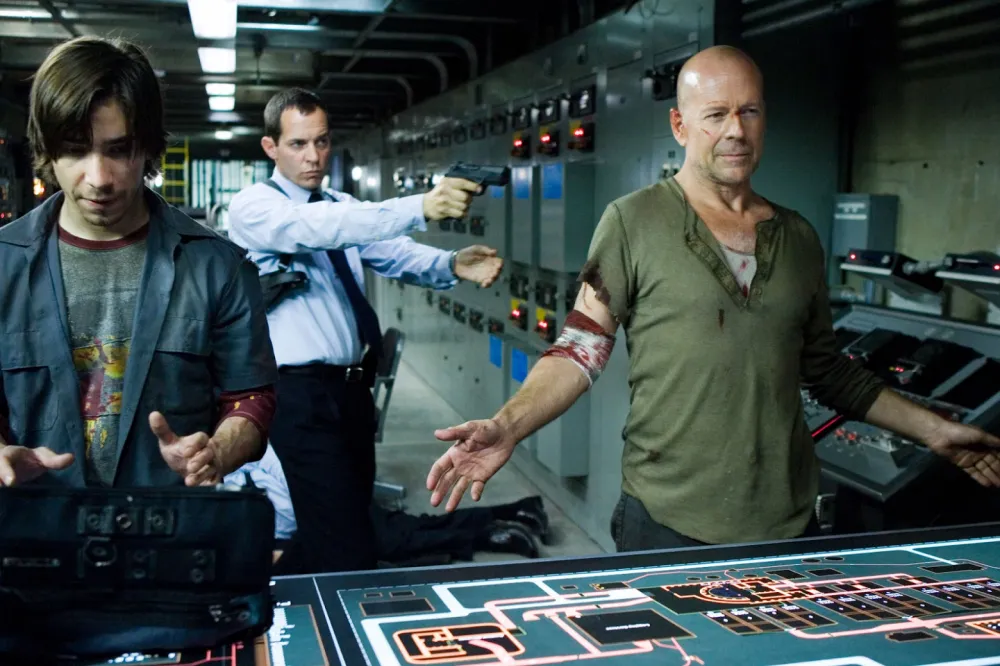
Over the years of interacting with colleagues and the market, I increasingly saw where the confusion arose. At a certain point, the information space was flooded with a wave of pseudo-experts and info-evangelists who proclaimed from every platform that IoT would save the world, that there would now be IIoT everywhere, and that PROFINET, EtherCAT, and other industrial protocols would soon be unnecessary. Most often, such statements came from conference stages and articles written by people who, frankly, had never been to a real factory. The internet became filled with loud headlines, and as a result, even experienced colleagues increasingly began to confuse concepts. In the following text, I will try to guide you through the concepts of IIoT and classic industrial and show exactly what their differences are. A short summary sounds like this:
IIoT is solutions for monitoring and optimizing technological processes. Classic industrial is about managing the technological process.
The best formula here is “watching is allowed, touching is not” for IIoT. For classic industrial, the formula is “real-time, real management.”
The IIoT can be compared to an independent observer. It helps businesses identify production downtimes, find bottlenecks and weak links in processes, analyze data, and make more informed management decisions without directly intervening in the management of the technological process. In this article, we will slightly unveil the open architecture of NAMUR Open Architecture (NOA) and how its concepts and requirements can be practically implemented in modern conditions, where almost every company has its own cloud data platform (Industrial IoT/IIoT), serving as a link between basic systems for managing technological processes, corporate IT systems, business processes, and analytics. The NOA concept is supported and implemented in their products by: Siemens, ABB, Schneider Electric, Emerson, Yokogawa, Endress+Hauser, Pepperl+Fuchs, Phoenix Contact, etc.
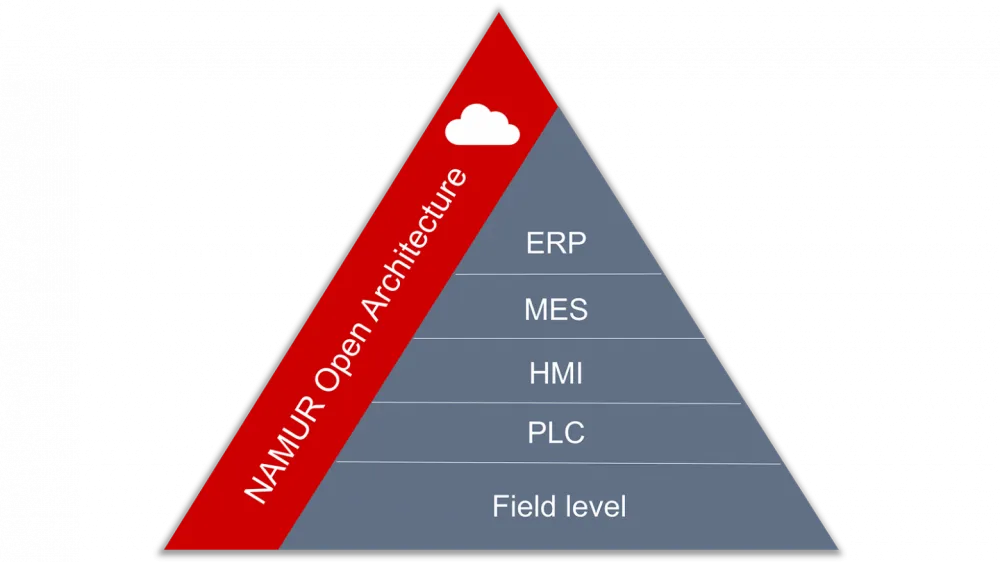
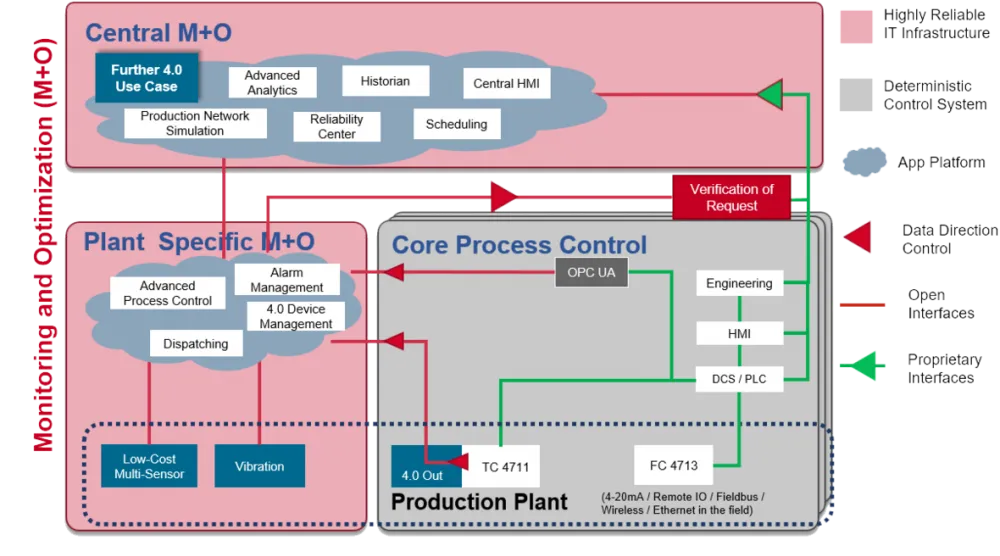
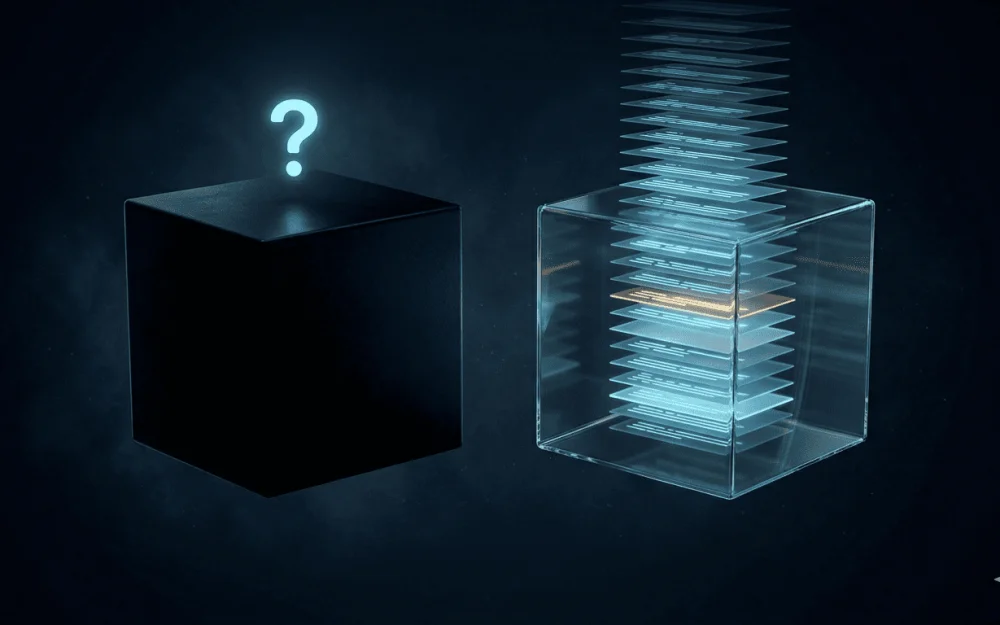
Classical industrial automation is built on a hierarchical (pyramidal) principle, where management and data flows are strictly separated by levels. This architecture limits access to detailed data from equipment and sensors, which significantly complicates the tasks of IT analytics, predictive maintenance, process optimization, and the construction of digital twins. NAMUR Open Architecture (NOA) addresses this problem while retaining all the advantages of the traditional industrial pyramid through the logical separation of production management and observation functions. The control loop remains within the classical industrial architecture and follows the principle of maximum safety - "the enemy cannot pass." The monitoring and optimization loop implements the approach of "watching is allowed, touching is not": it does not have direct access to control and does not interfere with the technological process in real time. In fact, NOA introduces a model of an external observer, providing safe access to data without compromising the stability and certification of the control system.
NOA introduces an additional independent data transmission channel - a second loop that provides direct delivery of information from the field devices and controllers to the Monitoring & Optimization (M+O) applications without affecting the main automation system and without any impact on process control. The NOA architecture relies on open standards and widely accepted information models (in particular, OPC UA), ensuring compatibility and interoperability of solutions from different manufacturers. Specialized architectural elements, such as data diodes or unidirectional data transmission channels, are provided for secure data exchange, guaranteeing controlled, one-way transmission of information from the OT domain (technology level) to the IT domain, while reliably isolating and protecting the main control system. The work on NOA is coordinated in collaboration with NAMUR, ZVEI, and PI (PROFIBUS & PROFINET International).
As a result, IIoT should primarily be viewed as an approach to dividing zones of responsibility. This is not about the emergence of fundamentally new hardware solutions: the architecture uses IIoT gateways, which are essentially the same industrial gateways specialized for data transmission tasks to analytics systems and cloud platforms. Unidirectional data transmission mechanisms, such as data diodes, are used to protect technological processes, excluding any reverse effect on production lines. Meanwhile, the set of field devices remains unchanged: the same sensors and automation tools are used. Added value is achieved through the collection of data from already existing equipment and their subsequent transmission to the monitoring and analysis levels.
The industry did not "reinvent the wheel" in the form of new controllers or sensors; instead, the emphasis was placed on architecture and data processing. Significant changes began at the level of monitoring and optimization with the emergence of Edge AI solutions for predictive maintenance tasks, such as diagnosing and predicting failures of electric motors and other industrial equipment. In most cases, such Edge AI systems are industrial computing platforms or single-board computers with hardware accelerators for neural computations, such as solutions based on NVIDIA Jetson or other specialized neuro-accelerators. In fact, this leads to the hardware playing a minimal role, while the key value is concentrated in the software and data processing algorithms. It makes sense to delve deeper into the software aspects of IIoT, particularly digital twins, while discussing the topic of Edge AI separately in the next stage.
Digital Twins
So, the market is shaped by leaders. They have distinguished IIoT as an independent entity, not at the level of “hardware,” but at the level of architecture. The key outcome of IIoT has been the digital twin: it can be either a separate object in the form of a model or an entire segment of a production line.
For integrators, the focus is primarily not on complex mathematical models, but on simple and visual things, such as 3D models of a real production line or workshop showing the current state of nodes. This provides the opportunity to see precisely where on the conveyor your future phone or your favorite chocolate bar is currently located, how an employee moves around the workshop, and so on. Wearable devices or solutions like Omlox from PI - real-time location systems (RTLS) designed for use in closed environments, help here.
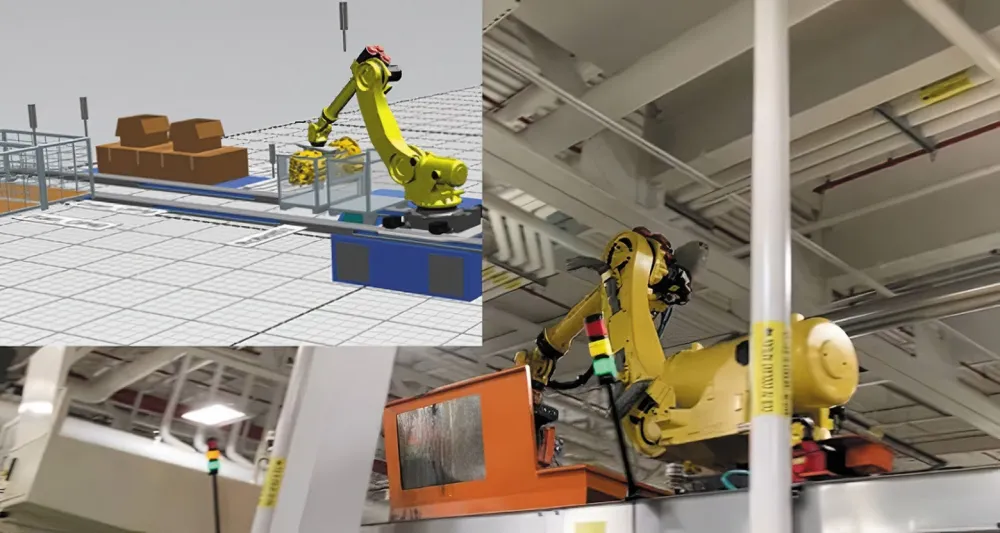
Digital twins can be implemented in virtually any way and based on any available equipment. It is enough to collect data and transfer it to a dedicated server, where a virtual 3D copy of the object will be formed. This is purely a software task, with no embedded exoticism: any IIoT gateway or even a minimal industrial PC will suffice. Moreover, the more detailed and high-quality the data collection, the more accurately the virtual model reflects the real state of the object. In the end, it results in something like a virtual analog of “The Sims”: people move around, objects shift, and processes are visible in real-time. As mentioned earlier, this opens up opportunities for business expansion for integrators, and for enterprises, it provides a visual tool for understanding what is happening on the factory floor: where employees are located, what is happening with the product and production lines.
Digital Twin with AI
The next step is to turn the digital twin into an AI assistant, a kind of D.A.R.V.I.S., which not only shows the picture of what is happening but also helps understand how to optimize the company's operations.
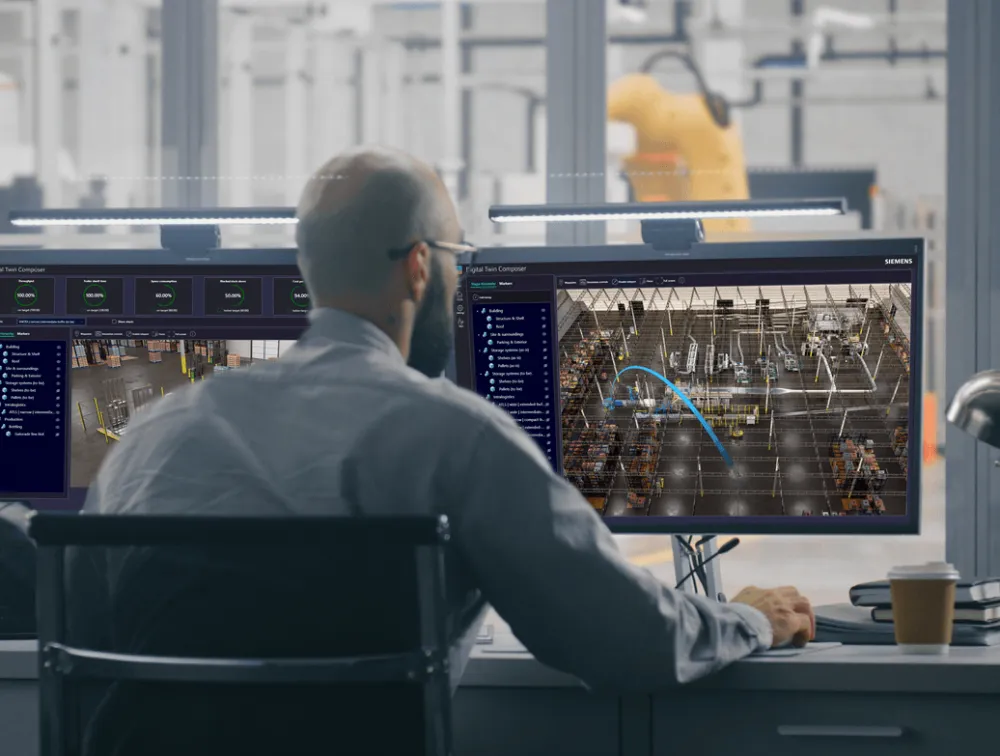
The key idea is the evolution of digital twins from passive visualization systems to active systems with intelligence. NVIDIA provides the AI infrastructure, simulation libraries, and frameworks in this approach, while Siemens offers experts, as well as its own software and hardware. At the center of the system is a conditional D.A.R.V.I.S.: it constantly analyzes the digital twins of production lines and simulates various change scenarios. As a result, you do not just observe processes and manually search for bottlenecks for optimization. An intelligent assistant emerges, actively participating in enhancing production efficiency.
First, 1) create a factory in virtual space, 2) optimize it, and 3) only then proceed to construction in reality. The era when enterprises were built first and automation was implemented afterward is coming to an end. In the future, the logic changes: first a virtual factory, then optimization of processes and virtual automation, and only after that implementation in the physical world. The principle is simple: test and optimize first, then build. And this is no longer an abstract idea, but a real tool - Digital Twin Composer from Siemens.
By the time the actual factory is launched, you already have its digital model and ready software; all that remains is to transfer the software to the real platform and start production. At this stage, new professions and roles emerge. It becomes possible to visualize and model any product, factory, or plant in full context and in real time. Digital Twin Composer allows: large-scale modeling and virtual commissioning of entire factories; training autonomous robots in "dark" factories without lighting; demonstrating and simulating the operation of equipment in rooms, houses, and buildings. All this clearly shows what opportunities open up for integrators: new formats for designing factories and new approaches to their construction appear. When it comes to contract development of electronics and software, the range of new services here is limited. In fact, we are talking about creating tools comparable to Digital Twin Composer, but such solutions are only within the reach of major players like Siemens and NVIDIA. It is unlikely that they will transfer key technologies to service companies, so for traditional contract developers, this market will likely remain closed.
Classic industrial
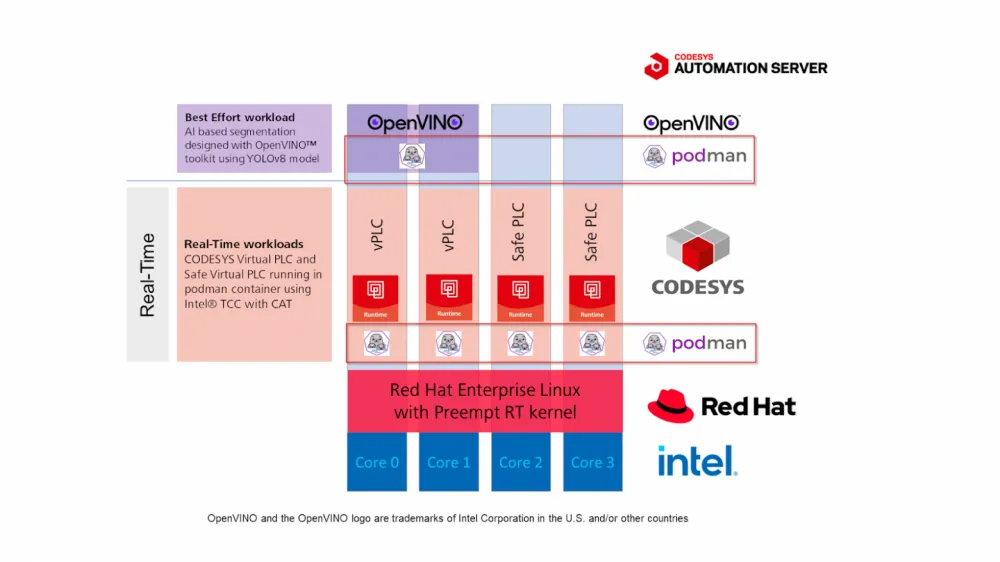
The classic industrial sector cannot be overlooked (the same "pyramid" without NOA). A few years ago, two major players, Siemens and CODESYS, came to the same conclusion. In large enterprises, PLCs are installed by the hundreds, and sometimes even thousands. As production develops, controllers are constantly added to technological processes. As a result, a complex and expensive ecosystem is formed, raising the natural question: how to reduce the total costs of ownership and development? The answer was a virtual PLC. Why use a separate hardware PLC device, for example based on TI Sitara AM335x/AM64x, when it is possible to deploy controllers (PLCs) on server hardware, scale them programmatically, while ensuring functional safety (safety) and information security (security).
Siemens and CODESYS understood that sensors and electric drives would still be connected via Ethernet; effectively, only switches remain to connect everything into a single network. The connection is extremely simple: patch cord, switch, and then all responsibility passes to the integrator, who implements the logic at the software level to manage the factory.
The virtual PLC essentially represents a set of containers: for CODESYS, this is Podman with PREEMPT_RT Linux Kernel and the corresponding runtime machine for the PLC. Siemens and CODESYS already had all the technological basis to implement such an approach. The logic here is extremely pragmatic: there is no point in proliferating hardware where business can significantly reduce costs with virtual PLCs. Later, this idea was picked up by others. If we talk about our market, Severstal also concluded that the value of “pure” hardware is decreasing, and it is much more important to understand what the architecture of industry will look like in 3, 5, or 10 years. And this is undoubtedly the right strategic step.
The same players sat and continued to discuss: wireless networks do not provide deterministic real-time and carry additional risks from the perspective of information security. As a result, Ethernet SPE and Ethernet APL emerged. Two wires, with a speed of 10 Mbps, are simply sufficient for field sensors. Power is transmitted through the same two wires. This opened up new opportunities for contract electronics developers. The industry will gradually migrate to Ethernet APL/SPE, which means hardware upgrades will be necessary. And now is the time to quickly adjust pitches and approach product developers with a different narrative: “Goodbye 4-20 mA, hello Ethernet APL/SPE.”
If we recall what I wrote earlier in the article “Key Trends and Growth Vectors of Industrial Networks in 2026,” the trends in the fieldbus domain clearly indicate a systematic transition to Ethernet architectures. The evolution from classic HART to HART-IP, as well as the emergence of Single Pair Ethernet for IO-Link, vividly confirms this development direction. The key role here is played by the simplicity of connection – a conditional “connect and go,” as well as the active development of managed APL and SPE switches. Configuration is increasingly reduced to adding a GSDML file (for PROFINET) in TIA Portal, which significantly simplifies equipment integration. As a result, installation and operation become substantially easier, and the architecture itself focuses on the field level: sensors and actuators, APL/SPE switches, and hardware (referring largely to the CPU module) or virtual PLC (Virtual PLC) as the computational core of the system at the controller level. Hence the logical question: what will happen to traditional AI/AO/DI/DO modules if everything transitions to Ethernet? Their share will inevitably decrease over time. Digital interfaces are faster, more reliable, and safer. It is no coincidence that IO-Link has already received specifications aimed at functional safety.
I will add a little parallel with the energy sector, the SEAPATH project developed by the Linux Foundation. SEAPATH is a real-time hypervisor designed for hosting virtualized protection, automation, and control functions (vPAC) in digital substations. Essentially, it is an open software solution originally developed to meet substation automation requirements under the IEC 61850 standard and aimed at critical industrial scenarios. The SEAPATH architecture takes into account key requirements of the energy OT landscape: deterministic real-time, high availability, compatibility, compliance with industry standards, and strict cybersecurity constraints. The platform enables the execution and isolation of vPAC applications (virtualized protection, automation, and control), forming the computational core of the digital substation, analogous to Virtual PLCs, but at the level of energy infrastructure. Some have VMs and others have containers; this is standard practice, and if you're interested, check out the Siemens jailhouse project.
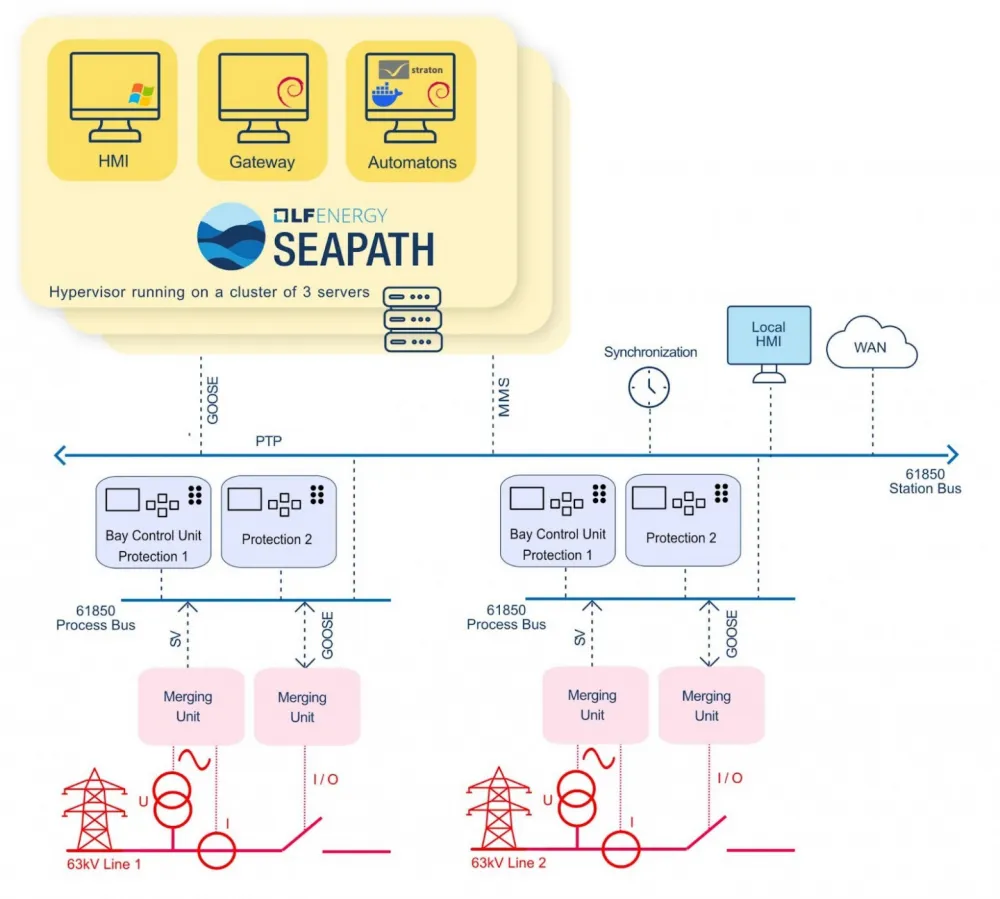
And if you thought that this is indeed a merging of IT and OT infrastructures, you are not mistaken. The hardware base is becoming common: standard servers without excessive specialized hardware. Computing is moving to the server level.
I would like to finish this section on MTP (Module Type Package). MTP is a modular approach to designing plants. And here it is important to understand the key advantage of the technology. When designing a plant and its subsequent automation, you work not with disparate nodes and signals but with already completed functional modules. For example, there is a ready mixing line, then a bottling and packaging line; you acquire and implement precisely such finished modules. These modules are then integrated with each other through a single standardized interface, without having to redo the control logic. This approach greatly simplifies scaling, modernization, and commissioning. This topic is excellently covered in more detail and with practical examples by the specialist Beckhoff.
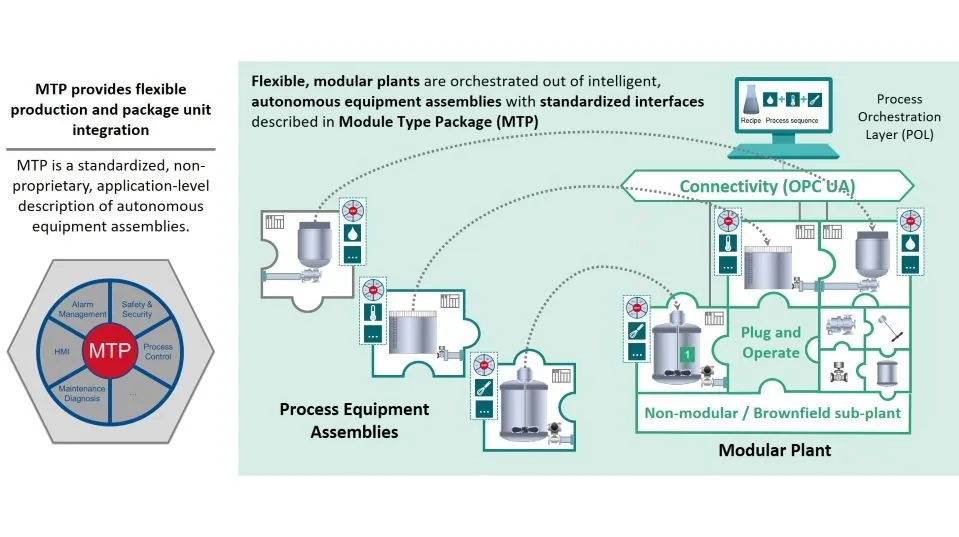
The process is divided into separate parts, which are then simply connected to each other plug & operate, similar to plug & play. The factory is assembled from pre-made modules, and on top, a POL orchestrator operates, which manages and links the entire process at a higher level. As a result, the enterprise is assembled like a mosaic literally with one "wave of a magic wand." The speed of design increases sharply with this approach: modules can easily be replaced with one another, providing high flexibility in production. No longer do you have to wait for months for an integrator to complete the commissioning; you simply take a ready-made line and embed it into the existing technological process.
Monitoring and optimization also cease to be a problem: they are initially built into the solution. Essentially, in the future, you get a line already with a digital twin, while specialists from the manufacturer simultaneously engage in servicing and predicting its condition. Monitoring and analytics become an additional service from companies supplying MTP modules. In numbers, this looks like this: a reduction in time to market by up to -50%, a decrease in labor costs for engineers by up to -70%, and an increase in production flexibility by up to +80%. It's all positives: standardization, unification, and a significant reduction in modernization costs for lines. And this is not an abstract idea or hype. The approach has already been formalized in the IEC 63280 standard, supported by many manufacturers of industrial equipment, and the technology is actively developing within MTP 2.0.
Robotics and AI
This section should begin from afar, with the demographic processes that are forming in the modern world. In developed countries, the demographic picture looks quite bleak: the birth rate is consistently below the population replacement threshold (the total fertility rate is below 2.1 children per woman), the population is aging, and in some countries, depopulation or extremely slow growth is observed. This leads to a whole range of systemic problems: labor shortages, increased pressure on pension and social systems, and the necessity to either stimulate birth rates or compensate for the lack of people through migration.
The first and most obvious trigger for the industry is that each year the number of people actually involved in production will decrease. There are simply fewer available workers on the assembly lines and in low-value-added operations.
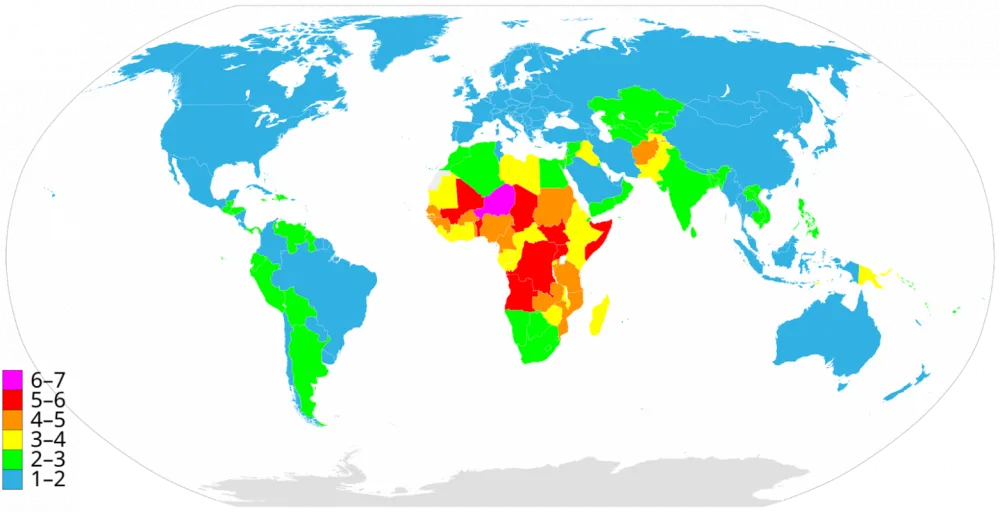
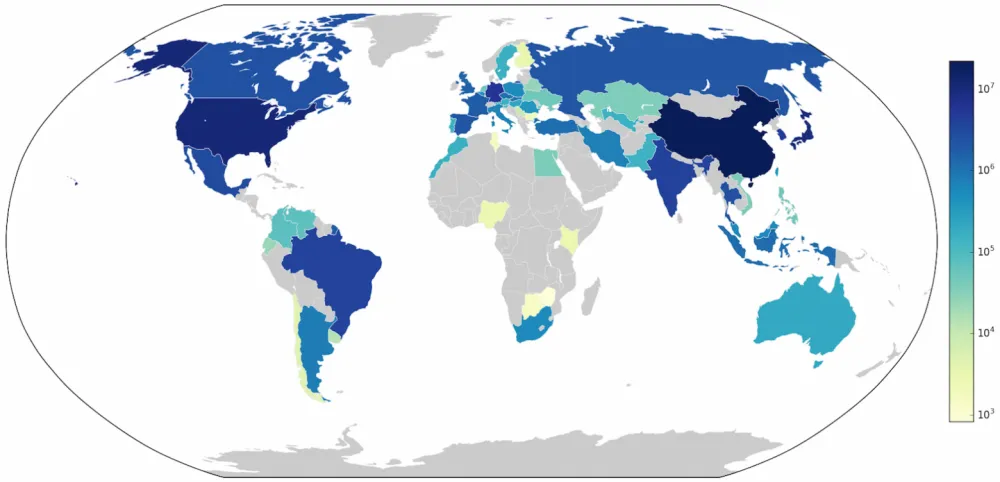
The second important aspect to pay attention to is the distribution of global production capacities. When comparing this data with birth rates, it becomes clear that in countries with low birth rates, the graphs correlate directly with each other. They clearly show that in the near future, a key problem for most enterprises will be a shortage of production personnel. And this task is one that the industry has already begun to address today through the active implementation of AI (neural networks), robotics, and automation.
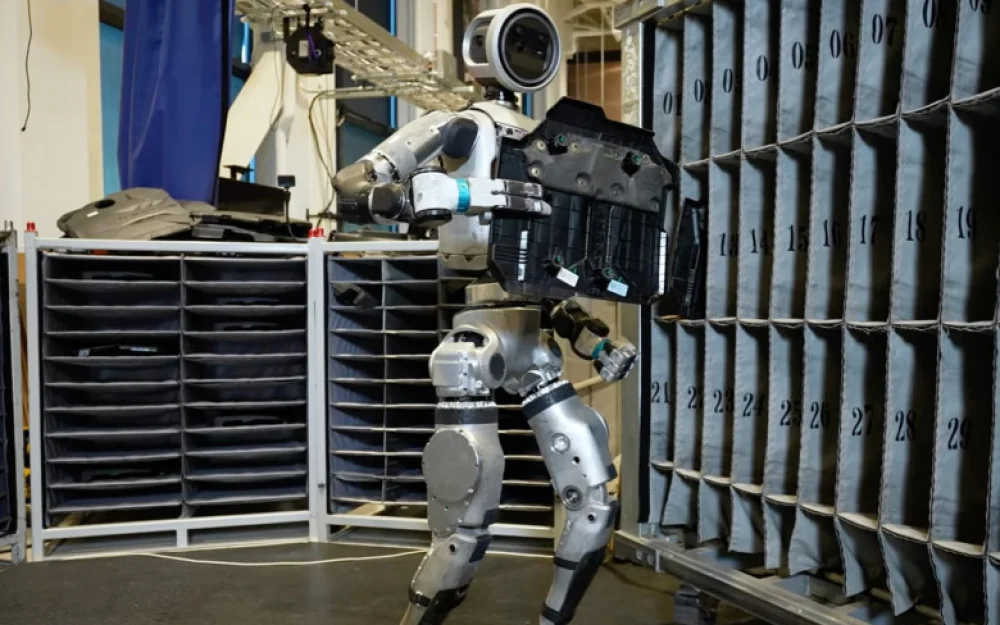
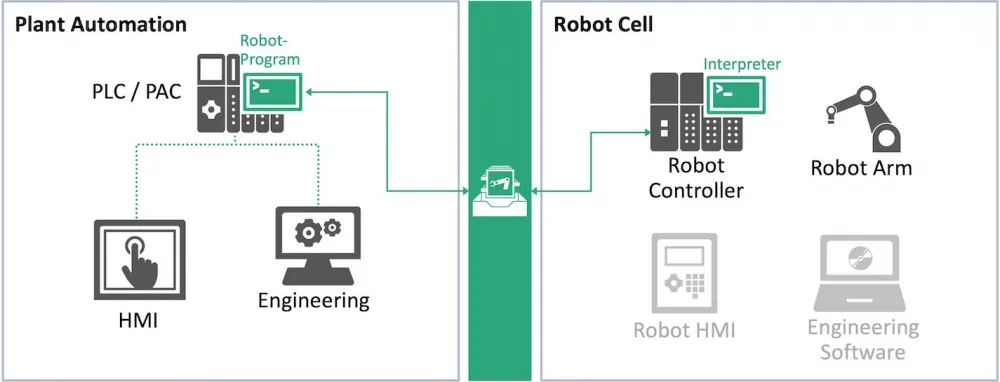
The emergence of assembly robots from Boston Dynamics, the formation of a new SRCI profile from PI - all these are links in the same chain. The factory of the future is literally saturated with robots and ubiquitous automation. And if we talk about where neural networks are really in demand today, it is primarily in humanoid robotics. Classic automation through industrial robots: delta, SCARA, 6–7-axis manipulators have long existed and work excellently. The next step towards full production automation is to eliminate the remaining routine conveyor operations that still depend on humans. This is where it becomes particularly interesting. SRCI offers a unified interface for industrial robots, allowing for the standardization of their connection from PLC to robot control unit (RCU). Meanwhile, manufacturers of humanoid robots are focused on optimizing training and adaptation for specific production tasks. The topic of robotics is currently at its peak popularity; everyone talks about it, and only the lazy do not make robots in China. Therefore, I will not dwell on it in detail, but will instead focus specifically on SRCI.
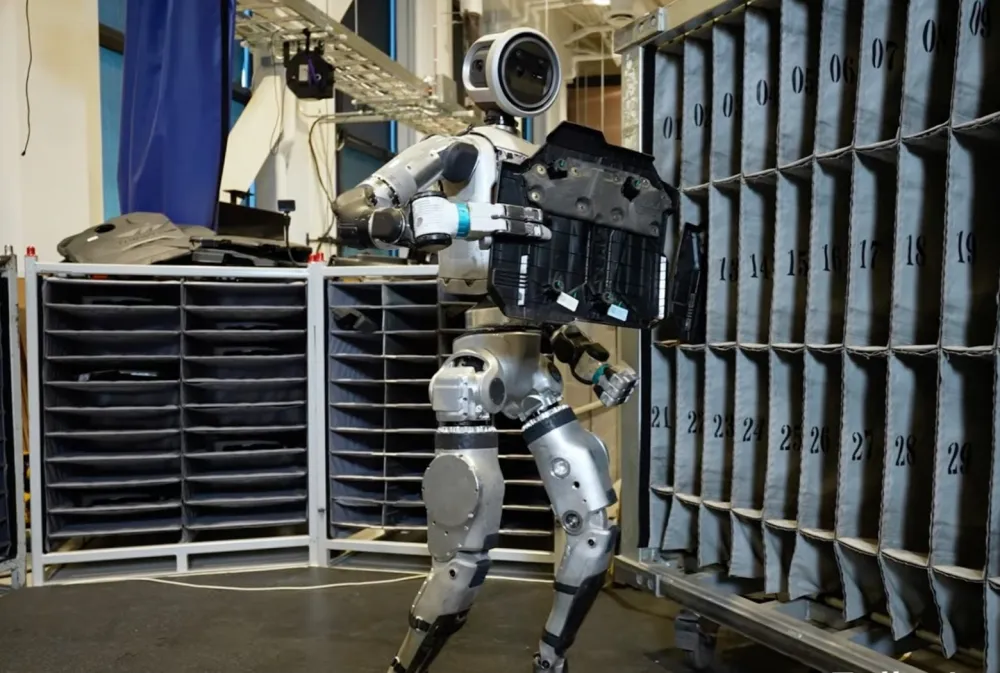
SRCI is a standardized interface for controlling robots that allows programming and managing industrial robots directly from the PLC environment. An engineer can write a single program for the entire mechatronic system, including robotic operations, and integrate robot control into the overall logic of the equipment. The PLC calls over a hundred standard functions of the robot, while the robot controller (RCU) responds by transmitting information about the status, operating modes, and current execution of operations to the PLC.
The main advantage of SRCI lies in the standardization and simplification of industrial robotics. PLC specialists gain the ability to work with robots in a familiar environment without learning new languages and APIs from different manufacturers, while PLC and robot manufacturers can use a single standard and universal libraries for equipment from different brands. As a result, integration complexity is reduced, the pool of engineers capable of working with robots is expanded, and dependence on specific vendors is decreased. All manufacturers of industrial robots have supported SRCI. Therefore, we are waiting for a unified interface for industrial robotics, which is accessible from the PLC (industrial robotics and PLC programming are links in the same chain).
IIoT has provided the industry not only with digital twins but also with another important direction that it is logical to transition to now: predictive maintenance and its further evolution into prescriptive maintenance. While the predictive approach focuses on forecasting failures, prescriptive maintenance goes further: using data analytics and neural networks, it not only identifies potential problems but also formulates specific recommendations on how to prevent them and what actions need to be taken. By nature, predictive and prescriptive maintenance are software based on neural networks.
Predictive maintenance and prescriptive maintenance can be performed both in the cloud and on the device itself, but the most realistic development scenario is cloud solutions similar to digital twins. If data for monitoring can still be collected from existing equipment and sent to the cloud, a separate “smart” electronic device (Edge AI) for prediction and prescription loses its meaning. Software for predictive and prescriptive maintenance becomes more of a plugin or module for the digital twin. For future systems, this is a logical stage of development.
In Edge AI, I see value primarily in recognition tasks - on assembly lines (which have been operating since the 90s), in humanoid robots (like those from Boston Dynamics), and in specialized controllers with narrow functions, where it is difficult to rely solely on classic PID controllers and simple data arrays. It is no coincidence that major manufacturers have so few independent electronic predictive solutions. Why develop and implement new hardware if existing components can be used, data can be collected from them, and transmitted to the cloud via a data diode for analysis? This approach is cheaper, simpler, and faster: developers do not need to design a new hardware platform, and companies do not need to invest in additional equipment. Essentially, everyone benefits.
Modular and autonomous factories are our future
Finalizing this article, with some background. Approximately 14-15 years ago, my instructor in the intellectual property course told me: “Roman, think about how to make a factory autonomous …”. A piece of advice that truly shows where the automation of enterprises is heading now and in the future, advice that is relevant today, in 10 and 20 years. Automation of production is indeed displacing some jobs, no matter how unpleasant that sounds, but this is a consequence of implementing automation; this discipline and specialties in universities were created for this purpose, and without it, we would still be working by hand. In the era of LLM and digital technologies, businesses are increasingly automating any tasks that can be automated, primarily for cost reduction. Just look at self-service checkouts or the development of unmanned transport and robotics. But the future is first for semi-autonomous, and then fully autonomous factories. And the technologies we discussed in the article will allow this to become a reality.
Demographic problems will be felt more vividly and universally. The share of people directly involved in production operations will inevitably decrease, and their function will increasingly shift towards monitoring and analysis, exactly in line with what we discussed earlier regarding the NOA concept in IIoT. Less manual participation in the process and more focus on how to make production more efficient. Business is always focused on cost optimization, and the demographic decline along with the labor shortage will only accelerate the departure of humans from everyday operational activities in factories. Digital twins are becoming the new working environment: a platform for monitoring, analysis, and decision-making. Production begins to be perceived as a system operating in simulation or a game. For integrators, this opens up scaling opportunities for solutions, while for factories, this brings additional advantages. When it comes to the embedded component, everything here is mostly already figured out: the market is essentially reduced to the level of data diodes and IIoT gateways, while the main value shifts towards high-level software, analytics, and cloud services.
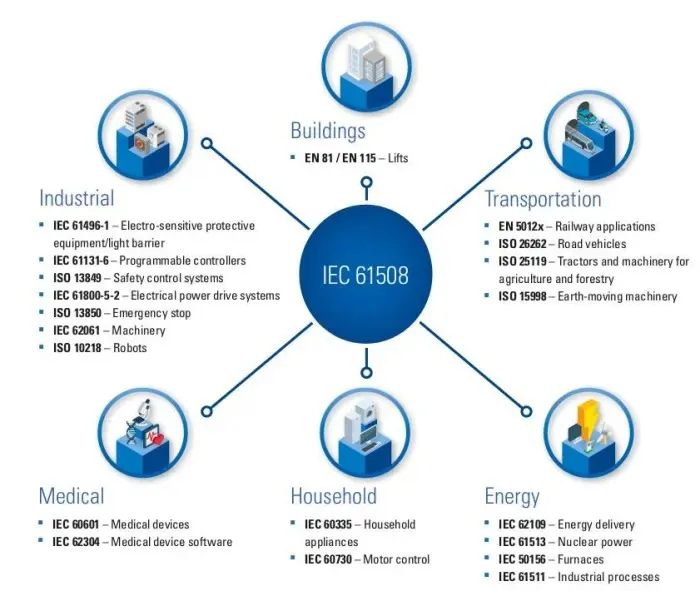
The emergence of humanoid robots initially on simple assembly lines clearly indicates the direction of development; in the future, conveyor operations will be fully automated. Robots do not make human errors, do not get tired, do not get sick, and are not dependent on schedules or salary levels. For businesses, this is a clear model: depreciation and energy costs are considered, everything is easily forecasted, calculated, and significantly simpler to control and manage. Over time, robotics will begin to emerge from industrial applications into a standalone sector with its own standards for functional and information security, although today it still largely remains part of the industry (ISO 10218). The emergence of SRCI and the active implementation of humanoid robots on assembly lines unequivocally indicates the direction in which the industry is moving. Robotics is currently being formed as a new industry, comparable in scale and size to the automotive sector. Robotics will gradually take shape as a standalone industry with its own standards and technological stack; for now, there is still a "zoo" of humanoid robots, a lack of functional safety standards, with classical industrial robotics as an exception. Initially, humanoid robots will be established in factories, and then they will take on new roles in other areas. Robotics follows the path of PLCs: first industrial application, then adaptation for other tasks (for example, smart homes). Technologies always evolve alongside the market, and robotics is no exception.
The modularity of MTP is a logical development of the idea of unifying and standardizing production lines. There is no longer a need for complex and lengthy integration. A company orders a ready-made line with a common infrastructure in MTP format, and automation along with integration accelerates exponentially. Connections become predictable and standardized, without any "dancing with tambourines." For integrators, this is both a risk and an opportunity. Often, it is cheaper to buy a ready-made modular line than to develop one from scratch. Therefore, a key recommendation for integrators is to think ahead about unification within the framework of MTP and to create their own modular products that can be replicated and easily integrated into various production projects.
Neural networks are indeed necessary, but primarily where they cannot be avoided: in machine vision and recognition tasks, in vision systems for robots, and in robotics applications in general. Another important direction is predictive and then prescriptive maintenance. Equipment wears out, lines break down, and here monitoring and digital twins come into play as they show the current state of the system. Predictive and prescriptive systems go further: they forecast what may happen in the future and suggest when and what actions a business should take to prevent problems in advance and minimize downtime risks. With comprehensive analytics, we obtain not just a picture of "here and now," but a system that shows how processes and events at the plant will develop in the future.
The industrial electronics market will gradually shrink to the level of sensors and actuators directly connected via Ethernet, including Ethernet APL and SPE. Essentially, only the CPU module with Ethernet infrastructure will remain from the classical PLC. For large enterprises, the share of virtual PLCs will grow actively, and control will increasingly move to the server environment of virtual PLCs. From the perspective of embedded solutions, controllers in previous volumes will simply become unnecessary, as will a significant part of the associated services. Sensors and actuators working directly with field equipment will not disappear, but they will lose remnants in the form of analog interfaces 4–20 mA, 0–10 V, and similar solutions will only remain digital. The share of wireless solutions will generally remain at the current level, as power and data transmission are effectively addressed through Ethernet APL and SPE. Actuators have long become smart, and the ongoing trend is to make sensors even more protected and rich in functional and information security mechanisms. Maximum security is becoming the key value around which the next stage of electronics for industrial automation will develop.
The market for the industry of the future looks particularly interesting: there is less "hardware" and significantly more software. Technologies are being unified, simplified, and easily integrated with each other. Integrators will increasingly focus on network infrastructure rather than manual equipment binding, product teams are shifting their focus towards software development, and embedded engineers will increasingly write code related to functional and information security.
Production lines will be deployed faster and more easily, and there will not be fewer jobs for engineers; on the contrary, there is no need to fear these changes. The factory of the future resembles a computer game more and more: you observe the system in real time, optimize processes, and anticipate where problems will arise. At the same time, IT and OT infrastructures will intertwine closely, but in a controlled and protected manner with a strong emphasis on security and protection of production from external influences and unauthorized access.
Modular autonomous units (production lines), designed and modeled online, pre-automated and equipped with a correctly functioning digital twin, are becoming the basic element of the industry of the future. The service business will likely shrink or, at least, be forced to adapt to new realities; this is a complex and ambiguous issue. But one thing is clear: technologies are becoming more complex, which means that more engineers will be needed.
Autonomous factories with robots, modular lines in a plug & operate format (analogous to plug & play) based on MTP, digital twins of enterprises with AI for monitoring and optimization—all of this comes together to form a unified picture. IT and OT are becoming closer to each other. The factory of the future will involve minimal human presence on the floor, well-thought-out logistics, and an autonomous system with predictive and prescriptive maintenance, where humans will only have roles in observation and adjustment. All necessary solutions already exist—the key question is merely the correct architecture. Remembering Adam Smith's ideas from "An Inquiry into the Nature and Causes of the Wealth of Nations," it becomes clear that specialization will only intensify. Therefore, it is better not to scatter efforts but to focus on the area where you have expertise and move forward boldly.
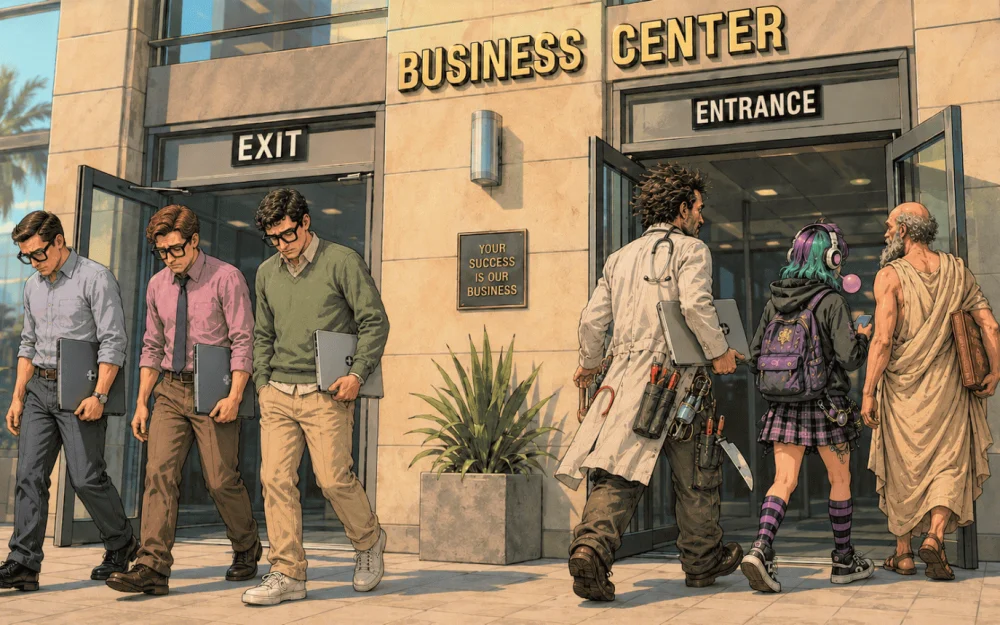
Dear reader, if you have read to the end, congratulations! This means that the future of changes no longer seems frightening to you, and you understand that it is possible and necessary to prepare for it. Digital twins are creating new professions: engineers designing virtual factories, specialists modeling the behavior of objects, wear, degradation, and aging. Some professions are gradually disappearing under the pressure of robotization, while others, on the contrary, are emerging thanks to technological advancements. Wishing you success, colleague!


Write comment