
- AI
- A
15,000 layoffs and a wave of bugs: the shocking connection between AI coding and Windows crash
Did AI play a key role in recent events?
Watching the events at Microsoft over the past few years has been as fascinating as it has been unexpected. The tech giant made a series of decisions that made using Windows less comfortable for users, and now many are switching to Apple and Linux in search of alternatives. Why did all this happen? Recent activity at Microsoft indicates that AI played a crucial role.
Let’s go back a bit to understand the context.
In early 2025, Microsoft CEO Satya Nadella stated that AI creates up to 30% of Microsoft code. This is quite a bold statement, and for many, it seemed to confirm the rationale behind Microsoft's significant investments in OpenAI.
Then Microsoft announced a massive layoff, totaling 15,000 people by the end of the year! Some departments were particularly affected: programmers made up 40% of the layoffs. For many, this looked like a replacement of some software engineers with AI solutions.
Then the technical difficulties began.
Throughout 2025 and into early 2026, each Windows update seemed to bring new problems. Performance decreased, issues arose with applications, cloud storage, core functions, recovery tools, and some updates caused serious boot problems.
Microsoft had to release a large number of patches and temporary fixes to address these issues, but the consequences were significant. Users began seeking alternatives, switching to Mac or Linux. According to some reports, Windows lost about 400 million users since 2022.
The question arises: are these two events connected - the active implementation of AI coding and the technical problems of Windows?
It is important to note that the code generated by AI has its own features and limitations.
Evaluate the capabilities of AI tools yourself
When discussing the role of AI in software development, it is crucial to understand the real capabilities and limitations of modern AI tools in practice. An objective assessment helps make informed decisions about the implementation of technologies.
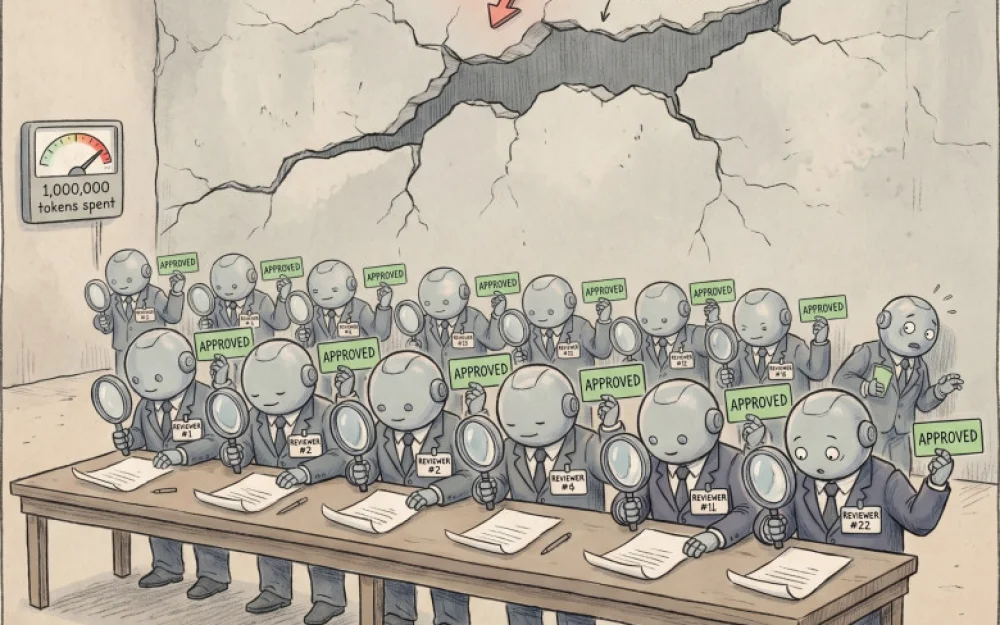
The report from Coderabbit showed that the code generated by AI contains 70% more serious issues compared to code written by developers. A 2025 study from METR found that coding AI tools can actually slow down experienced programmers since additional time is needed to review and correct the code. Notably, a survey of 500 software engineers showed that 60% of organizations do not conduct systematic assessments of the effectiveness of AI coding tools.
There is no direct evidence of a connection between the implementation of AI and technical problems in Windows. However, the timing coincidence seems quite remarkable.
Given this context, recent actions by Microsoft take on special significance.
In response to technical issues with Windows, Microsoft President for Windows and Devices, Pavan Davuluri, noted in an interview with The Verge: “The feedback from our community of passionate users and Windows Insiders has been crystal clear. We need to improve Windows in ways that truly matter to people.” To achieve this goal, CEO Satya Nadella created a new position of “Head of Engineering Quality” to ensure an adequate level of engineering quality across the company and appointed Charlie Bell, who previously led Microsoft’s security division, to this role.
It is important to emphasize that this is an assumption, but it gives the impression that the company recognizes the need to strengthen quality control. Especially considering that one quality control specialist may not be enough for a systemic solution to the problem.
This could be an important lesson that many tech companies will need to reflect on in the near future. AI cannot fully replace specialists, and attempts at such replacement may have unforeseen consequences. Ideally, if companies balanced the implementation of AI with maintaining a skilled workforce, the results could be more successful. While it is nice to see that Microsoft seems to be reevaluating its approach, the question remains whether large tech companies can draw deeper lessons from this. Time will tell.




Write comment