- AI
- A
Not Artificial Intelligence: How Scientific Work is Organized in Russian AI Laboratories in 2026
Scientific laboratories are becoming centers for attracting talented young researchers. In this article, we will discuss the work of scientists and what underlies the results of their work. We were assisted by Alexander Beznosikov - scientific supervisor of BRAIn Lab, director of the agent systems center at the Moscow Institute of Physics and Technology, head of the laboratory for federated learning problems at the Institute of Control Sciences of the Russian Academy of Sciences.
Every year on February 8, Russia celebrates Science Day — a holiday for people who discover new laws of nature, create technologies, and make our lives easier and more interesting. Just 10–15 years ago, outside of universities, very few spoke about machine learning and artificial intelligence. Today, however, it is one of the most discussed topics in Russian science.
The Russian scientific community in the field of AI has been developing by leaps and bounds in recent years: the number of specialized universities is growing, businesses and the government are eager to invest in technology, and enthusiasts are opening research laboratories.
Scientific laboratories are becoming centers of attraction for talented young researchers. In this article, we will talk about the work of scientists and what lies behind the results of their work. And helping us with this is Alexander Beznosikov — the scientific supervisor of BRAIn Lab, director of the agent systems center at the Moscow Institute of Physics and Technology (MIPT), and head of the laboratory for federated learning problems at the Institute for System Programming of the Russian Academy of Sciences.
How does a scientific laboratory work?
In modern Russian science, a laboratory has ceased to be a closed workshop for selected scientists. Today, it is a dynamic ecosystem where the key role is played not so much by age and academic degrees, but by the speed of involvement in real research. Our scientific supervisor, Alexander Beznosikov, believes that the structure of a scientific team is built on the enthusiasm of youth and the fundamental perspective of the older generation:
Science has always been done by students and graduate students. Moreover, the involvement of undergraduate students is a characteristic feature of the Russian system.
If in the West scientific activity often begins at the master's or doctoral level, and in China, on the contrary, students start research almost from the first year due to fierce competition, then Russia occupies an intermediate position. Already from the third year of their bachelor's degree, students, for example, at MIPT, actively engage in laboratory projects — and immediately as full-fledged participants in the research process. For many of them, a candidate's dissertation becomes more of a result of the scientific work done rather than the main goal.
At our MIPT, we have always been focused on applied science—in addition to the fundamental school traditionally established in Russian universities. But in the era of dynamic AI progress, the boundary between theory and practice has blurred. While just a couple of years ago the main emphasis was on publication activity (articles in top journals, presentations at international conferences, etc.), today the priority is gradually shifting towards implementation. Fundamental research has not gone anywhere—it still forms the basis of scientific reputation. But now our main task is to transform the results of analysis into tangible solutions.We want what we create to be something that can be touched in real life.
Entry Threshold: Less Fear, More Persistence
A career path in a scientific laboratory begins step by step: a student creates a trial project under the supervision of more experienced colleagues as part of a course, receives feedback from the instructor, the laboratory assesses the newcomer’s potential, and the young researcher evaluates prospects in the laboratory. If both sides are satisfied with each other, the work continues, and the student usually takes on several more projects.
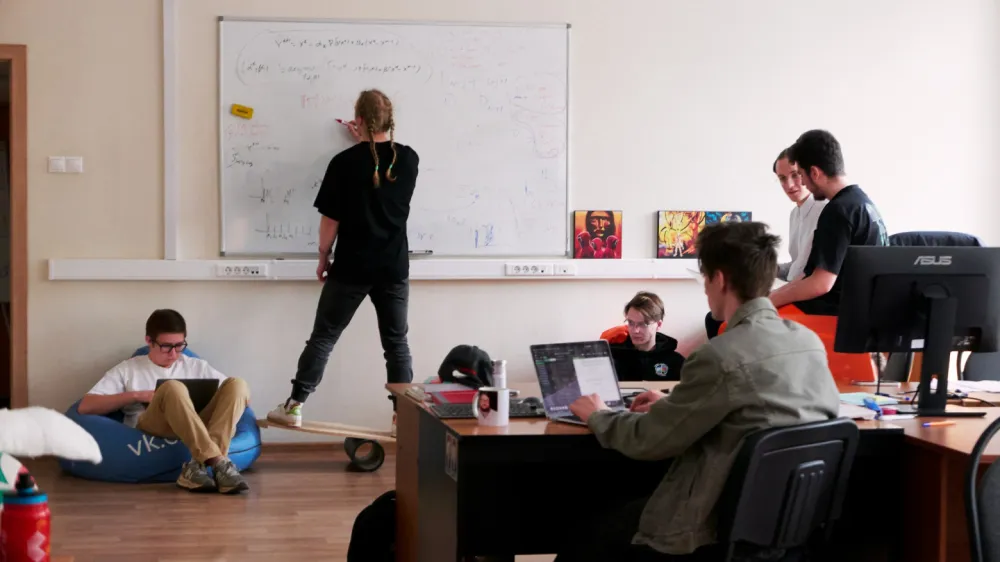
The first six months to a year require serious support because scientific work differs significantly from studying in its unpredictability of results. But after some time, students independently formulate tasks, conduct research, and even supervise newcomers. And after a couple of years, many already form their own groups of several people working on related tasks.
As for the financial side of the issue — I will be honest: the salaries of beginning researchers currently do not compete with the offers from companies for junior positions. However, this serves as a kind of filter: six months with a lower income become a test of genuine interest in science. Those who stay do so for the opportunity to tackle non-standard problems and participate in research that goes beyond commercial development.
The situation equalizes when a student becomes an experienced researcher. After working for two to three years in a laboratory, employees reach the necessary level of expertise, and their income is already comparable to salaries in IT. Of course, we do not consider extreme cases like stock options in startups, but we confidently compete on the "average hospital" level.
Scientists often balance between academia and careers in big tech, especially AI specialists. No one hinders this; on the contrary: it’s great when employees in a company solve the same research problems as in the laboratory. Both sides benefit: the company gains access to the latest technologies and publication activity, while the laboratory receives additional resources, data, and the opportunity to implement developments into real product challenges.
About us: what the laboratories of fundamental research in artificial intelligence at MIPT are engaged in
We are scientists from the laboratories of fundamental research in artificial intelligence at MIPT and the problems of federated learning at the Institute of Control Sciences of the Russian Academy of Sciences.
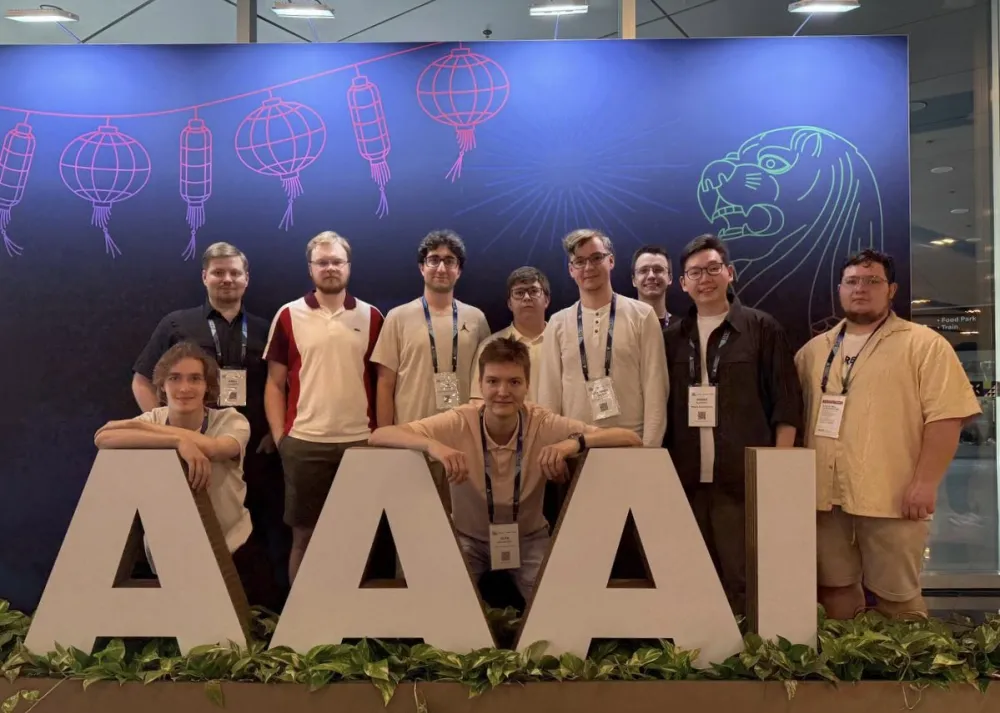
Initially, the scientific agenda of the laboratory was shaped around numerical methods. Indeed, modern machine learning is based on solving complex optimization problems. We study and develop both classical and new methods, paying special attention to numerical aspects — accuracy, stability, and convergence speed of algorithms.
Many projects have already gone beyond the scope of fundamental research, and students and graduate students are working directly with clients, creating products for real-world implementation. The main focus is now on training large neural network models for medical tasks, as well as developing methods for data protection and preventing threats that affect the quality of AI systems.
Subscribe to our blog to learn more about modern science in Russia! We are preparing a continuation, so your opinion is important to us. Please share in the comments what we should talk about first?




Write comment