- AI
- A
Tesla's profits plummet by half. Musk finds a way out - and it's not cars
Production of Model S and Model X ceases amid a 46% profit decline. Musk's pivot to robots is not innovation. It's a retreat.
Tesla delivered 1.79 million vehicles in 2025. That’s an 8% decrease from 2024, and honestly, I wasn’t shocked by that. What shocked me was what happened recently.
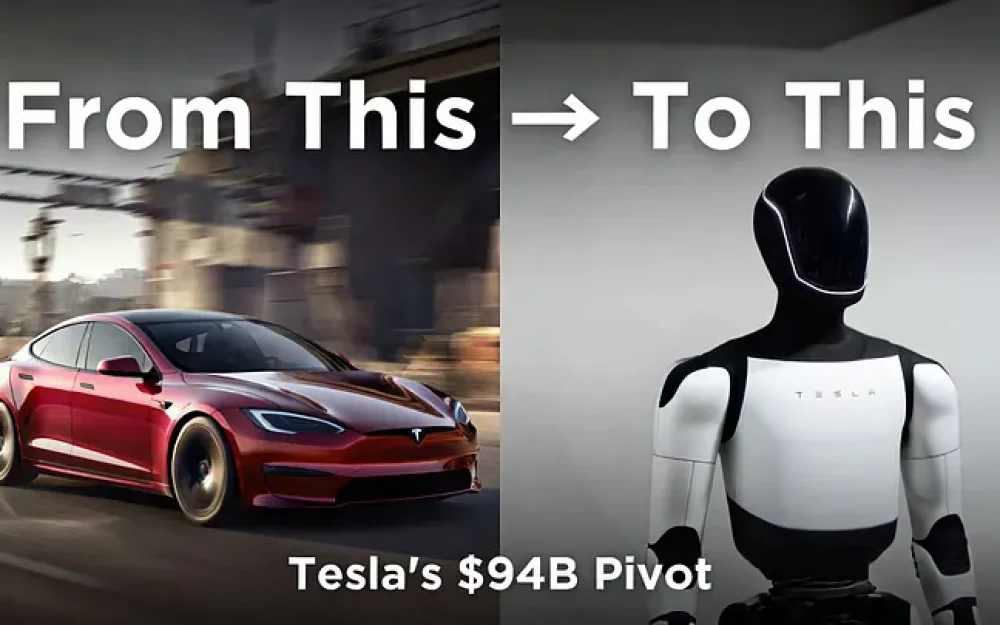
The production of the Model S and Model X is coming to an end, and the company has no plans to release replacements. No farewell tour. Just… that’s it. And Elon Musk’s justification? Tesla aims to go beyond the identity of just being a car company.
Let that sink in for a second. The company that literally defined the modern electric vehicle is stepping away from personal cars.
The numbers don’t lie (and they are ruthless)
Here’s how 2025 looked for Tesla: revenue fell by 3% to $94 billion. Not a catastrophe, of course. But profit? It plummeted by 46%. That’s the kind of number that makes investors break out in a cold sweat.
The fourth quarter was even worse. Profit collapsed by 61% compared to the fourth quarter of 2024. When you’re losing money that quickly, something has to change.
Two things killed Tesla’s momentum in 2025. In Europe, Chinese electric vehicle manufacturers entered the ring with prices that Tesla couldn’t compete with. BYD, NIO, Xpeng… they were no longer second-tier players. They were taking real market share with cars that cost 30-40% less than comparable Teslas.
In America, the federal tax credit for electric vehicles disappeared. And when I say the market crashed, I mean it really crashed. Tesla only sells electric vehicles, so when Americans stopped buying EVs, Tesla suffered more than anyone.
And here’s where it gets weird.
Production of the Model S and Model X will continue at the Fremont factory in California; the plant isn’t closing. It’s being repurposed to produce humanoid robots called Optimus.
Yes, robots. The ones that walk on two legs and are supposedly going to revolutionize the labor market.
Elon Musk has talked about robots as the future. But do we really have the tools to understand where this industry is heading? Services like BotHub allow experimentation with advanced language models and AI architectures directly from the browser – the very technologies that will shape the future of robotics and autonomous systems.
No VPN is required for access, and a Russian card can be used.
You can get 300,000 free tokens through the link for your first tasks and start working with neural networks right now!
I have been following Tesla since the first Roadster, and it feels like watching someone throw a winning poker hand to play roulette. The Model S defined the luxury electric vehicle segment. The Model X proved that electric SUVs can work. And now they’re simply… gone?
The Model 3 and Model Y will stay for now. Plus the Cybertruck, which is essentially a commercial failure wrapped in stainless steel, but that’s another story.
The real question that no one is asking
What will happen when the Model 3 and Model Y reach the end of their life cycle? Will Tesla completely stop producing personal vehicles?
Musk is betting everything – on robotaxis, humanoid robots, and selling self-driving software to other automakers. This is a massive pivot from "we will save the planet with electric vehicles" to "we are a tech company that makes some cars."
The thing is, I’m not sure this strategy makes sense. Tesla's brand capital is entirely built on cars. Features like the Supercharger network, wireless updates, and minimalist interiors – all are a result of Tesla's success in producing desirable electric vehicles.
Are you throwing all of this away for the pursuit of AI and robotics? In a market where Boston Dynamics, Figure AI, and a dozen Chinese companies are already light-years ahead in robotics development?
This seems reckless.
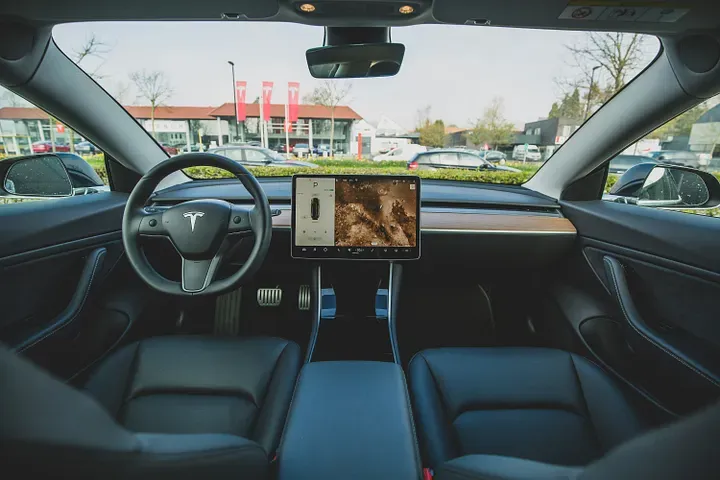
If you own a Model S or Model X, good luck with parts and service in five years. Tesla is already notorious for its poor support from service centers. Imagine the struggle to find parts for a model that is no longer produced by a company that has stopped being an automaker.
Current owners of Model 3 and Y should be asking themselves the same question. How soon will these models also be discontinued?
Tesla used to have a 10-year vision for automotive platforms. Now it seems like they are improvising from quarter to quarter, chasing what Musk thinks is cool this week.
The Uncomfortable Truth
Tesla’s results for 2025 prove what the company doesn’t want to admit: they are no longer special in the electric vehicle sector. Chinese manufacturers are making better cars for less money. Traditional automakers like Hyundai and Kia match Tesla's range and surpass them in build quality.
So instead of competing, Tesla takes its ball and goes home. Rebranding as a technology company allows Musk to claim a higher valuation and sidestep the ruthless automotive market.
But here’s the problem. Tesla has no track record in AI or robotics, other than marketing hype. Full Self-Driving is still not fully autonomous driving after a decade of promises. The Optimus robot looks impressive in videos, but barely manages basic tasks.
Meanwhile, companies that are genuinely focused on these technologies are eating their lunch.
I want to be wrong about this. I truly do. Tesla pushed the entire automotive industry towards electrification. That matters. But watching them abandon that legacy to chase Musk’s latest obsession feels like someone throwing away a successful restaurant to open a cryptocurrency startup.
Maybe I’m just bitter because I almost bought a Model S in 2023 and decided to wait for an update. It seems now I’ll be waiting forever.
The automotive world is changing faster than ever, and Tesla is betting that they can change even faster. We’ll see if that pays off. But right now? It feels like desperation dressed up as innovation.



Write comment