- AI
- A
"Arsik": How a Genius Self-Taught Man from the USSR Built a Robot in His Own Apartment
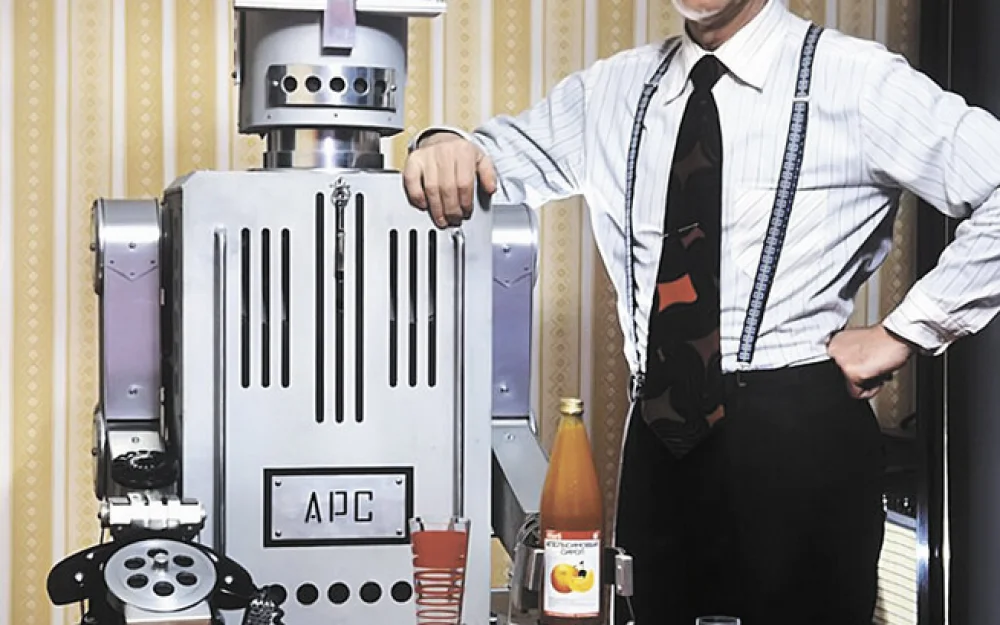
He had no budget of a large corporation. He did not even have specialized education. Nevertheless, this Soviet robot Kulibin managed to create an autonomous home robot that handled its not always simple tasks with flying colors.
Soviet Android
“Necessity is the mother of invention”, as the English proverb goes. For a drawing teacher at a Kaluga technical college, Boris Grishin, necessity was most acute: his mother Maria Vasilyevna was seriously ill, and sometimes she didn't have the strength to pour herself a glass of water or call an ambulance. And calling an ambulance was often necessary.
Grishin, by the way, never studied robotics professionally. He graduated from the Moscow Institute of Transport Engineers (MIIT) and after that got a job at a Kaluga technical college teaching drawing, and also worked part-time at a local school.
Work took up a lot of time, and his mother needed care. Then, like a true conqueror of fate — the archetype celebrated in the books of London and Cooper — Grishin decided on a bold, desperate and slightly mad move: to assemble a butler robot with his own hands, which would take over daily care. Thus in 1962 the concept of the Automatic Radioelectronic Secretary, or “ARS”, was born.
Unfortunately, we do not know exactly how the work on ARS, which Grishin affectionately called Arsik, was carried out. If technical diaries with notes on the R&D process in a particular Soviet apartment were kept, they have not been found so far.
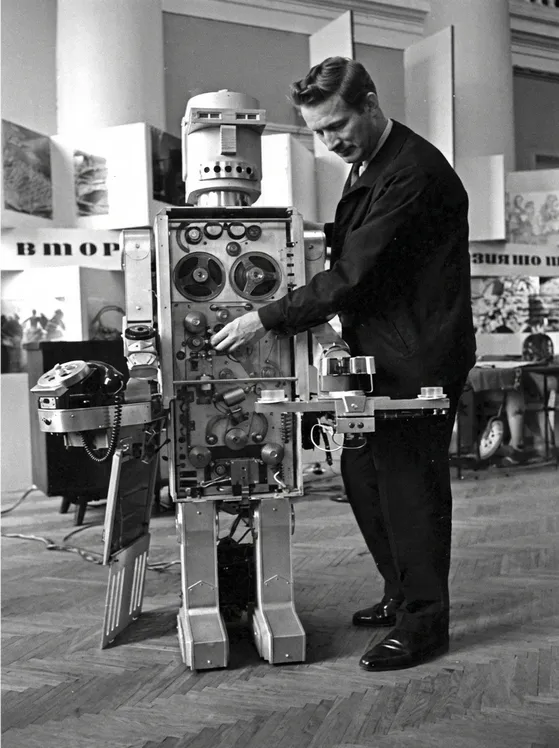
But we know that as a self-taught person, Grishin relied largely on intuition. And it did not let him down! As said Ivan Doronin, the design engineer who worked on the recreation of ARS: “Everything is very competently assembled — you can't slip a screwdriver in, but everything is in its place, you couldn't do better.”
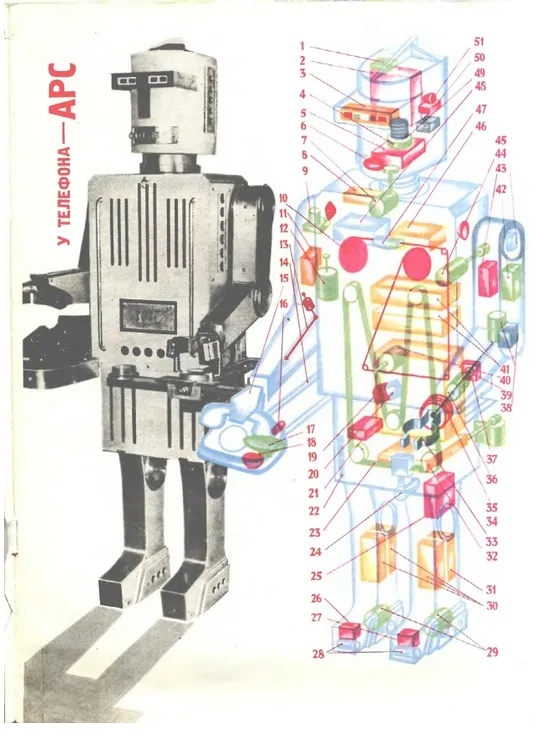
ARS weighed a good quintal — far from the "dystrophic" EngineAI PM01, which performed acrobatic antics in the air. The anatomy of the miracle butler included 13 electric motors, an electromechanical program-time device, feedback sensors, and other modules. By the way, due to its modular design, disassembling and reassembling Arsik was not difficult alone, despite its impressive weight of "one hundred".
So, what could this miracle of independent engineering thought already do?
Talented Mr. Arsik
His range of tasks included almost everything required of a competent butler, except that he couldn't hand his creator a hat and cloak. Or maybe he could.
Grishin's day began with ARS waking up his creator with energetic piano melodies and the cheerful voice of Nikolai Gordeev: that's how morning exercises on the radio began. After the invigorating gymnastics, ARS switched to secretary mode and, apparently, gave a brief summary of the upcoming day, recorded on a tape reel.
After the owner left, Arsik took over the duty. Apparently, the robot was equipped with a set of sensors that could respond to sound, temperature, and maybe even movement.
In particular, it was apparently able to recognize male and female voices by general acoustic characteristics and may have even been able to decipher voice commands by the length of the spoken phrase. For example, the command "Call an ambulance" has a special rhythmic pattern dictated by the number of syllables in the words — due to this, it could be read by the robot. At least a similar principle was used in the American robot Elektro from the 1930s, which, with an even simpler device, understood the commands spoken by the operator precisely by the rhythm of the phrase.
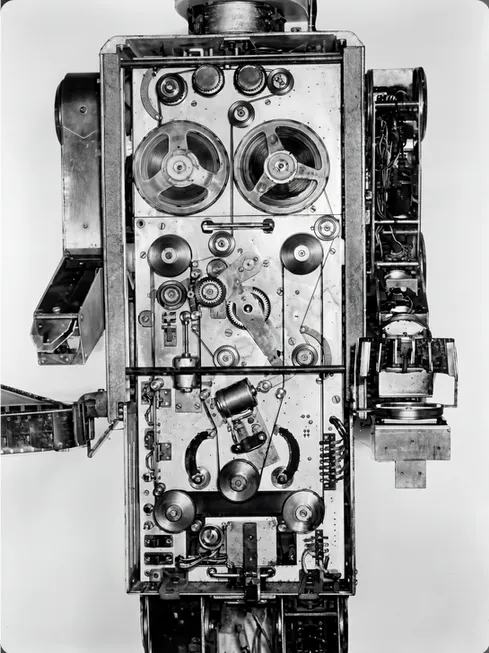
His speech was provided by an 18mm reel tape recorder equipped with a proprietary tape feed mechanism. A second tape recorder with 6mm tape was needed for recording incoming calls when the owner was away. Standard tasks were read by magnetic heads, whose operation was controlled by signals from a stepping head, and were recorded on wide tape. Telephone data, on the other hand, was recorded separately on narrow tape. Thus, Arsik successfully functioned as an answering machine.
So that the inventor's mother would not be bored, ARS was taught to turn on the TV on schedule when the episode of “The Zucchini 13 Chairs” was on air or the next broadcast from the Bolshoi was airing. His duties also included monitoring the temperature in the apartment, which he regulated himself, opening the door if Grishin was not at home, and turning the lights on and off.
Thus, ARS was far ahead of its time: it was not just a quirky robot, like a living illustration straight out of the Strugatsky brothers' works, but also an autonomous “smart home” system. By the way, the first overseas analogue of such a system — the Westinghouse ECHO IV — appeared in 1966, right when ARS was already fully finalized.
There was also a special tray on Arsik's body, on which he delivered medicines, and when guests arrived, he also brought out sparkling water. Using his left manipulator arm, he dispensed the fizzy drink into glasses in measured portions.
The arm had several drive and gripping units. The motor, worm, and worm gear provided rotation and power transmission, while the arm's grip was regulated by a return spring and a solenoid plunger unit. Remarkably, Arsik did not spill a single drop, nor did he crush fragile flutes into glass shards. And this at a time when neither microprocessors nor modern sensors existed at all.
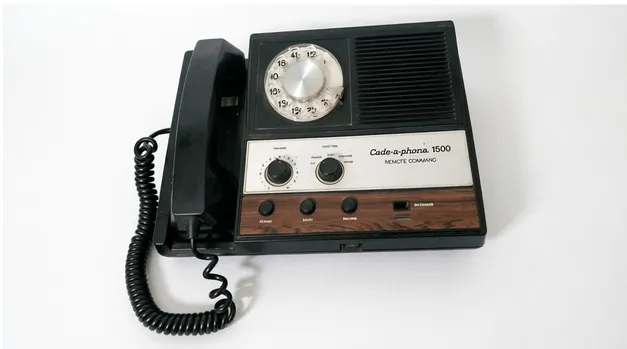
Interestingly, one of the first mass-produced answering machine models in the US, the Code-a-Phone developed by Ford Industries and Western Electric, hit the market once again in 1966, the fateful year for ARS.
Robot Arsik is a superstar
So, in 1966, the magazine Tekhnika Molodezhi announced a competition to build the best android robot, promising a substantial prize to the winner — a motorcycle that was far from cheap for a Soviet citizen. Grishin could not pass up such an event, and Arsik, in the form of a detailed technical specification with blueprints, was sent to conquer the Moscow editorial office of the magazine.
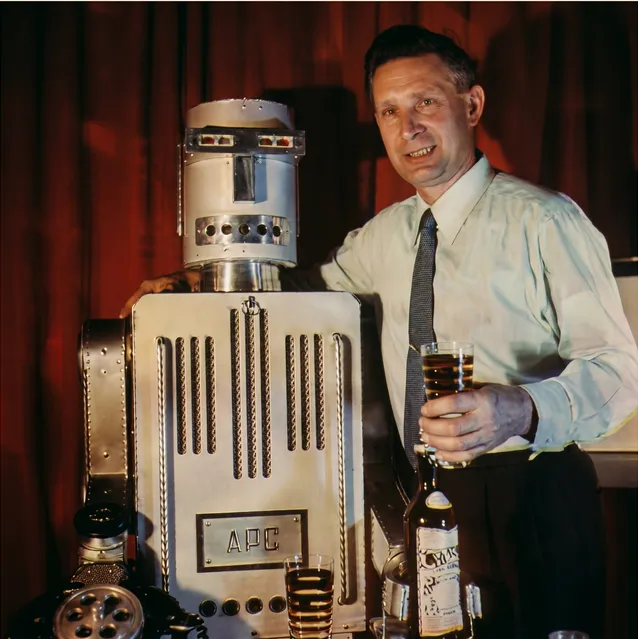
Its debut at the 1967 competition was a full-blown sensation, despite other worthy contenders such as the Sibiryak-2 robot, which was capable of working as a ticket taker.
That said, ARS did not win — the top honors, along with the motorcycle, went to a robot named Neptun, developed by a team led by Boris Vasilenko. Neptun, which weighed twice as much as ARS, was quite impressive. It moved at speeds of up to 5 km/h, navigated obstacles in its path autonomously, and reacted to sound, light, and radiation — at the very least, a practical concept useful, for example, for work in areas contaminated with radionuclides.
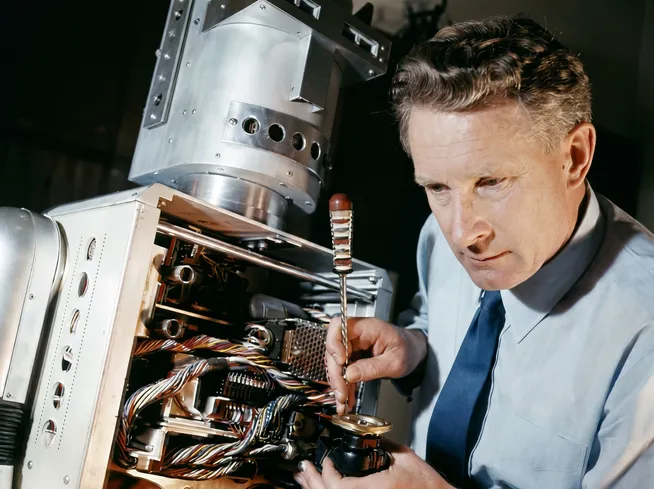
But Arsik could never have been put into mass production under any circumstances. On the other hand, it captured the imagination as a true servant robot, as if it had stepped right off Asimov's pages about the distant future, humming as its motors ran. And of course, its phenomenal anatomy did not go unnoticed, winning ARS the prize for "Most Complex Design". History, however, remains silent on what the alternative prize was supposed to be, as the motorcycle had already been awarded to the winning contestant.
Vita brevis, ARS longa
Unfortunately, after ARS's all-Union triumph, Grishin did not continue working in robotics professionally. In any case, we know of no other similar models that came from under his ruler and drafting pencil.
The brilliant self-taught man was no longer around by 2015, right when Boston Dynamics unveiled Spot to the world — the robot dog that spread across memes and videos with humorous voiceovers using misanthropic bot voices. It's a pity, of course, that we have no way of knowing what thoughts went through Grishin's mind as he witnessed the dawn of the robotic revolution firsthand.
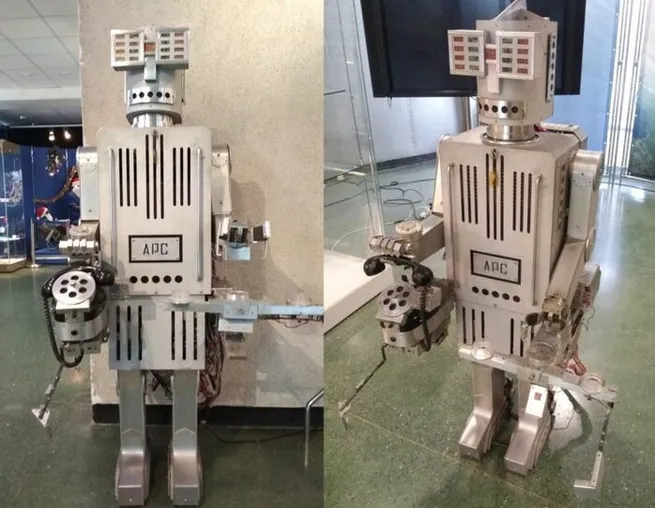
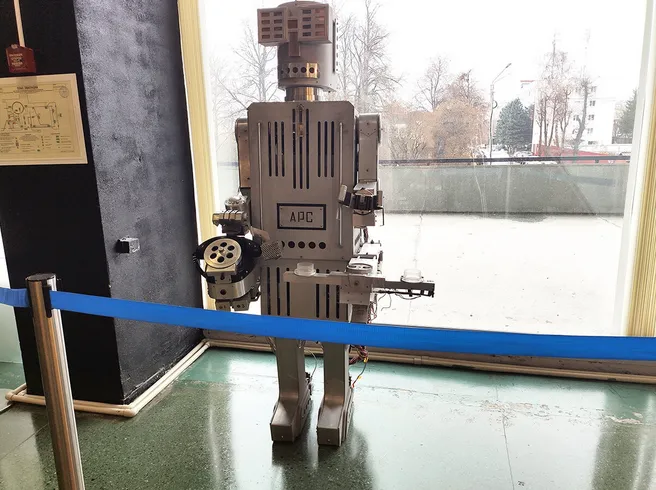
ARS, fortunately, is still alive to this day. It was kept by the author's family for some time as a 100-kilogram family heirloom. But in 2016 it was transferred to the K. E. Tsiolkovsky State Museum of the History of Cosmonautics, where it underwent restoration and remains to this day, delighting young viewers in particular.




Write comment