- AI
- A
SpaceX is building a megaconstellation for AI, but the laws of physics cannot be bypassed for any amount of money
No matter how you feel about artificial intelligence — especially large language models and chatbots that work on it — the reality is that humanity is currently building and expanding the infrastructure to support it. These are massive networks of data centers, consuming electricity and water, and their construction is increasingly conflicting with the needs of nearby residents.
It is precisely because of these problems that the idea arose: what if AI data centers were moved into space? One company, SpaceX, recently announced plans to build a mega-constellation of a million satellites for this purpose.
Is this an example of an emerging technology capable of solving the problem of competition for limited resources? Or is it, like Hyperloop once was, a beautiful wrapper for an unachievable idea — where the concept itself doesn’t violate the laws of physics, but practical constraints make it so impractical that delivering on the promise is impossible?
It turns out that on the way to creating a working network of AI data centers in space, there are five serious obstacles. Three of them, in principle, could be overcome by technological development. The last two are imposed by the very physics of the Universe. And most likely, it is they that will put an end to the whole venture.
5. Astronomical launch costs
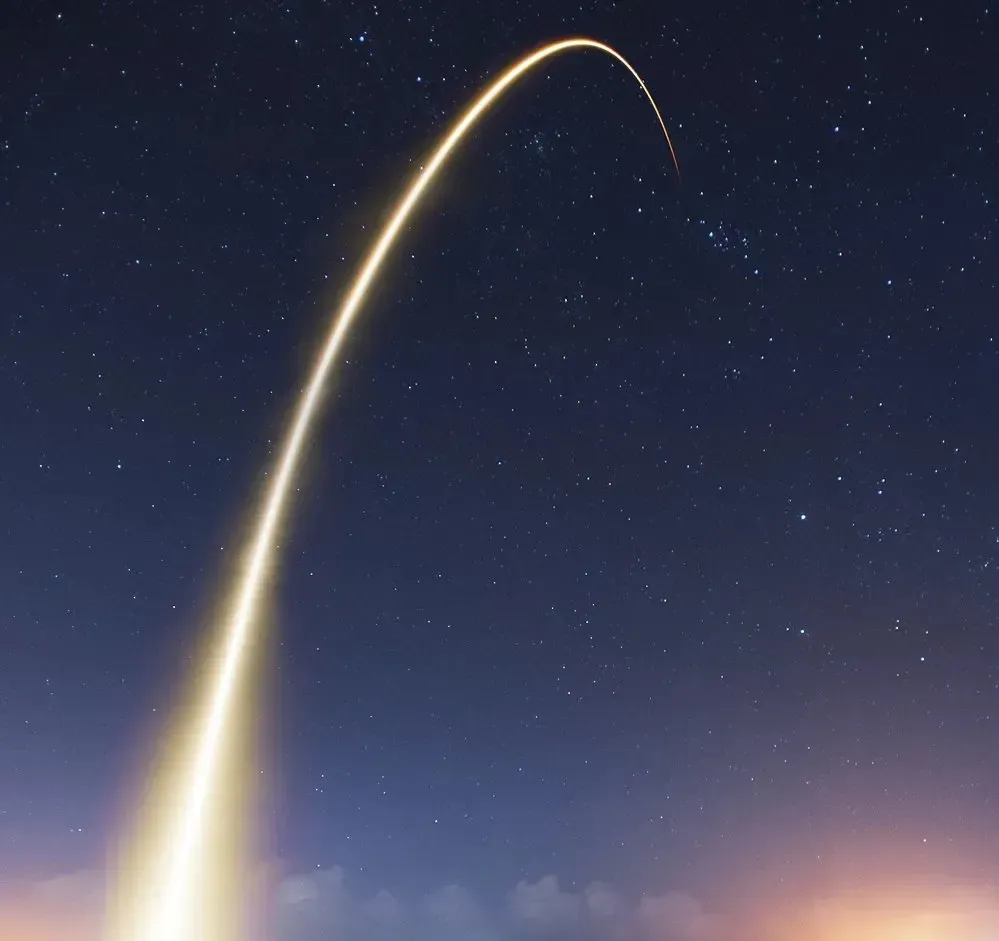
The two most important technological breakthroughs in recent years have occurred in rocket engineering: the ability to safely land and reuse rockets, and the related radical reduction in the cost of sending mass into low Earth orbit.
The first American launch vehicles for satellites — the Vanguard family — cost about a million dollars per kilogram. With a typical satellite mass of around 800 kg, this meant a launch cost close to a billion dollars in today's prices. Since then, prices have been falling dramatically.
During the Space Shuttle era, the cost dropped to about $50,000 per kilogram. In the 2010s, with the emergence of private companies like Arianespace and SpaceX, it fell below $10,000 for the first time. Now, with reusable rockets requiring minimal maintenance between launches, we are approaching the coveted $1,000 per kilogram mark.
With competition between Russian and Chinese government programs and private companies like Rocket Lab, SpaceX, and Arianespace, launch costs are no longer prohibitive. Moreover, they will likely continue to decline. This obstacle — despite how often it's mentioned — is the easiest to overcome through further economies of scale.
4. The Impossibility of Repair and Upgrade in Orbit
This objection, which, incidentally, was also raised by Sam Altman, is also primarily economic. AI data centers need to be optimized for computationally intensive tasks: training and running machine learning models, parallel processing of AI and LLM workloads, using high-bandwidth memory, GPUs and TPUs, as well as high-speed interconnects.
These specialized data centers require not only specialized chips and architectures, but also a colossal amount of energy. While a regular computer uses a CPU, the GPUs and TPUs used in AI data centers consume many times more energy. As of December 2025, the average server rack in an AI data center consumes 60 kilowatts or more — compared to 5–10 kilowatts for a standard data center.
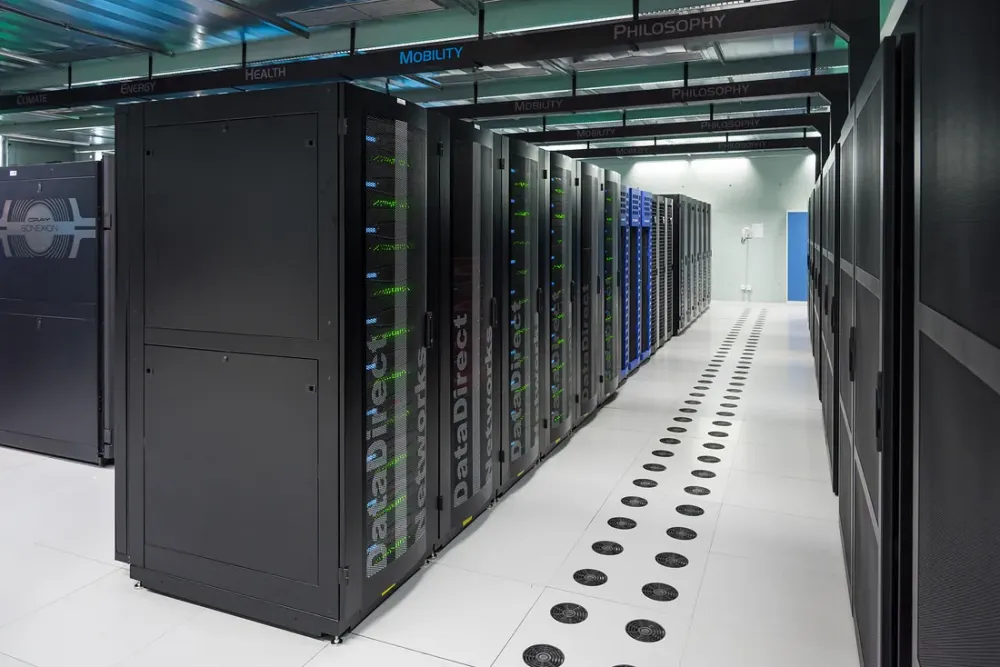
On Earth, there is a whole conveyor belt for detecting and replacing faulty components: continuous monitoring of load, temperatures, events, failure history, and battery status. As soon as any parameter goes out of bounds, the urgency of intervention is quantitatively assessed and further actions are determined. This is how we do it now — on Earth.
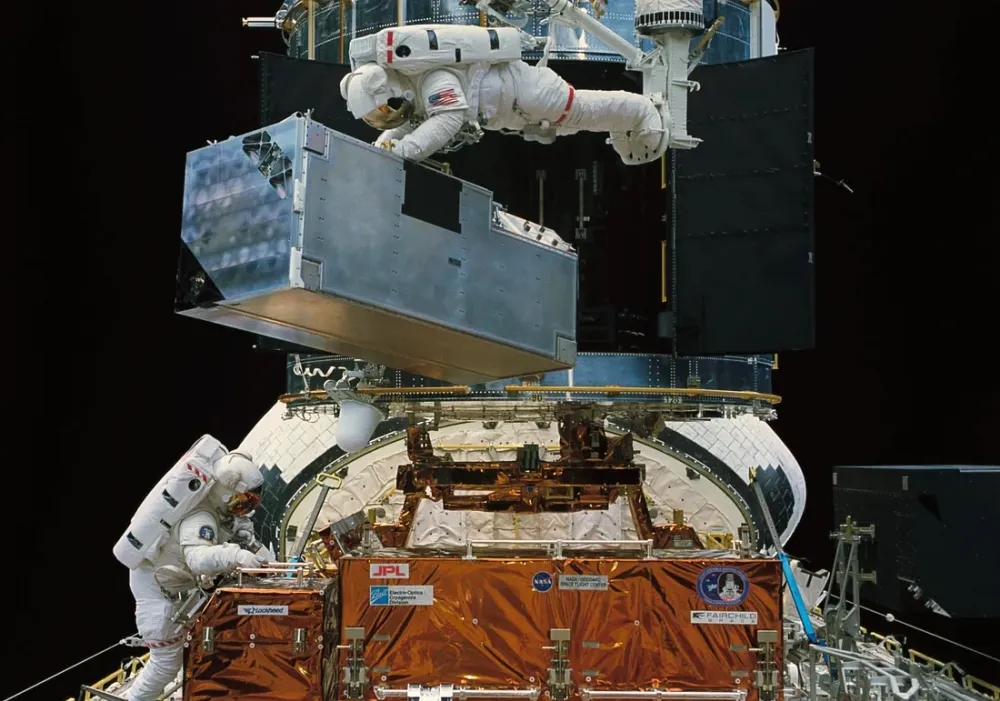
In space, we can have the same sensors. But problems can only be solved in two cases: if they can be addressed remotely — through a reboot, a software command, or automatic system switching — or if a repair crew can arrive. The second option is practically unfeasible in space.
Therefore, many problems in orbit will require not repair, but the launch of a new satellite to replace the malfunctioning one. Again, this is an economic argument. With a sufficient number of satellites and the pace of launches, this obstacle itself might prove surmountable.
However, while SpaceX dreams of a million satellites, AI works just fine here on Earth. Services like BotHub provide access to leading global neural networks — GPT-5.4, Claude 4.6, and others — directly from the browser.
3. Energy Supply
Now it gets more serious. Energy generation is a complex task. On Earth, we get energy from chemical combustion reactions, nuclear fission, wind, sun, and hydroelectric power. But beyond Earth’s environment — without water, air, and a solid surface — most of these methods don’t work. In space, we essentially have two options:
Solar panels that collect energy from the Sun in a vacuum.
Radioisotope thermoelectric generators, where energy is released during the decay of radioactive material.
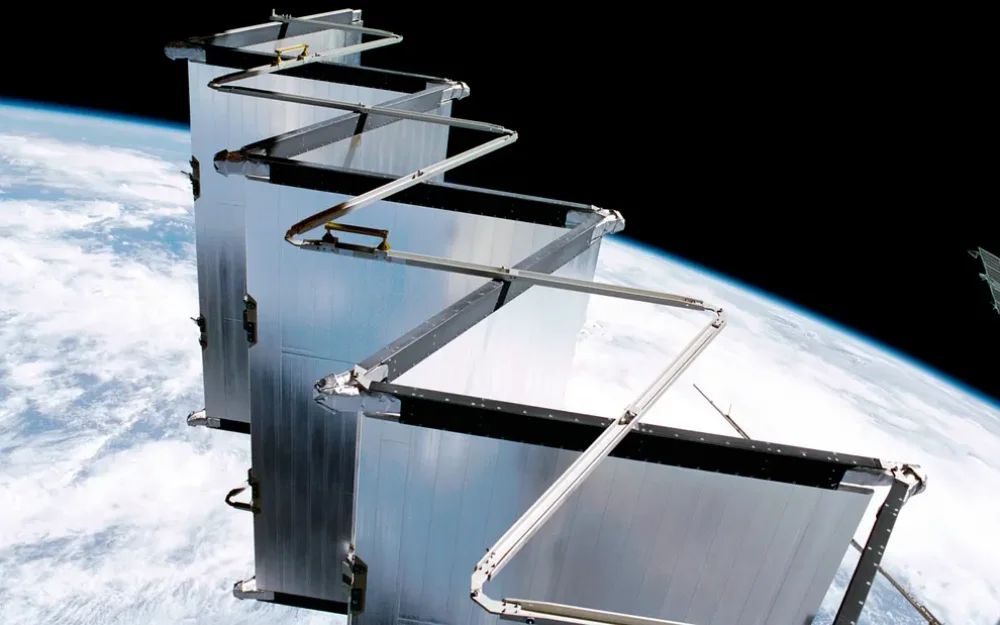
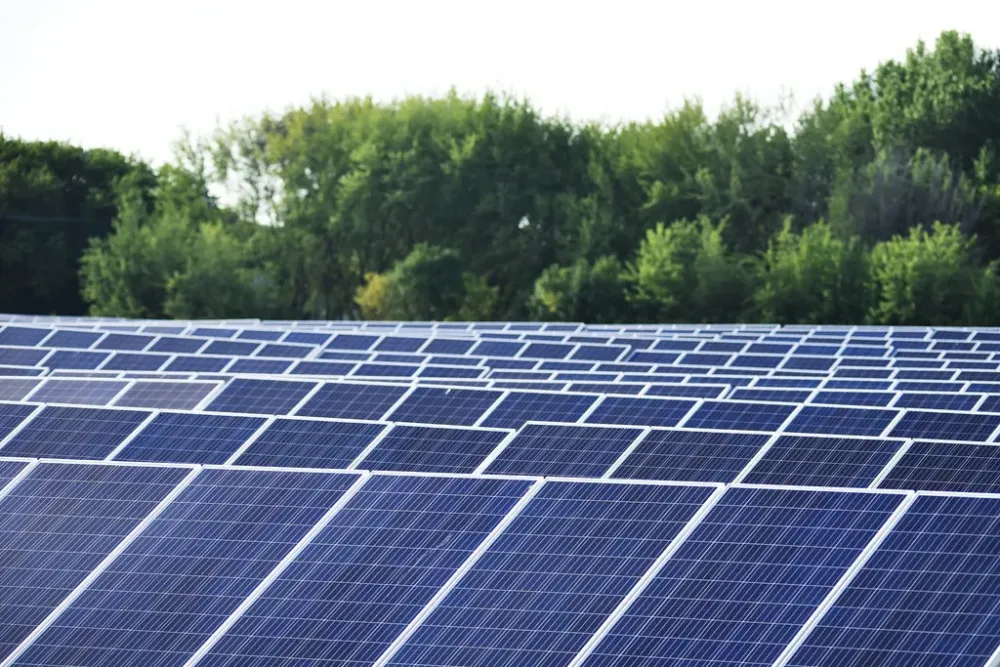
Radioisotope generators are complex to produce and are usually only used for deep space missions. For large constellations of satellites, there is no real alternative to solar power. With a maximum efficiency of solar panels around 20%, the only way to increase power is to increase the area of the panels.
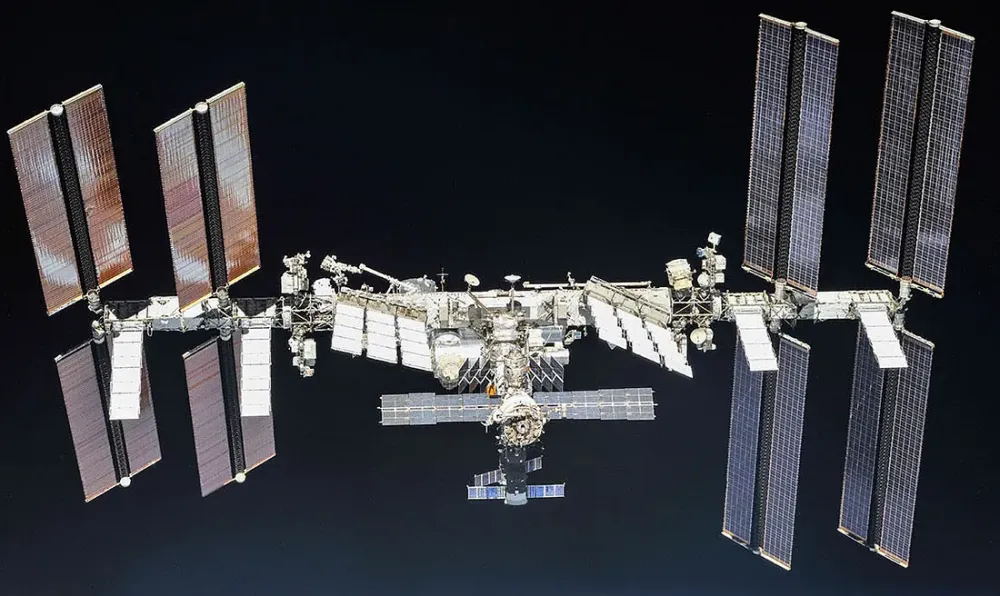
For the equivalent of one AI data center server rack — 60 kilowatts — a square of solar panels approximately 16 by 16 meters will be required. For comparison: the International Space Station — the record holder for the largest solar array in space — generates about 120 kilowatts. This is only twice as much as needed for a single rack.
A constellation of a million satellites would bring the total power to 60 gigawatts — about 3% of all global solar generation. Implementation would require creating entire industries from scratch: from mining rare elements to manufacturing and assembling specialized space panels. The feasibility of this at the moment is highly uncertain.
2. Cosmic Ray Errors
Here we transition from technological problems to problems dictated by the fundamental laws of physics.
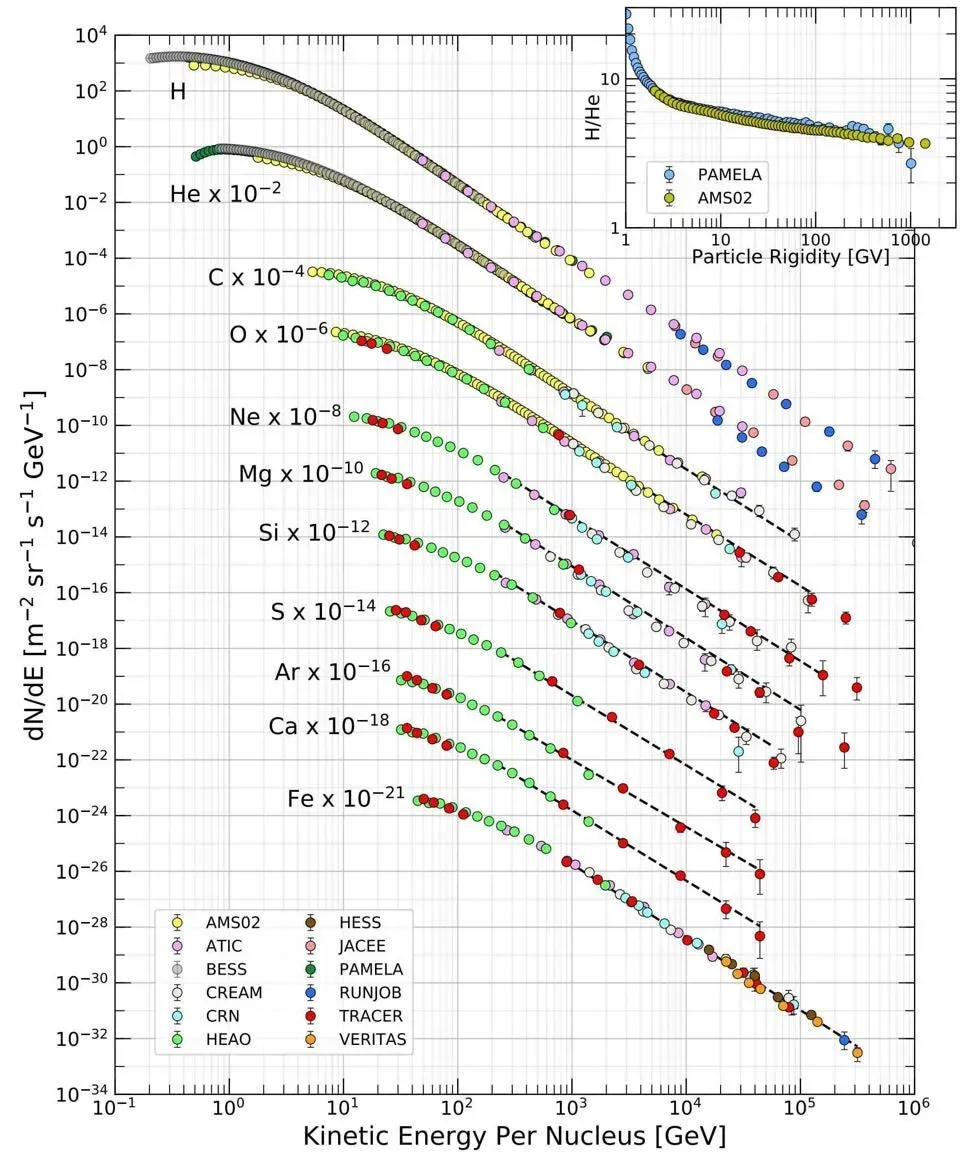
From the Sun, stars, white dwarfs, neutron stars, black holes, accretion disks, and any other sources of heated, accelerated matter, fast charged particles — cosmic rays — travel. These are mostly protons, helium nuclei, electrons, positrons, rare antiprotons, and heavier atomic nuclei. They move at speeds close to the speed of light. But here, on Earth, they rarely affect our daily lives.
Two reasons. First: Earth's magnetic field has a protective effect, directing most particles away from the planet — except near the poles, where auroras occur. Second: The atmosphere has a tremendous "braking ability," causing cosmic rays to produce cascades of secondary particles that dissipate energy, so only low-energy particles reach the surface.
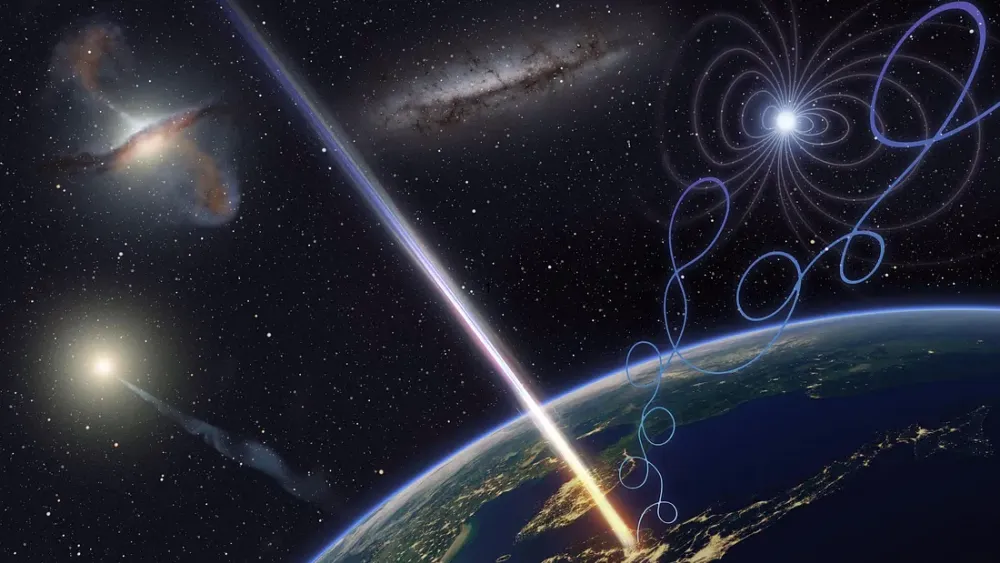
When a cosmic ray hits an electronic data storage device and is absorbed, it most often causes a "bit flip" — changing a 0 to a 1 or a 1 to a 0.
It sounds trivial. But it could mean the difference between "2+3=5" and "2+3=37." Or between a positive and negative bank account balance. In the context of a large language model — between a correct translation and a wrong one, a correct medical diagnosis and an incorrect one, a venomous snake and a harmless one. The consequences range from unnoticed to catastrophic.
In space, there is no atmosphere to protect satellites, and the Earth's magnetic field provides minimal protection. If you do not plan to duplicate or triple every AI data center (doubling or tripling the costs), you will have no way to protect against such errors. A flipped bit remains flipped, and it can only be detected if there are backup systems for verification.
On Earth, such errors are extremely rare. In space, they occur constantly. No physical shielding can stop them. Cosmic rays are real, and as orbital AI data centers become larger and more complex, they will be increasingly vulnerable to these errors.
1. The Cooling Problem
Here’s the main issue. The central, fundamental problem of operating a system in space that consumes a huge amount of energy. How do you prevent it from overheating, melting, degrading, and ultimately short-circuiting?
On Earth, two things help us. The atmosphere: air dissipates heat from hot sources, sometimes with the aid of fans and enhanced airflow. And water: water cooling is many times more effective than air cooling.
A clear illustration: if you stand in the cold outdoors, you lose heat relatively quickly. But if you immerse yourself in water of the same temperature, heat loss increases by several times—that's why hypothermia is so dangerous for those who find themselves in water at near-zero temperatures. It’s the interaction with molecules that effectively dissipates heat. The higher the frequency of these interactions, the faster the heat is dissipated.
None of this exists in space. The only way to cool a spacecraft as a whole is through radiation. Even if there is a cooler system on board, it merely moves heat from one point to another. By cooling one part of the system, you make another part hotter — and that part can shed heat only one way: by radiating it. Thermal radiation is a slow, inefficient, and frankly insufficient cooling method for such a power-hungry system made of sensitive electronics.
The consequences of insufficient cooling are easy to list: thermal errors, short circuits, breaking of connections between components, and ultimately, the melting of the most heat-sensitive elements — such as lead-based solder.
When electronics overheat — they fail. When you consume a lot of energy — you inevitably produce a lot of heat. If you do this in space — you can't use air or water cooling. Only radiation. And there is no physically possible way to passively cool a 60-kilowatt AI data center server rack quickly enough to avoid problems.
There is a popular saying: never bet against an innovator, especially if they already have a track record of "impossible" achievements. But the only thing that is truly impossible is to break the physical laws that govern reality at a fundamental level. As Scotty from "Star Trek" said: "The laws of physics cannot be changed." Until a reliable method for addressing the overheating problem, which is inevitable for an AI data center in orbit, emerges, we can accurately predict when and how any such venture will fail.





Write comment