- AI
- A
Top free neural networks for generating and editing images
Everyone has moments when the perfect visual is already ready in their head - clear, detailed, exactly what is needed. You open stock images - not it. You dive into Canva - honestly, a compromise on a compromise, and you don't want to mess with Photoshop.
Sound familiar?
And now a different scenario: you simply describe in words what you have in your head - and within seconds, the image is already on the screen. And it's exactly what you wanted. Sounds suspicious? We understand. But this is not magic or an advertisement for a self-development course - it's just the year 2026.
Modern neural networks for generating images can do things that would have made designers twitch a couple of years ago. A photorealistic portrait? Sure. A surreal landscape where the ocean flows upward? Easy. A cat in a samurai suit against the backdrop of neon Tokyo? Already done while you were reading this paragraph.
GPT Image 1.5
Perhaps the most obvious choice for those who already use ChatGPT. Image generation is integrated directly into the interface - no third-party services, no separate tabs.
Under the hood, GPT image generation works - a fundamentally new approach compared to the previous DALL·E 3. The model excels at accurately following prompts, can embed text directly into images, and works with uploaded photographs.
One of the main features is iterative work. Generation is natively built into GPT, so images can be refined directly in the dialogue. The model retains the context of the conversation and maintains consistency. For example, when developing a character for a game, their appearance will remain recognizable from iteration to iteration.
In December 2025, an update arrived. The new version GPT Image 1.5 promises more accurate adherence to instructions, improved editing, and generation speeds up to 4 times faster. Now, when editing an uploaded image, the model only changes what it is asked to, while keeping the lighting, composition, and appearance of people unchanged.
As for the pricing: the free plan allows for 2-3 generations per day. Each slot resets exactly 24 hours after a specific generation, not at midnight — so it's not profitable to use up all attempts at once.
Generation works better with English prompts — the model conveys details and style more accurately. The Russian language is understood normally, but sometimes the results are slightly less predictable.
Result
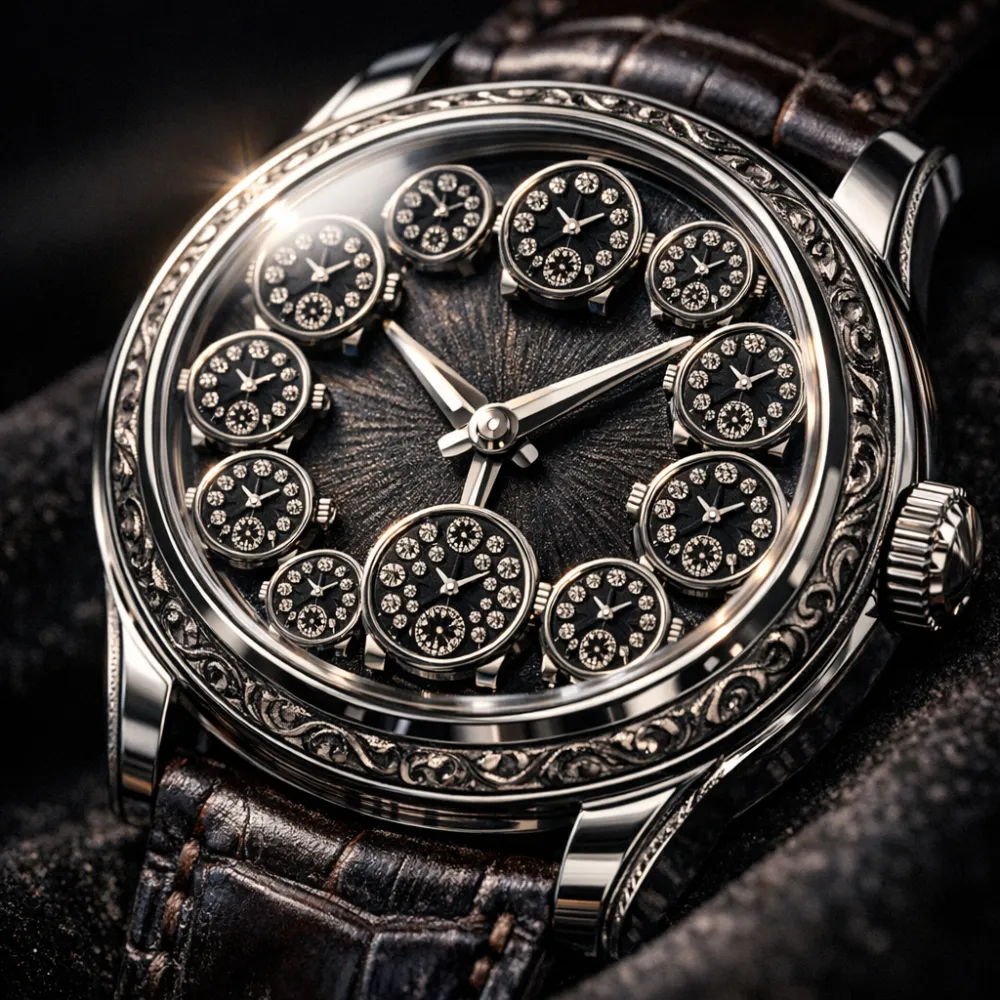
And here is the more ambitious twin brother of the first version. The neural network clearly decided not to slack off and honestly tried to cram even smaller details into the tiny dials, as requested. Of course, the AI still hasn't learned to count to twelve and lost one of the hour markers somewhere in the process of creative struggles.
FLUX

FLUX is a series of text-to-image models from Black Forest Labs (BFL), a German company founded by former Stability AI employees. It sounds like a modest summary, but there is something serious behind this: this very team once created Stable Diffusion. On November 25, 2025, BFL released the FLUX.2 model family, consisting of Pro, Flex, Dev, and Klein. The flagship of the line is FLUX.2 [dev], a 32-billion parameter model for generating and editing images, including with multiple references simultaneously.
One of the main advantages is working with references. FLUX.2 Pro accepts up to 10 reference images at a time, with the first six processed with maximum attention to detail, while images from the seventh to the fourteenth influence the overall composition.
The image quality is also something to boast about. FLUX.2 generates images up to 4 MP compared to 1 MP for FLUX.1, making it suitable for printing, high-quality digital materials, and cinematic storyboards. The typography is impressive as well: the model accurately renders text on signs, products, logos, and interface layouts — where previous models consistently failed.
In January 2026, another update was released: the FLUX.2 [klein] family - the fastest models in the lineup, capable of generating images in a fraction of a second on consumer GPUs.
As for access: FLUX.1 Schnell is available as open-source under the Apache license, Dev - as source-available under a non-commercial license, and Pro - a proprietary model available only through API. In December 2025, the company raised $300 million in a Series B round, bringing its total valuation to $500 million.
Result
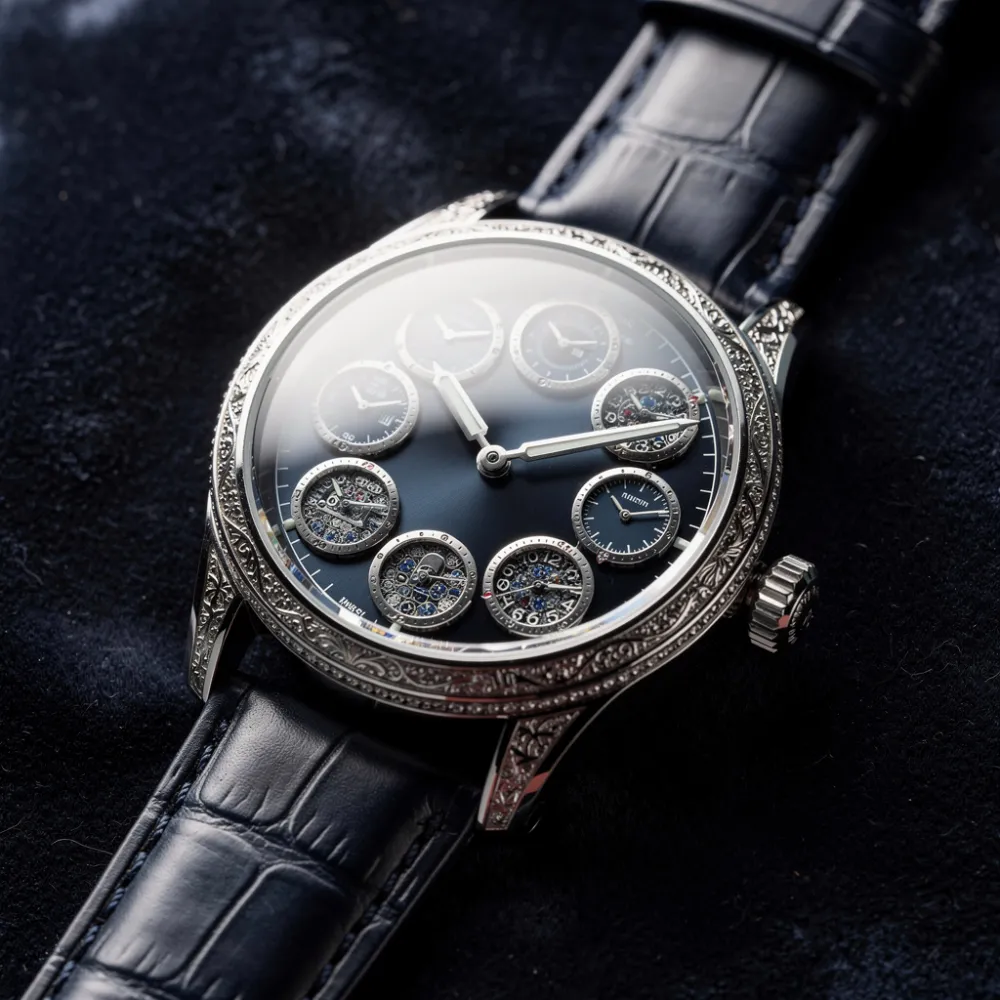
The neural network piled all the small dials together at the bottom, leaving the upper half empty. At the same time, it replaced some of the small clocks with tourbillons. Yes, the image turned out gorgeous, with expensive highlights and engravings, but as a clock, it's a complete failure. And out of 12 divisions, it made only 8.
Reve Image
Reve Image appeared literally out of nowhere in March 2025 - and immediately topped the Artificial Analysis leaderboard, where it remains to this day. A good start for a service that few people have heard of. The company is based in Palo Alto and intentionally stays small, with a team of former top specialists from Google Brain and NVIDIA.
Notably, the text handling is exceptional: Reve is one of the market leaders in typography. Unlike many models that produce nonsense, the service accurately renders text on signs, t-shirts, and newspapers.
In terms of functionality, the service is a full-fledged editor, not just a generator. You can edit already created images: improve quality, remove backgrounds, change sizes, and refine details. This provides much greater control over the final result.
The model understands the placement of objects, works with references, and supports editing at the level of individual objects, background removal, and upscaling. When editing, you can leave text notes directly on the relevant areas of the image - and the model will rework exactly those.
As for versions: the Reve 1.5 Preview model offers more photorealistic images with improved detail, lighting accuracy, and texture sharpness. The interface in 2026 received an update: it is now a clean single-panel layout, where everything is at hand and you can focus on working with the canvas.
Regarding the tariffs: the credit system has gone to the past. The free plan provides a limited number of generations, while the paid Pro plan offers 100 times more for $20 a month, plus private images.
Result
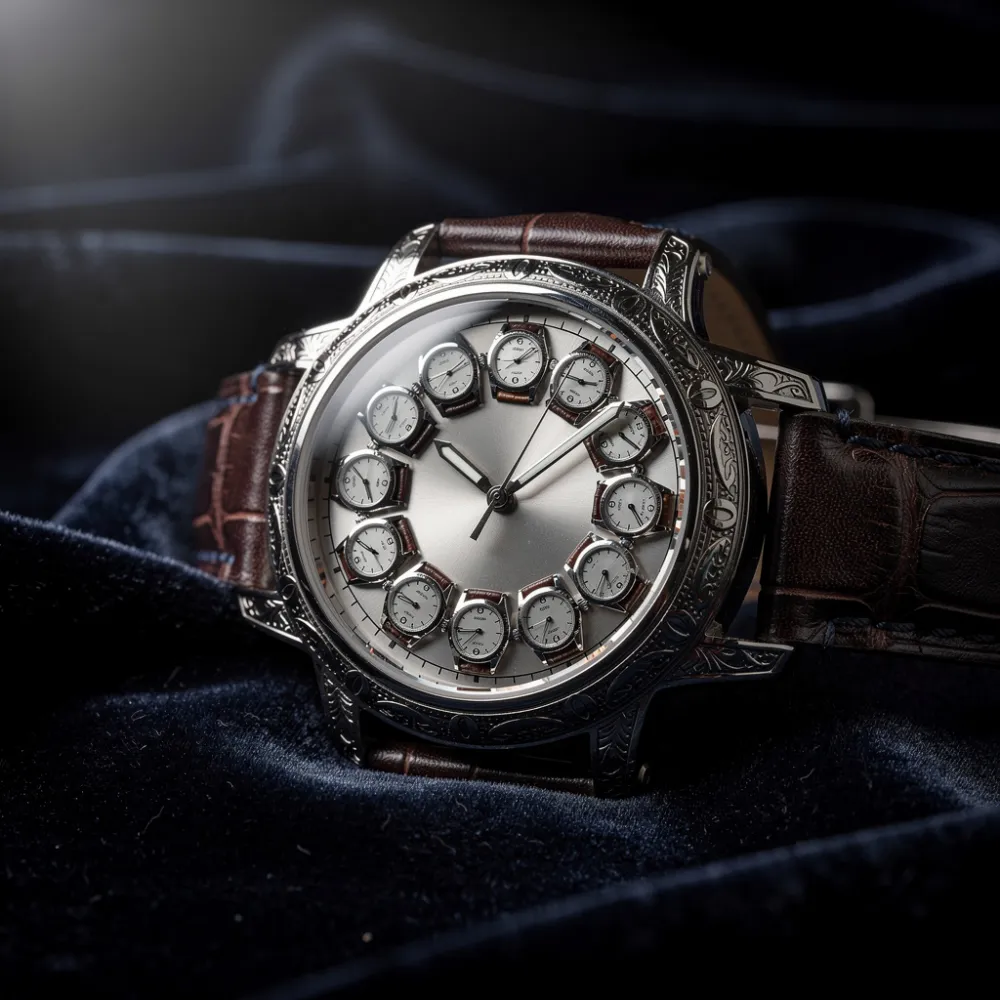
Instead of implementing a neural network, it simply attached clocks on top, like small alarms. Of course, they once again overslept recursion, but for mathematical abilities and a neat parade of clocks - a solid three with a plus - 13 dials. The result is still mediocre.
MAI-Image-2
I was scrolling through the Arena.ai leaderboard - and Microsoft immediately caught my eye. MAI-Image-2 debuted straight in fifth place in the Image Arena, showing significant growth across all seven categories compared to its predecessor - especially in text rendering, where the increase was +115 points. Then the model even made it into the top three leaders.
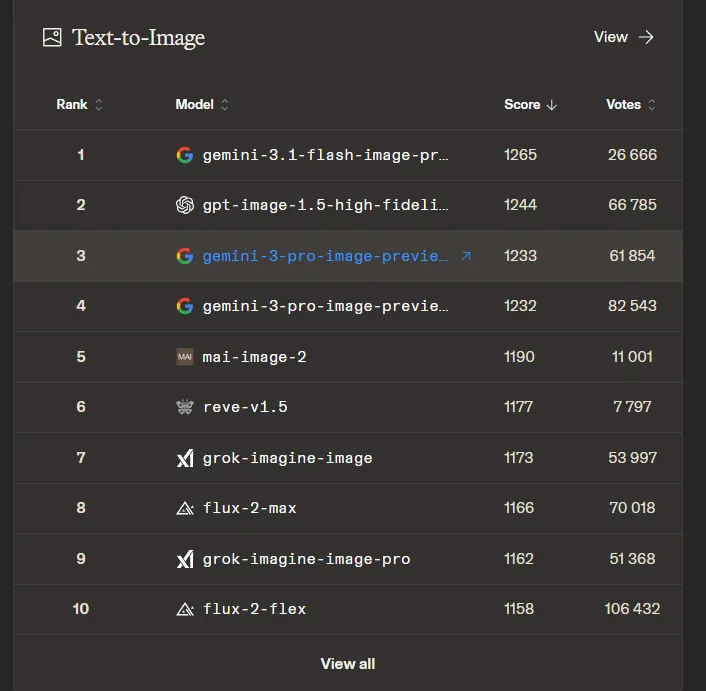
A year ago, Microsoft was generating images for Bing and Copilot almost entirely using OpenAI's models. Now the company has its own tool - and it immediately outperforms competitors. Unlike DALL-E 3, developed by OpenAI and integrated into Microsoft products through a partnership, MAI-Image-2 is a model created by Microsoft from scratch. MAI-Image-1 debuted in ninth place on the leaderboard in October 2025. Five months later, the second version is already in the top three on the most popular crowdsourced leaderboard in the industry. The pace, it must be said, is atypical for Microsoft.
The model was built with three specific tasks in mind. The first is photorealism: natural lighting, accurate skin tone representation, environments with physical texture. Microsoft positions this as a way to reduce the amount of post-processing between generation and final result. The second task is text within the image: the model can work with readable inscriptions directly in the scene — from signs to infographics and typographic layouts. The third task is detailed scene generation: dense compositions, surreal concepts, cinematic shots, and everything where precise prompts and high clarity are important.
The model was developed with the participation of photographers, designers, and visual storytellers - to better meet real creative tasks.
Now about the downsides - they exist. MAI-Image-2 supports only a square format of 1:1, without horizontal, vertical, or arbitrary aspect ratios. In 2026, when social networks require different image sizes, this is a significant limitation for content creators. After each generation - a 30-second cooldown, and only 15 images per day. Editing in the style of image-to-image, inpainting, and outpainting is not yet available - this is a generator that only converts text to image, with no option to refine an already completed image.
MAI Playground is already open to everyone at playground.microsoft.ai, and the service is gradually appearing in Copilot and Bing Image Creator. The cost through the API is $0.036 per image, which is 15–25% cheaper than comparable OpenAI services.
Result
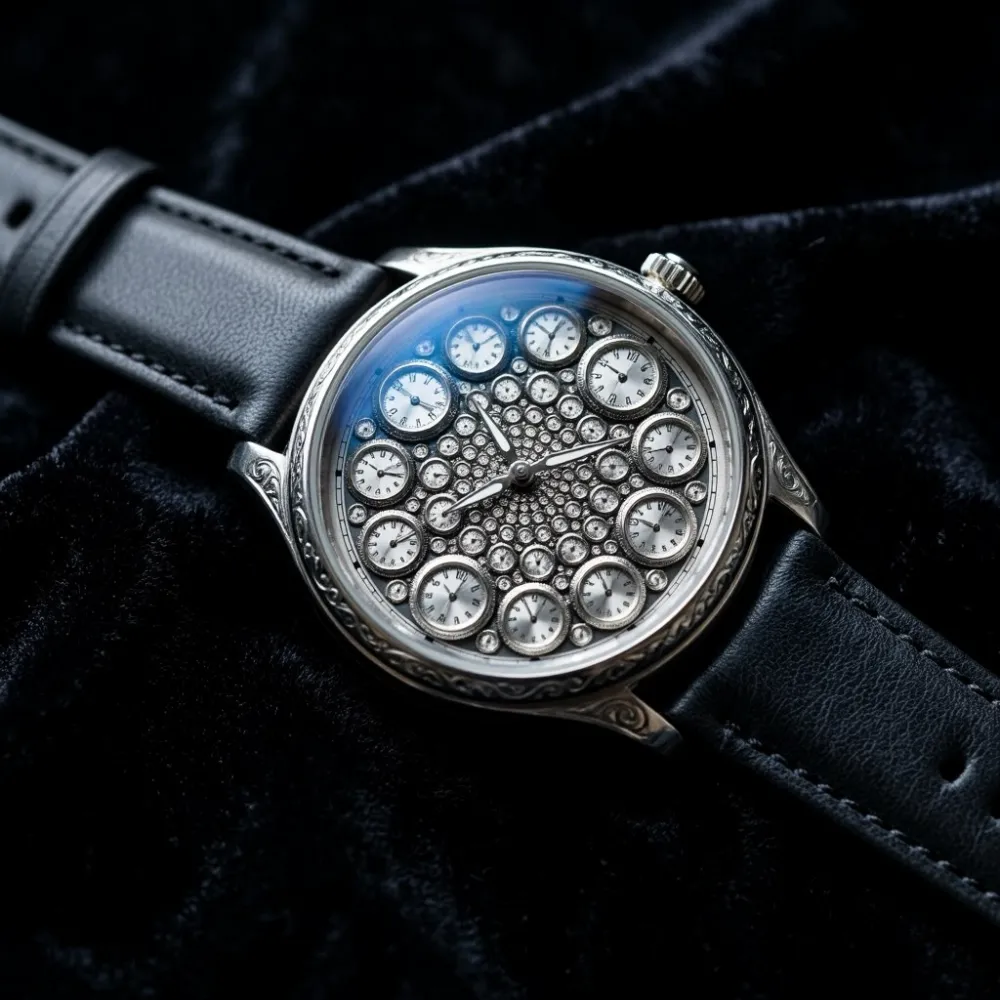
This neural network is the only one that truly listened to the word fractal and reacted to it with the enthusiasm of a maniac. Instead of elegant recursion, we got a dial that looks at you with a hundred little eyes. Yes, technically the task is completed even with some redundancy, but looking at it for more than five seconds is physically uncomfortable. A miss again.
In summary
In conclusion, I want to remind you that it is still too early to trust neural networks unconditionally. They make mistakes, fantasize, and sometimes surprise us in the wrong direction. They are not bad, but only as assistants, no more. Algorithms can speed up routine tasks, simplify the complex, inspire, and save time. The main thing to remember is that behind all these technologies, it is us who stand.
So trust, but verify. And don’t forget, it is you who direct all this in the right direction!
Thank you for making it to the end! Now it's your turn. Tell us which neural networks have already taken a place in your bookmarks? Maybe we forgot about some service? Let’s expand this list together!
- Neuro-digest: key events in the world of AI for the first week of July 2025
- Here’s the translation you requested:PETG like glass, hairdryer in action, and matches in the fasteners: 2.5 months with Reborn 3
- I failed to assemble a team for my pet project twice. Then I finished the entire project with Claude in six months.

Write comment