
- AI
- A
Why AI-generated texts annoy readers and how I work with them
Why AI-generated texts often provoke irritation even without obvious mistakes. I analyze typical problems of AI content and explain how I edit such texts to make them readable.
I work a lot with texts that are initially created by a neural network and then refined by a human. Sometimes these are news articles, sometimes reviews, sometimes product cards, and sometimes large articles tailored for a specific platform. During this time, I have formed a fairly simple observation: what often irritates the reader is not the fact that AI is used, but rather how the result actually looks.
The most interesting thing is that formally such texts can be quite normal. Without gross mistakes, with structure, with understandable paragraphs, and with logical transitions. But already on the second or third screen, it becomes heavy. Attention drifts away, trust diminishes, and the text itself starts to be perceived as something artificial and tiresome.
I would describe it like this:
a neural network too often writes text that looks like text but does not feel like thought.
This is especially noticeable on Habr. Here, the reader has a fairly high threshold for falsehood, fluff, clichéd approaches, and pseudo-expert presentations. Therefore, the usual scheme of “generated, slightly tidied up, and published” works poorly. Below, I will attempt to analyze what specifically in such materials is off-putting and how I usually fix it.
It’s not the machinery that irritates, but the empty confidence
When discussing neural network texts, the conversation often boils down to clichés: identical words, template titles, identical paragraphs. All of this does exist, but the problem runs deeper.
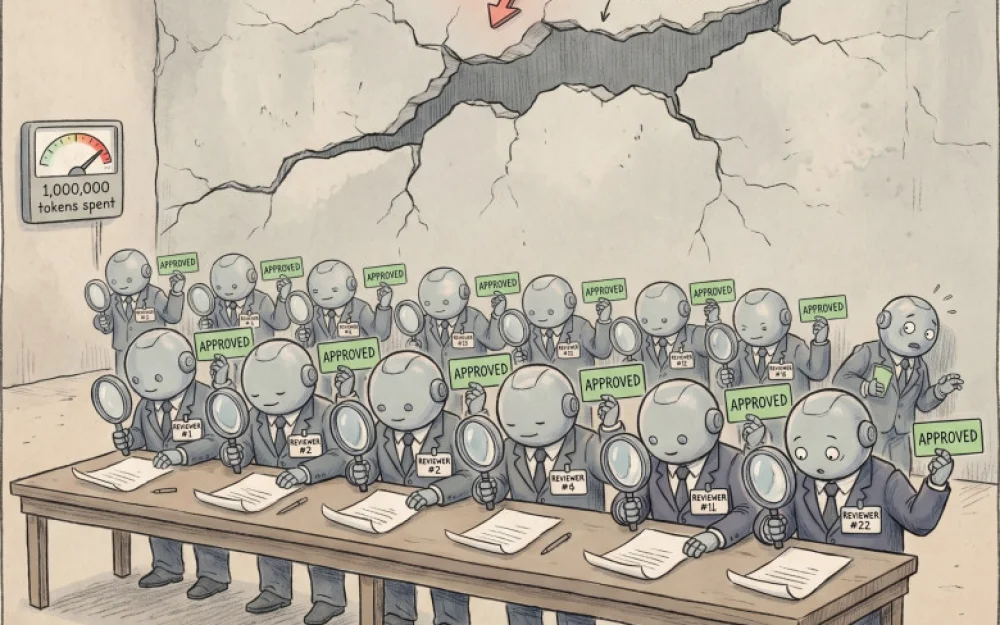
What irritates is not that the text was written by a machine. What irritates is the feeling that the text tries to appear convincing without real substance, without internal support, and without the author’s understanding of the topic. It sounds smooth, but inside it is too often empty. Or, what’s no better, filled with obviousness presented as if it were an important conclusion.
The reader feels this almost instantly. Not necessarily at the level of formal analysis. Rather, at the level of reaction: “something is not right here,” “a lot of words and nothing,” “sounds like a promotional background,” “this could have been said in half the length.”
That’s why the debate about “can we distinguish AI text from human text” is not the most useful for me. A much more important question is: does the text hold attention or start to become tiresome right from the beginning?
Why neural network text often starts to annoy from the first paragraphs
There are several typical reasons, and they repeat so often that over time you start to recognize them almost automatically.
Too Long of an Approach to the Topic
Neural networks really like neat introductions, where the author seems to be preparing for a long time to say the main point. As a result, the beginning of the text turns into a ceremony of approaching the topic.
Phrases such as: “in today’s world, technology plays an important role,” “in recent years, artificial intelligence has been actively developing,” “today many companies strive for process automation” appear. All of this may seem coherent, but in reality, it gives the reader almost nothing.
On Habr, this is especially painful. Here, people usually come not for warming up, but for the essence, experience, observation, and analysis of the problem. If the author takes too long at the entrance, trust in the text begins to decline even before the main conversation has started.
Template Structure Without Living Logic
Neural networks have a favorite mode of assembling material: introduction, explanation of the topic, a block on “why this is important,” a block on “how it works,” a block on “advantages,” a block on “disadvantages,” and a conclusion. Sometimes, two or three more universal subheadings are added, which can be rearranged, and almost nothing will change.
On paper, the structure exists. In reality, it feels as if you are reading not an article but an automatic template, assembled according to a familiar framework. There is no flow of thought in it. There is no sense that the text is led by a person who understands where exactly they want to take the reader.
This is critical for a technical audience. If the material does not build an argument but simply lays out the topic in cells, it is perceived as weak, even if it contains no outright nonsense.
Excessive Smoothness
Another typical feature is too even a rhythm. All paragraphs are approximately the same. All thoughts are expanded with the same degree of detail. All transitions are neat. All conclusions sound complete.
In theory, this looks like a plus. In practice, it is precisely this sterility that gives away the synthetic nature. Human text is rarely so symmetrical. Somewhere, the author speeds up; somewhere, they slow down; somewhere, they shorten a phrase; somewhere, they deliberately linger on a nuance. A living text has unevenness, and in this lies its strength.
When all the material is written as a smooth strip of well-polished paragraphs, it starts to slip past perception. The eye reads, but the memory retains almost nothing.
Visibility of informativeness instead of actual informativeness
This is one of the most unpleasant problems. The neural network can very convincingly create the sensation of substantive text. You read one page, then another, and then realize that only general words remain in your head.
Such texts usually contain a lot of “efficiency,” “flexibility,” “scalability,” “optimization,” “new opportunities,” “quality enhancement,” and other universal vocabulary. But there is little normal specificity. There’s a lack of answers to questions: what exactly happened, where this is already working, why it even matters, what the limitation is, on what the conclusion is based.
As a result, the text seems dense, although in fact it is loose.
Too confident a tone where boundaries are needed
The neural network loves to speak with the intonation of an author who has already understood everything. Even if the topic is new, raw, controversial, or just ambiguous, the text still presents the material with the appearance of a definitive conclusion.
In such cases, what irritates me is not even the risk of factual error, but the very feeling of excessive self-confidence. A normal author usually senses where to make a caveat, where to narrow the wording, where it is more useful to honestly indicate uncertainty.
AI, on the other hand, often prefers to deliver a final intonation even where a cautious conclusion or at least a normal frame is needed.
Translational aftertaste
A separate story is texts that seem to be written in Russian but sound like an incompletely digested translation. This is not necessarily a literal calque. Sometimes the problem lies in syntax, sometimes in word choice, and sometimes simply in the flow of thought.
This is especially common in materials about AI, development, services, automation, and corporate products. The text seems to have transferred the logic of an English-language presentation into Russian but did not adapt it for natural speech.
The reader may not articulate this in such detail, but the feeling of artificiality is still perceived.
Why such texts are spotted faster on Habr
It seems to me that several factors coincide here.
First of all, the tekkix audience reads a lot and quickly recognizes patterns. Secondly, empty amplifiers and standby constructions work quite poorly here. Thirdly, the reader is usually sensitive to the accuracy of formulations: they notice when the author understands the topic and when they are just assembling plausible text from general words.
In addition, tekkix has one more important feature. It is easy to see when a text is written "for publication in general," and when the author actually had a thought, experience, irritation, observation, or personal practice. In the latter case, the article lives. In the former, it usually falls apart in the comments.
And that is why neural network material without serious editing is particularly vulnerable here.
How I know that the text has started to irritate
I don’t have some magical checklist, but I have a few internal markers that almost always trigger.
If while reading I catch myself thinking that a paragraph seems to be written normally, but I want to scroll past it, then there’s already a problem with it. If after three paragraphs I can’t briefly retell the main idea, then the text lacks density. If a formulation sounds smart but needs to be translated into plain language, then it is likely too decorative. If a subheading can be replaced with any other universal title without loss, then the structure is weak.
Most often, irritation is caused by three things: a long approach to the essence, overly general statements, and phrases that try to sound more significant than they deserve on their own.
This is already enough for the material to need serious reworking rather than just cosmetic changes.
How I edit such texts
I almost never perceive an AI draft as "almost a ready article." For me, it’s more like raw material. Sometimes useful, sometimes not so much, but still raw material.
Editing in such cases is not about replacing a couple of words or light "humanization." Usually, I have to restore what the text lost during generation: semantic density, normal rhythm, specificity, and human intonation.
First, I remove all the boilerplate fluff
The first thing that usually goes under the knife is the paragraphs that create a sense of beginning but don’t provide any content. If the text can be opened immediately with a fact, observation, question, conflict, or conclusion, then that’s how it should be done.
Very often, after removing introductory phrases, the material only benefits. It becomes faster, more precise, and more honest toward the reader.
I generally think that one of the main mistakes when working with neural networks is being too careful with the generated beginning. Most often, it doesn't need to be saved. It just needs to be replaced.
I restructure based on thought, not template
If an article is assembled as a set of mandatory blocks, I first try to understand what the central idea actually is. After that, I establish the order.
Sometimes it makes sense to go from the problem to the solution. Sometimes - from personal observation to a general conclusion. Sometimes - from a specific case to an analysis of a typical mistake. But almost never does a good article benefit from having mechanical blocks like “what it is,” “how it works,” “why it's important.”
Subheadings also have to be rewritten almost always. They should not denote a section but rather move the text forward. A good subheading adds meaning in itself. A bad one just divides the canvas into pieces.
I clean out filler words
There is a whole layer of words and phrases that neural networks rarely go without for some reason. This includes everything that creates a sense of expertise without adding new thoughts: “significant,” “important aspect,” “key role,” “substantial influence,” “opens new opportunities,” “allows for increased efficiency.”
Sometimes such words are necessary. But in AI texts, they very often serve as packaging around emptiness. Therefore, I check them quite rigorously: if the phrase loses nothing after removing the filler, then the filler was unnecessary.
The less functional importance there is in the text, the easier it is for the reader to get to the actual meaning.
I restore concreteness
This is perhaps the most important part of editing. I try to ground any general statement.
If it is written that a tool “saves time,” I try to understand exactly where. If it says that the model “better handles complex tasks,” at least some context is needed: compared to what, in what class of tasks, on which examples this is evident. If the service “is convenient for business,” I want to see a use case scenario, not just a pretty phrase.
As long as the text lacks proper concreteness, it remains reminiscent of a summary from someone else's presentation.
I break the sterile rhythm
When the text is too symmetrical, it is perceived as plastic. That's why in editing, I almost always change the pace: sometimes I shorten it, sometimes I merge two paragraphs into one, and sometimes, on the contrary, I highlight a separate thought in a short, sharp fragment.
This is a simple thing, but it greatly affects perception. A lively text should move at different speeds. Then it gains intonation.
I reduce artificial definiteness
If the original draft sounds too confident, I add normal boundaries to it. Not to make the text cautious to infinity, but to restore its honesty.
Sometimes it's useful to clarify that we are talking about a specific scenario. Sometimes it's worth indicating that the market has not yet developed a stable practice. In some cases, one can directly say that the conclusion is preliminary. Such things do not weaken the material. They make it more mature.
What I almost never do
There are several approaches that, in my experience, only worsen the result.
I do not try to “slightly enliven” an inherently synthetic text. If the foundation is weak, superficial polishing does not save it. It results in the same template material, just with a slightly more conversational surface.
I do not cling to the original wording if it already sounds artificial. Sometimes it's easier to rewrite a sentence than to struggle for a long time to extract life from it.
I do not maintain the structure just because it already exists. The framework of an article is worth nothing by itself if it does not help to reveal the thought.
And I also do not strive to make the text “look human” in a decorative sense. Adding a couple of conversational words and a bit of chaos in syntax does not mean making the material alive. The reader recognizes this quite quickly.
Where neural networks are truly useful
In all this, I do not view generation as a useless toy. On the contrary, it is a useful tool if one understands its place.
A neural network is helpful when you need to quickly gather a raw draft, organize a large amount of information, sketch out a possible structure, extract several ways to approach a topic, adapt the same material for different platforms, or simply move off a dead center.
Problems begin at the moment when this draft is attempted to be presented as a finished article without deep editorial work. Because the draft is made quickly. But for the accuracy of intonation, the density of thought, the sense of appropriateness, and respect for the reader, a human is still responsible.
This is where the real boundary of usefulness lies.
What ultimately distinguishes a good text from a neural network-generated one
I would say this: the difference is not in the set of special words or in the length of paragraphs. The difference is whether there is an internal necessity in the text.
A good text feels like material that has an authorial intention. The author wants to convey something, show, analyze, clarify. They understand why each block is here, why this thought is placed exactly here, and what the reader should take away from the article.
A bad neural network text is most often structured differently. It simply looks like an article. It may have the correct structure, polite presentation, neat formulations, but there is no feeling that a real thought, which has gone through editing and selection, stands behind it.
This is precisely what irritates the reader.
My working conclusion
For me, a neural network is neither an author nor an editor. It is a speed-up tool for the draft stage. Sometimes very convenient. Sometimes really strong. But when it comes to publication, especially on a platform with a demanding audience like tekkix, without proper manual editing, the result will almost always be weaker than it seems at first glance.
AI texts irritate not because they necessarily have gross errors. Much more often, they irritate with their impersonal correctness, empty confidence, and the feeling that in front of the reader is a carefully assembled imitation of thought.
Therefore, my editing usually comes down to quite mundane things: removing the standard run-up, restoring semantic density, cleaning up false significance, adding objectivity, leveling intonation, and making the text finally speak to the point.
And perhaps this is the most useful skill when working with generative tools: not trying to prove that the machine already writes like a human, but quickly understanding where the convenient draft ends and normal editing begins.
If you look at it this way, neural networks stop being irritating in themselves. Only poor work with them starts to irritate. And that is a completely different problem.








Write comment