- DIY
- A
Cisco Chassis Upgrade: How My Friend Got Into DIY
I usually write about open source and software development, but today I want to tell you about my friend I met during a tour of the Selectel data center. Danya works there as an engineer, and we’ll discuss what he does after work — of course, he continues doing engineering.
Key holder made from a switch
Actually, the base is a Mikrotik. The choice is interesting: in my opinion, it would be possible to find something simpler and cheaper, for example, a wall-mounted cross with sockets. Or hang the keys not on SFP (spoiler), but on RJ45.
But it turned out to be devilishly cute - and the question of cost disappeared when Dan said that initially he wanted to make QSFP modules into key fobs, so that it was not a connector, but the module itself. Such ports are found in even more expensive equipment, and the modules themselves are not cheap - in the end, he took what was more optimal.
The idea, although not new, was born from the fact that the switches were initially without a case, and Dan printed a case on a corporate 3D printer, and at the same time, colleagues from another department asked him to do so. It looked like this:
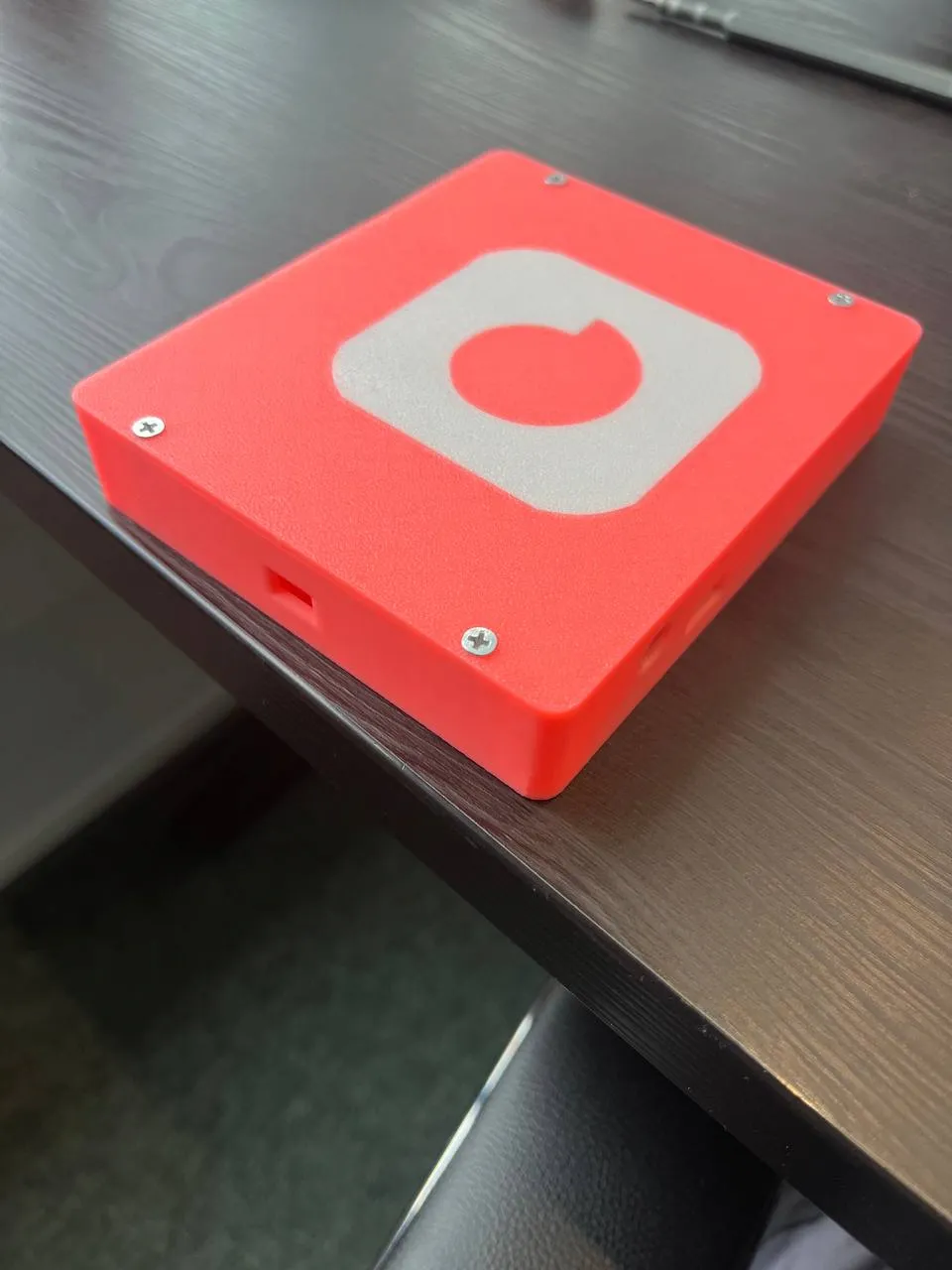
After the cases were printed, the colleague thought that the scheme was working - it was possible to use a similar one for a key holder using transceivers as a key fob. Such beauty was born:
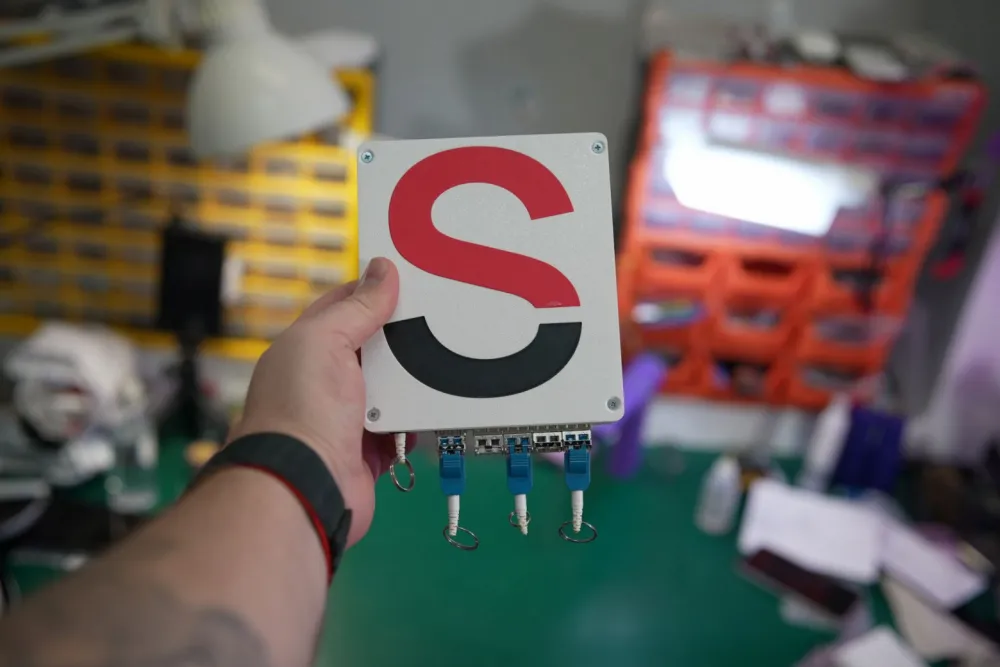
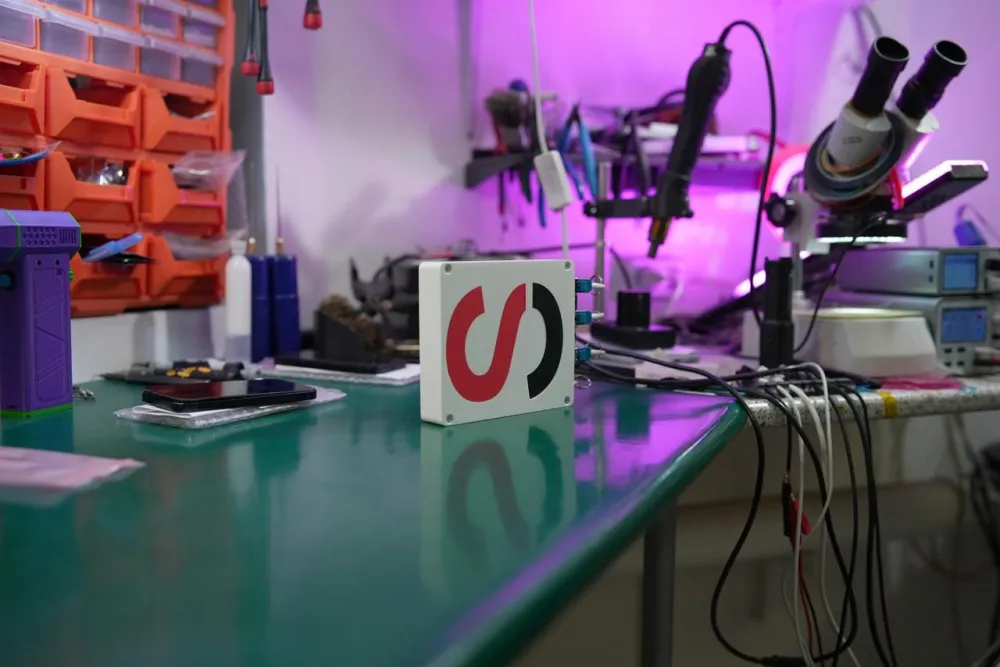
But there were also some pitfalls. The ordered rings from well-known Chinese places turned out to be too small, and too many colleagues became interested in the pet project. As a result, Dan decided not to wait for a new delivery, and had to remove the rings from the working keys.
Air humidifier
When I was on an excursion, Dan's colleagues told me a lot about the temperature and humidity in the server rooms. Perhaps this is where the idea to make a homemade humidifier came from, and even with cooling. I caught this project at the idea stage and managed to advise making smart control on Arduino - I wanted to get my hands on the software.
But Dan is a pure hardware engineer: he said that it would be simpler and more reliable to use PWM, two buttons, and a power module from Type-C. Well, that's fine, no need!
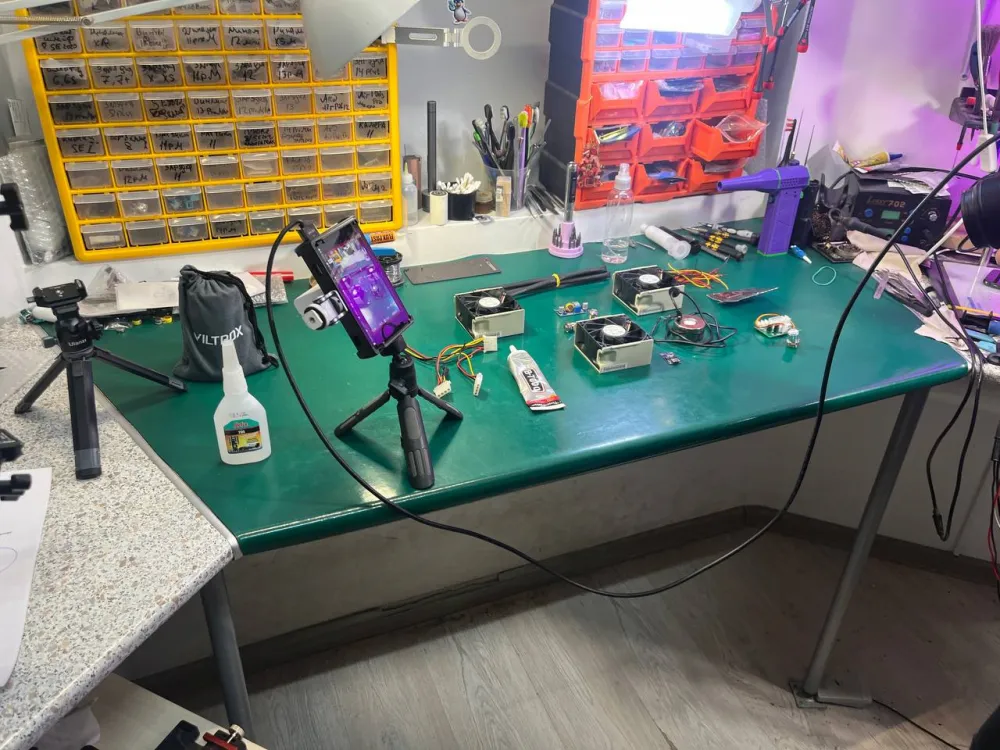
In one thing we agreed: making humidity sensors is a tedious task, and they should be far from the humidifier so that the readings are adequate, and there's also a need for extra space in the case, which was already lacking.
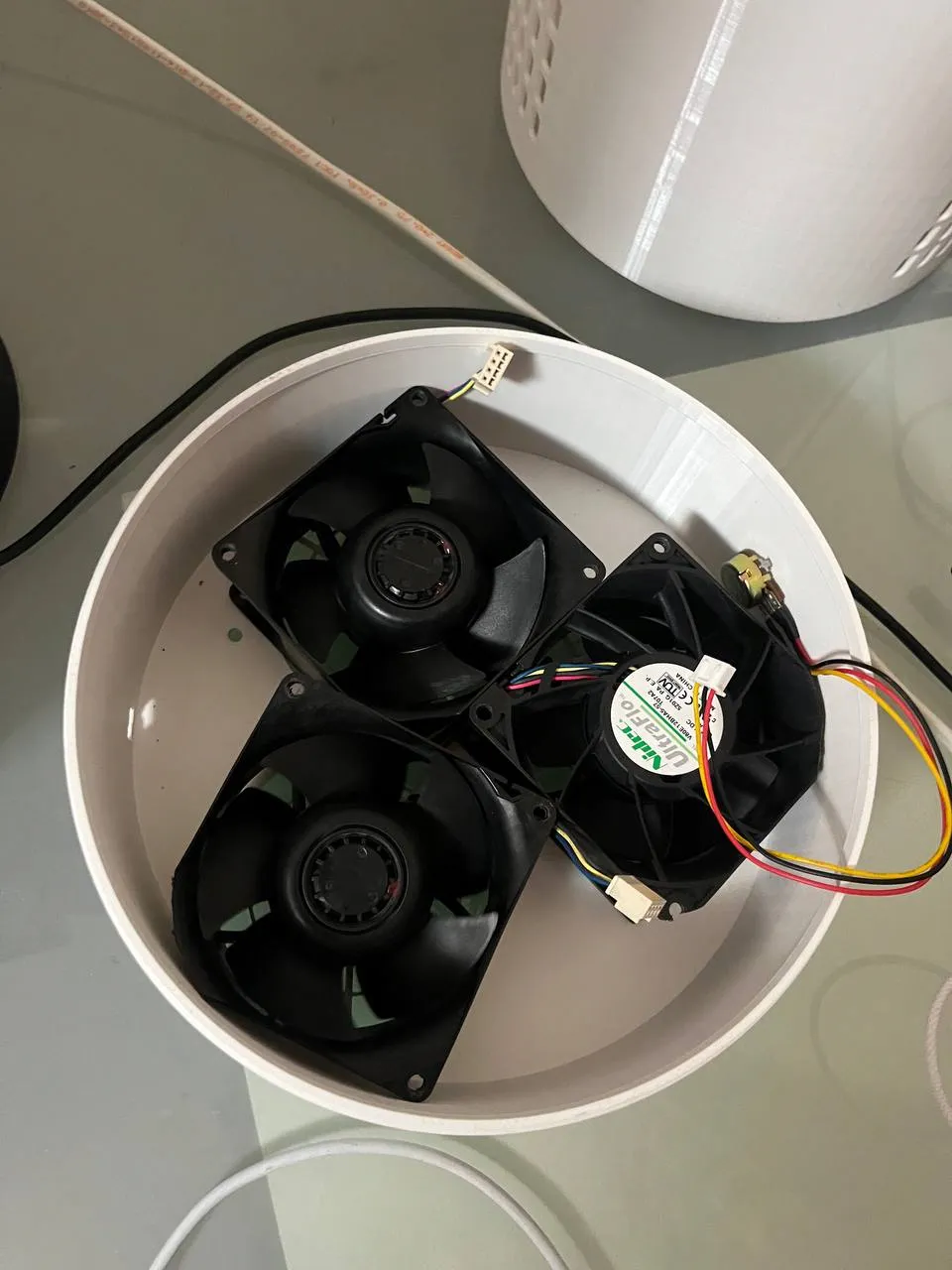
So the final option is a diffuser. Normal, good practice in 3D printing and modeling.
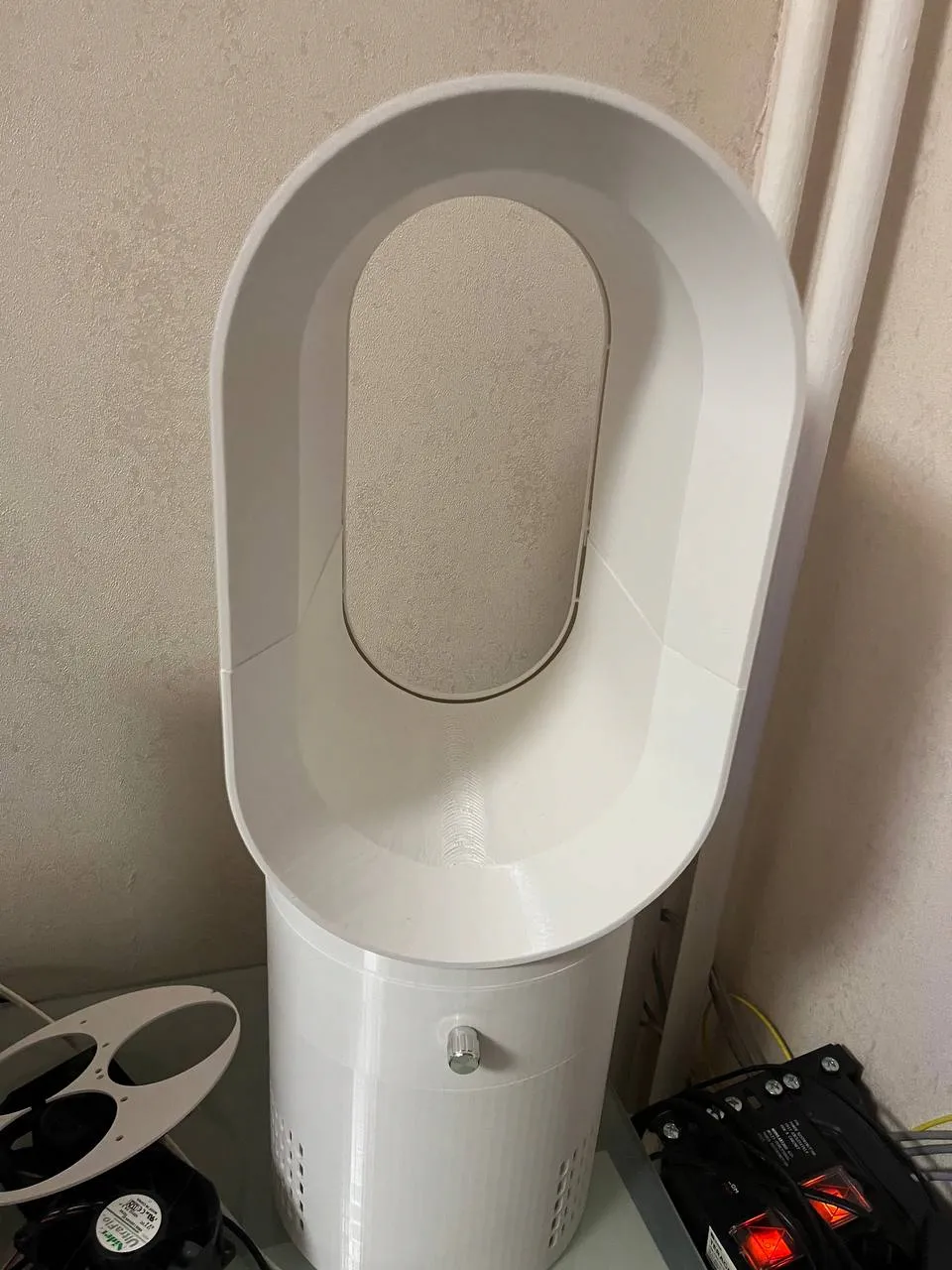
Refrigerator
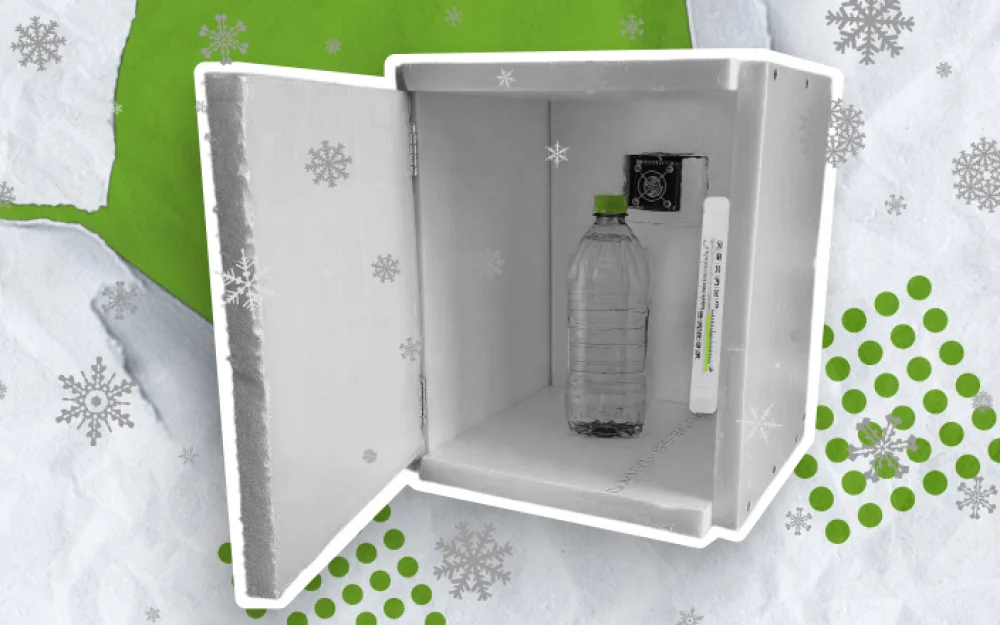
The star of this collection and what you can't help but want to put into mass production. Some might consider it an act of vandalism, others will say "...how bold," but I think it's real art - fitting a refrigerator into a router case, with its unit width of 42 centimeters, where regular models from 50 cm aren't even considered.
He also wanted a compressor one - understandable, the others have very low efficiency. However, his wishes were initially not met: again, non-standard sizes. We had to take an absorption mini-bar, but due to a delivery issue, the refrigerator died on the way - which was a clear sign. Then, miraculously, a compressor refrigerator was found that perfectly fit the dimensions!
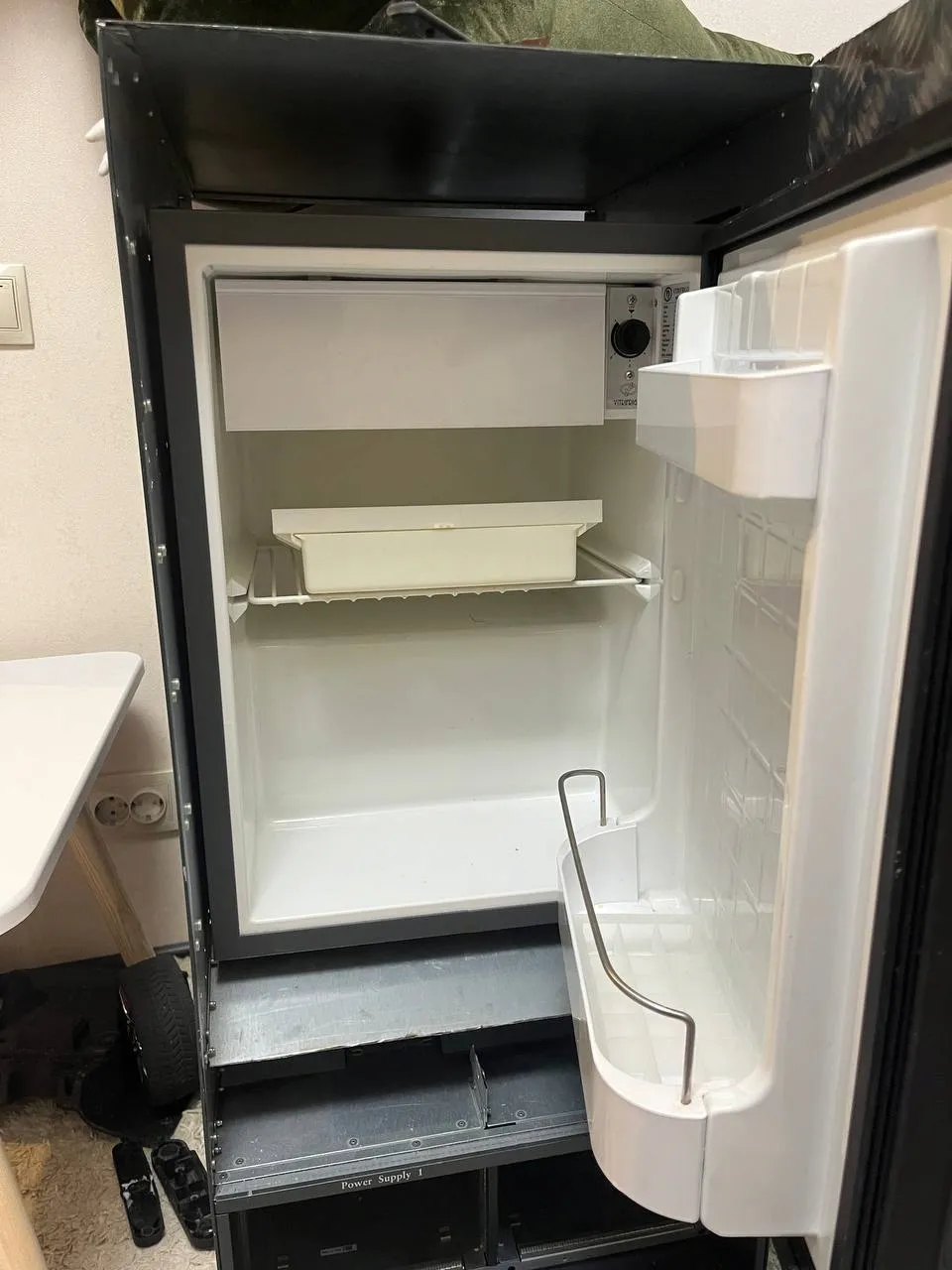
In the process, I also sawed off an indecent number of modules using an angle grinder (and surely broke many hearts)...
While Danya was sawing them, I learned that Cisco routers are extremely curious: copper busbars, as well as power supplies that can output 3 kilowatts (42 volts!). Any welding machine would be envious.
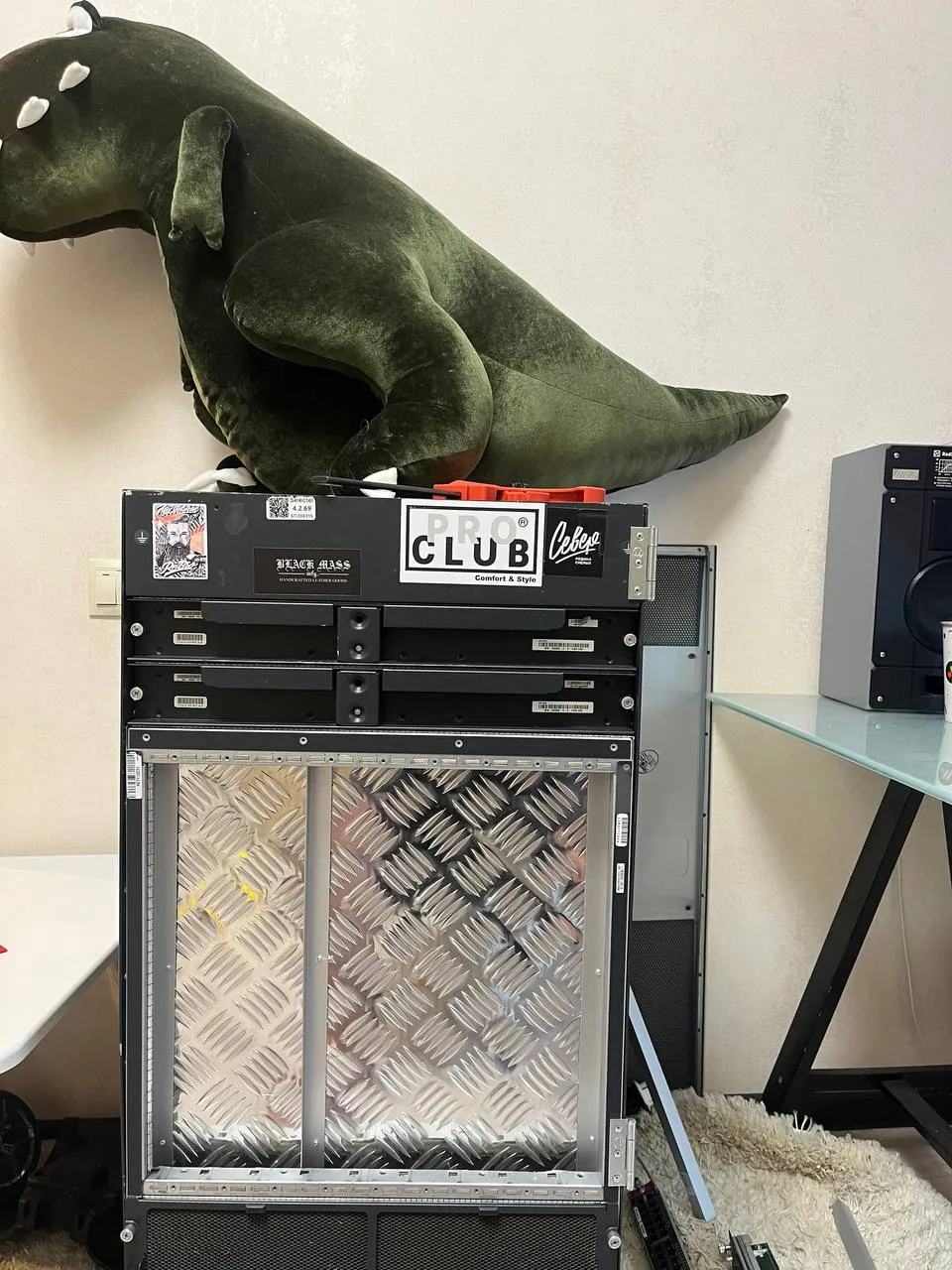
Now the cold storage in the Cisco chassis (that's its correct name) lives in a data center for Danya's team's personal use and cools cola in about 15 minutes. Everyone should have such colleagues.
Conclusion
It's funny that initially, Danya made these things for himself, simply because he had the desire, resources, and time after work. And then one colleague found out, then another, and a third - and now it's a part of the internet. All the products found their home and were in demand even in their first imperfect versions.
I remembered how as a kid I read «The Mysterious Island». Remember how Smith and his comrades ended up on a deserted island with absolutely nothing — and used engineering to build a life from the ground up? Of course you can't compare the two directly (for one thing, Smith didn't have a 3D printer), but when I watched Danya drilling, sawing, gluing, and designing, I thought of that exact character — who isn't afraid of setbacks and takes action without having to force himself, just because he can.
Returning to the DC tour: yes, Tier III, thousands of racks, monitoring walls, high loads — that's awesome, really impressive. But that's not the most important part — what matters is the people, you can tell they're in their element and doing their jobs well.
Anyway, what's the point of all this, maybe I should try it myself? Grab an old hard drive, take it apart, give it a new lease on life. They say you can make great decorative clocks and bench grinders out of them.

Write comment