- Gadgets
- A
Metallic Glasses for Electronics and Beyond: Patent Analysis
Metallic glasses are a class of metallic solids with an amorphous structure. Unlike conventional metals with their crystalline structure, the structure of amorphous metals resembles the atomic structure of supercooled melts. The difference between "amorphous metal" and "metallic glass" is the same as the difference between amorphous and glassy states. The latter is a subset of the former but not identical to it. In other words, any glass is amorphous, but not every amorphous substance is glass. Metallic glasses are often referred to as bulk metallic glasses in English literature.
Today we will talk about them.
History of Creation and Market
Amorphous metals are usually obtained by very rapid cooling (about 1000 degrees Celsius or Kelvin per second) of the parent melt.
The study of amorphous metals began in 1960 at the California Institute of Technology – a group of scientists produced the first metallic glass Au75Si25. Since then, many similar materials with interesting properties have been produced; however, the field of their practical application cannot yet be called wide due to their high cost.
Meanwhile, the potential applications of metallic glasses are vast – ranging from drills and bulletproof vests to implants for strengthening bones and protecting spacecraft. By end-use sectors, the metallic glass market is segmented into electronics and electrical engineering, automotive and transportation, aerospace and defense, medicine and healthcare, sports and leisure, energy, industrial equipment, and other industries.
According to a marketing research, the metallic glass market will grow from $1.9 billion in 2025 to $3.6 billion by 2035, with a compound annual growth rate of 6.5%. The metallic glass market is gaining momentum due to the growing demand for materials with superior strength, high elasticity, and corrosion resistance in the electronics, aerospace, biomedical, and defense industries.
The aerospace and defense industries value metallic glasses for their exceptional strength-to-weight ratio, impact resistance, and structural stability under extreme conditions. Due to these properties, they are suitable for the production of lightweight structural components, vibration damping parts, and even protective armor systems. The absence of grain boundaries in metallic glasses reduces the likelihood of crack formation and propagation, enhancing fatigue strength compared to traditional metal alloys. Components made from metallic glasses are also less prone to failure due to thermal cycling, which is crucial for aerospace systems subjected to variable temperatures. Their ability to undergo precision casting without shrinkage or deformation allows for the fabrication of parts with high tolerances.
Although the cost and scale of production still limit their widespread application, interest in research and pilot programs aimed at creating advanced components for air and space vehicles remains high. The constant desire to reduce weight and improve performance in aerospace missions drives the long-term integration of metallic glasses into these costly application areas.
Leading players in the metallic glass market, according to research, include: Liquidmetal Technologies Inc., Amorphology Inc., Antai Technology Co., Ltd., Epson Atmix Corporation, Exmet AB, Glassimetal Technology, Heraeus Holding, Hitachi Metals Ltd., Materion Corporation, Prometal Tech, PX Group SA, Qingdao Yunlu Advanced Materials Technology Co., Ltd., RS Alloys, Usha Amorphous Metals Limited.
Despite their advantages, metallic glasses face challenges in widespread industrial adoption due to the complexity of production and high costs. Their manufacturing requires precise temperature control and rapid cooling to prevent crystallization, which limits scalability and increases energy consumption. Inconsistencies in casting or cooling can also lead to degraded performance, complicating quality control.
This article focuses solely on the patent aspect.
Patents on Glasses
On the Google Patents portal, a search for bulk metallic glass yielded about 94,000 documents as of February 2026.
It is evident that there has been a plateau in patenting over the last 20 years, with a slight peak in 2013-2016. The ranking of patent holders:
Corning Incorporated – 2.2%;
3M Innovative Properties Company – 1.6%;
Gentex Corporation – 1.3%;
Applied Elastomerics, Inc. – 1.2%;
Cabot Corporation – 1.2%;
Apple Inc. – 1.2%;
All are serious innovative companies, and, importantly, from the USA. NOT A SINGLE company or organization in the TOP-10 from Japan, China, or the EU. According to the above data, America holds a patent monopoly on this type of glass.
The leading IPC codes were as follows:
various equipment Y10T – 23%;
reduction of greenhouse gas emissions Y02E – 15.9%;
semiconductor devices H01L – 14%;
chemical composition of glass, glazes or enamels; surface treatment of glass; surface treatment of fibers or threads made of glass, minerals or slag; bonding glass to glass or to other materials C03C – 13.2%;
environmental protection in various processes, including biological purification Y02P – 12.1%.
We are particularly interested in semiconductor devices; we conducted a special search on (bulk metallic glass) (H01L). There are only about 29,000 patents in total.
The top 10 patent holders are as follows:
Intel Corporation – 2.4%;
Samsung Electronics Co., Ltd. – 1.6%;
Applied Materials, Inc. – 1%;
Texas Instruments Incorporated – 0.9%;
Megica Corporation – 0.8%.
As you can see, the picture here is fundamentally different. The same well-known companies are present, but TSMC leads the ranking. South Korean Samsung is also in a good position here.
Examples of patents:
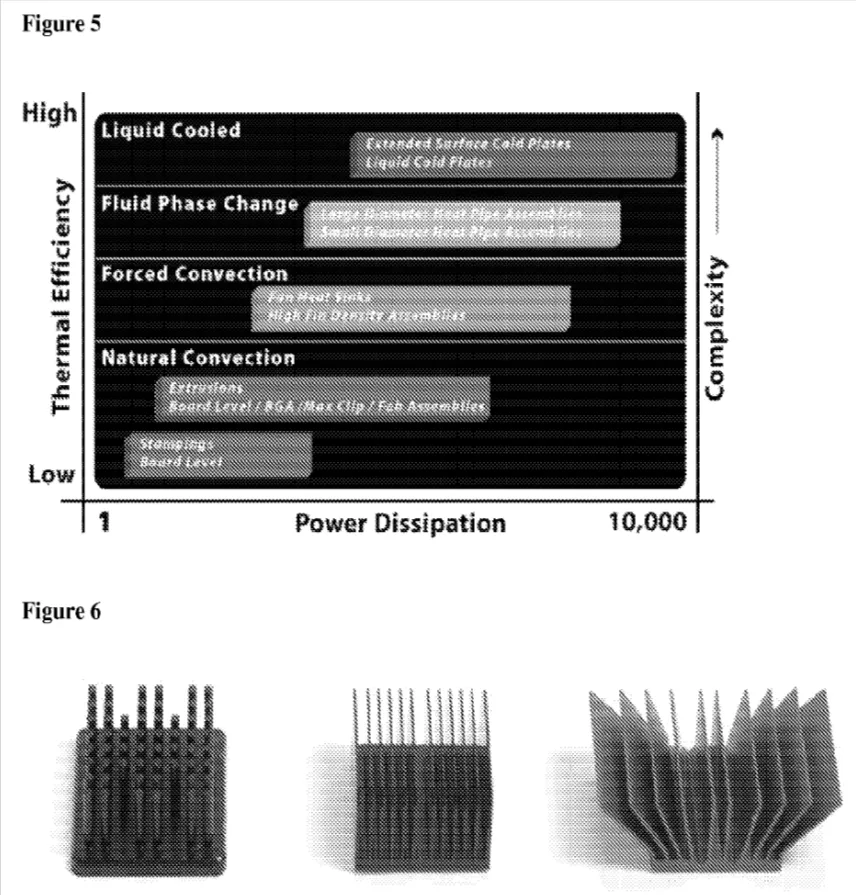
US10433463B2 Bulk amorphous alloy heat sink.
US20150305145A1 Joining methods for bulk metallic glasses. Corning Inc.
US20090032970A1 Stacking of integrated circuits using glassy metal bonding. Intel Corp.
What about Russia?
We conducted a search for Russian patents on inventions through abstracts in the FIPS database with the queries "bulk metallic glass" and "amorphous metallic glass":
No.2121011(1998) Metallic glass and method for producing metallic glass. California Institute of Technology (US). Metallic glass formed from an alloy (Zr1-xTix)a1ETMa2(Cu1-Niy)b1LTMb2Bec, containing at least 50% amorphous phase, where ETM is an early transition metal selected from the group consisting of vanadium, niobium, hafnium, and chromium, with the atomic percentage of chromium not exceeding 0.2 a1; LTM is a late transition metal selected from the group consisting of iron, cobalt, manganese, ruthenium, silver, and palladium; x and y are atomic fractions, a1, a2, b1, b2, and c are atomic percentages; the value of x ranges from 0 to 1; the value of y ranges from 0 to 1; the value of a2 does not exceed 0.4a1; the value of (a1 + a2) is in the range of 30 - 75; the value of (b1 + b2) is in the range of 5 to 62, the value of b2 does not exceed 25, the value of c is in the range of 2 to 47, with the alloy having a cooling rate required to suppress crystallization of less than 103K/s.
Figure 1 schematically shows a diagram in which temperature is plotted against time on a logarithmic scale. The melting temperature Tm and glass transition temperature Tg are indicated. The typical curve "a" shows the onset of crystallization as a function of time and temperature.
№2596696 (2016) Material based on bulk metallic glasses based on zirconium and a method for its production under low vacuum conditions. National Research Technological University "MISIS". The invention relates to the field of metallurgy, namely to materials based on bulk metallic glasses made from zirconium, and can be used for the production of micro-machine parts and mechanisms with requirements for high wear resistance and strength.
№2852100 (2025) Method for obtaining bulk metallic glass based on zirconium using selective laser melting technology. National Research Nuclear University MEPhI. The invention relates to amorphous materials, namely bulk metallic glasses based on zirconium and methods for their production using additive technologies, specifically selective laser melting. The specified material and technology for its production can be applied in the manufacture of bearings, gears, pressure sensors.
Yes-yes! Only 3 patents for inventions, one of which is from the famous California Polytechnic (which, by the way, ranked higher, coincidence?).
There is one utility model patent in the Russian Federation, which is №99004 (2010) Amorphous metallic fiber for dispersed reinforcement. LLC "Khimmmet" (St. Petersburg). Metallic fiber made of an amorphous alloy-metallic glass, constructed in the form of a flat thin strip, characterized in that at least one of the surfaces of the strip has a micro-relief formed by transverse projections and depressions located perpendicularly at an angle or at different angles to the longitudinal axis, or in the form of point projections and recesses on the surface, wherein the formation of the specified micro-relief occurs during the pouring of the melt onto a cooled drum, on the surface of which a micro-relief is previously formed by transverse grinding, cutting grooves, rolling, chemical etching, or other means, opposite to that obtained on the fiber.
No open databases have been registered in the Russian Federation.
There is one program for computer software No. 2020616321. The program is for the precise quantitative assessment of kinetic factors in structural-phase transformations. Kazan (Volga) Federal University. The program is designed for the precise quantitative assessment of characteristics that determine the kinetics of structural-phase transformations in nonequilibrium condensed systems (supercooled liquids and glasses, supercooled metallic melts, amorphous alloys).
No topologies of integrated circuits with metallic glasses have been found in open registers of the Russian Federation.
Conclusion
Bulk metallic glasses (BMG) have been obtained in many systems based on iron, nickel, titanium, and zirconium. Alloys based on Pd and Zr demonstrate good glass-forming ability (GFA). This effect is most pronounced in the systems Pd-Cu-Ni-P, Zr-Al-(Co,Ni,Cu), Zr-Ti-Be, Zr-Ti-Cu-Be, Zr-Ti-Cu-Ni-Be. Due to the absence of crystal structure defects, BMGs possess a combination of unique properties: high fatigue resistance, high strength and hardness, high fracture toughness, good wear resistance, and good corrosion and radiation resistance.
In the world, both BMG compositions and methods of their production, as well as devices for producing BMGs, are actively patented, significantly for electronics.
The leadership of companies from the USA is evident. In Russia, however, open patent activity is low.
Online Patent is the number 1 digital system in the ranking of Rospatent. Since 2013, we have been creating unique LegalTech solutions for the protection and management of intellectual property. Register at the Online Patent service and gain access to the following services:
Online registration of programs, patents for inventions, trademarks, and industrial designs;
Submitting an application for inclusion in the register of domestic software;
Options for expedited service;
Free search through patent, program, and trademark databases;
Monitoring of new applications by criteria;
Online support from specialists.







Write comment