- Gadgets
- A
Whoop Fitness Tracker Review: Useful Device or Subscription Hype?
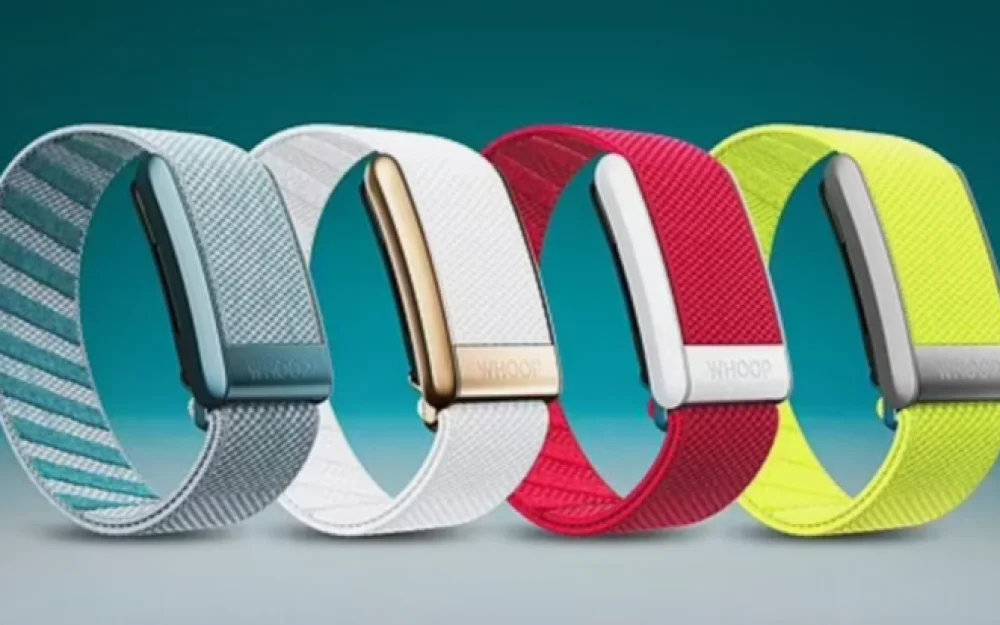
Imagine seeing a strange wristband on crossfitters and popular podcasters. This is Whoop. Why do people wear a device that shows neither time nor notifications and asks for a monthly fee?
Whoop is a fitness tracker without a screen and without the usual smart features. It does not show the time, count steps, or display notifications. This is done intentionally: the bracelet focuses on one task — to continuously collect data about the body and help train and recover optimally. All analytics are viewed in the app on your phone.
The company was founded in 2012 by Harvard graduate Will Ahmed — a former captain of the squash team. The idea arose from a personal problem: he was overtraining and did not understand when his body was on the verge of overload. The breakthrough to success occurred when top athletes began wearing Whoop: LeBron James, Michael Phelps, Steph Curry. The company deliberately sent trackers to NBA coaches, NFL, Olympic teams, and Navy SEALs. The strategy worked — the bracelet began to be talked about as a professional tool. Now Whoop is valued at $3.6 billion.
The current generation — Whoop 5.0 (2025). Compared to 4.0, the bracelet has become smaller and lighter, with a battery that lasts up to fourteen days. There is a version Whoop MG with an ECG sensor for screening arrhythmia.
What and how Whoop measures
Sensors: an optical heart rate monitor with multiple LEDs of different colors continuously measures heartbeat and heart rate variability. An accelerometer detects movement and sleep phases. With version 4.0, a skin temperature sensor and pulse oximeter were added. In Whoop 5.0 MG — an electrocardiograph for quick ECG measurements.
Data collection frequency is a separate pride of Whoop. Model 4.0 records the pulse ~52 times per second — significantly more often than many competitors.
HRV — one of the main indicators in the Whoop philosophy. The bracelet measures HRV every night, collecting data throughout sleep and calculating a "dynamic average" with an emphasis on the last phase of deep sleep. At night, you are in your most relaxed state — this provides a clear picture of the body's condition. Competitors do it differently: Oura averages HRV over the entire sleep period, while many watches recommend measuring it once upon waking. With Whoop, the bracelet itself chooses the optimal moment. Experts note that if the algorithm incorrectly determines the sleep phase, HRV may be calculated incorrectly. But overall, the approach provides a rich array of data.
Strain Score — a proprietary indicator of daily load (0–21 points). It is calculated based on the time spent in various heart rate zones. A calm day scores around 5–8, while intense training scores 15–18. The app recommends a target Strain zone based on morning recovery. Strain only takes into account heart rate load, so strength training without a significant increase in heart rate may go unnoticed. To address this, they added a Strength Trainer, but the main focus is on heart rate.
Recovery Score — a recovery index with a color code: green (ready), yellow (average), red (rest). It is based on HRV, resting heart rate, sleep quality, and breathing rate. Many users get hooked on Whoop for this reason. Similar functions are now available on Garmin (Body Battery) and Oura (Readiness Score), but Whoop was one of the first and still has one of the best implementations.
Sleep tracking. The bracelet automatically detects falling asleep and waking up, breaking the night into phases: light sleep, deep sleep, REM, and wakefulness. The app shows: Sleep Performance (percentage of required duration), Sleep Need (how much is needed considering load and sleep deprivation), and Sleep Debt (sleep debt over the last few days). Among the downsides — the bracelet does not always recognize daytime naps and may be off by 30-60 minutes during fragmented sleep.
WHOOP Journal — one of the most useful features. Every day, the app asks about habits: alcohol, caffeine, time of last meal, stress, screen time before bed, meditation — over 140 parameters to choose from. Once a month, Whoop shows correlations: for example, "alcohol in the evening reduced Recovery by 8%, decreased HRV by 7 ms." Or "reading before bed increased deep sleep share by 5%." The gadget motivates healthy behavior by reinforcing personal statistics.
Why People Like Whoop
Shift of focus: from steps to recovery. Most trackers chase activity — steps, calories, "close the rings." Whoop evaluates you based on how well you have recovered. Sometimes it's better to see a red indicator and allow yourself a day off. On the main screen, there are three rings: Strain, Sleep, Recovery. Whoop doesn't explicitly show steps anywhere.
Lack of screen — as a plus. The bracelet does not distract with notifications, it can be worn 24/7 and almost forgotten. Due to its compactness, it can be worn on the bicep, on the chest, on the waist — try doing that with an Apple Watch. For contact sports, the lack of a screen is also an advantage.
Data and accuracy. Whoop 3.0 received criticism for an inaccurate heart rate monitor, but 4.0 has significantly improved. In independent tests, Whoop 4.0 showed a pulse error of ~1.4 beats/min. For HRV, the error is ~5-6 ms — better than Garmin and Polar watches.
Community and teams. You can join teams, see rankings for Strain and Recovery, compete. Whole clubs in the NFL, NBA, NHL use the bracelets. Wearing Whoop is like becoming part of a closed club of enthusiasts.
Whoop Coach — AI coach. Since 2023, there has been a chatbot based on GPT in the app. You can ask questions based on personal data: from "how to improve HRV?" to "what to do before tomorrow's marathon?". The AI analyzes sleep, loads, habits, and gives personalized recommendations.
Some Issues with Whoop
No GPS and screen. Whoop won't record a running route — there's no GPS module. Runners and cyclists will have to wear it in addition to their sports watches. You can't check your current heart rate without your phone. Without a smartphone connection, Whoop is almost useless — it's strictly for post-analysis.
Accuracy is not perfect. Sometimes the bracelet counts still lying down as sleep, may not account for daytime naps, or may not highlight a short intense workout.
Charging. A slider power bank comes with it, which attaches to the bracelet without interrupting wear. Convenient, but it’s easy to forget to charge it.
Closed data. There's no simple way to export all metrics. There is integration with Apple Health and Strava for basic things, but you can't download the entire HRV/HR archive. The API is extremely limited. Your data is only within the proprietary app.
Psychological pressure. Daily numerical assessments can be overwhelming. The bracelet shows a red zone, even when you feel fine — or the opposite. If you tend to obsess, the tracker may add stress instead of alleviating it.
Who it suits and who it doesn't
Suitable for: serious athletes, biohackers, people working on sleep and recovery from burnout, coaches, and sports doctors.
Not suitable for: those who need an all-in-one gadget (notifications, GPS, payments), fitness beginners, and subscription opponents.
Get it if you need maximum depth of recovery data and are willing to pay for it. Don't get it if you just want to move more — it's more effective to start with simpler and cheaper solutions.








Write comment