- Network
- A
NetCraft: Castle Capture, Orcs, and BGP. How We Developed a Strategy for Network Engineers
I am Dmitry Kiselev, head of the service support group for data transmission solutions at Infosystems Jet and creator of the internship program in the team. Today I will tell you about how we conceived and have already conducted new network games several times.
"Need to build a ziggurat!" — a familiar phrase? But what if you need to build not a ziggurat, but BGP peering? That's exactly what you do in the first strategy we created for network engineers — NetCraft.
After our first game for networkers — "Need for Speed: VXLAN EVPN. Racing on Switches" — we realized: engineers need more than just configuring speed — it's more interesting to devise a complex action plan. This is how the idea for a real-time strategy, but with a console instead of a mouse, was born.
The game has been successfully showcased at Linkmeetup, Network Summer, and IT Elements. We are already updating the games for Network Summer-2026, and in the meantime, I'll explain the rules.
Who do you want to be?
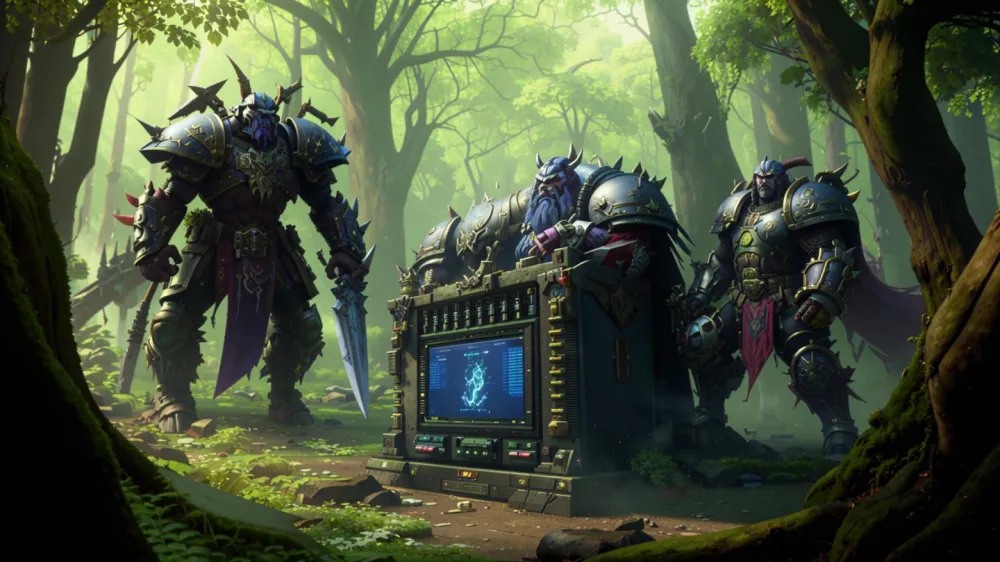
First, each player chooses their character — an Orc, a Night Elf, a Human, or an Undead Warrior (this doesn't affect gameplay but sets the mood) — and begins the battle for gold coins.
We took all textures and characters from the Warcraft III mods website. The immersion in a familiar strategy is complete!
You can get coins in two ways:
Run around the map and pick up coins. Each coin is worth 200 gold.
Capture castles. And that's the most interesting part!
The essence of capturing a castle is simple: you need to organize network connectivity between your switch and the castle's switch.
The game map itself is also filled with animations and characters from the beloved game: running peasants, trees, paths — just like in childhood.
And then the most interesting part begins — capturing castles!
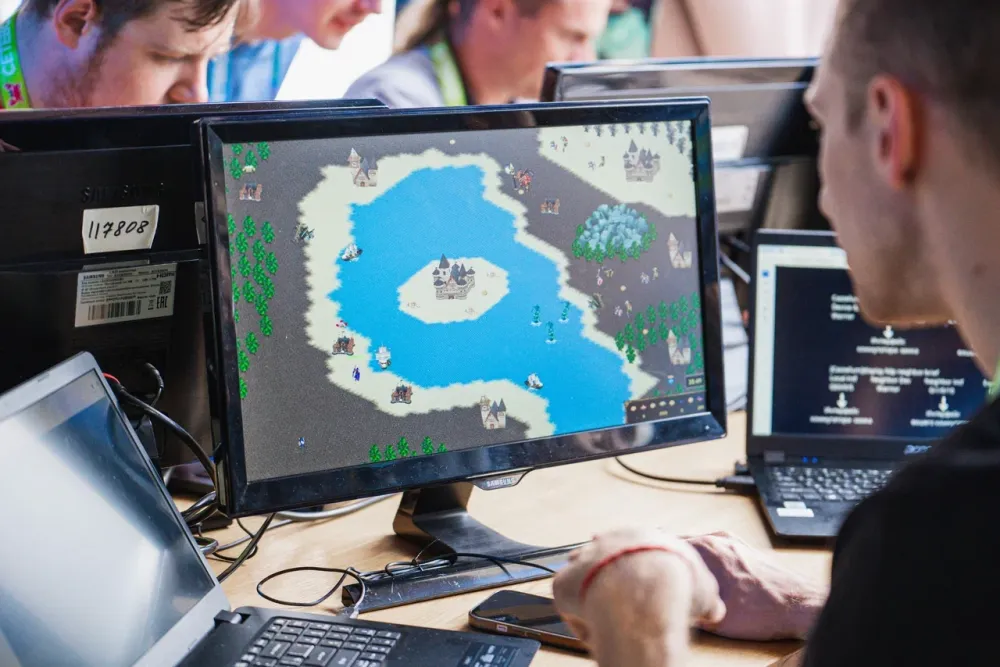
Architecture: one stand, 10 castles, 4 warriors
Each of the four players gets access to their own Cisco Catalyst switch, which is connected to each of the 10 castles.
When a player's character enters the castle, a scroll unfolds on their screen with a description of the settings that need to be configured. The first one to successfully solve the task captures the castle and receives coins.
In the game, we have:
4 first-level castles — tasks for 2-3 teams, most often for the second level of the OSI model.
4 second-level castles — here you need to think thoroughly: L2 + dynamic routing protocol.
2 third-level castles — a comprehensive task. According to one player's review: 'It's like a lab on a CCIE exam!'. But, in the humble opinion of the game's creator, this task is much easier than a CCIE lab.
As practice has shown: to capture a third-level castle, you need to throw all your forces into assaulting that particular castle from the very beginning. If successful — the earned coins will be enough to win the entire game.
What did we hide in the castle dungeons?
For game automation and visualization, we used a client-server architecture: the server launched visualization and regularly polled network devices to check task completion. When a certain trigger was executed — the castle was captured. Players connected to the server to control their characters and observe the game progress.
Each castle is a separate switch with a pre-installed configuration. When a player 'entered' the castle, the server sent them a scroll with the task and began checking: has a BGP neighbor appeared, is the interface configured, is there connectivity? Upon successful verification, the castle changed color to the player's color, and coins were added to their account.
How the siege proceeded
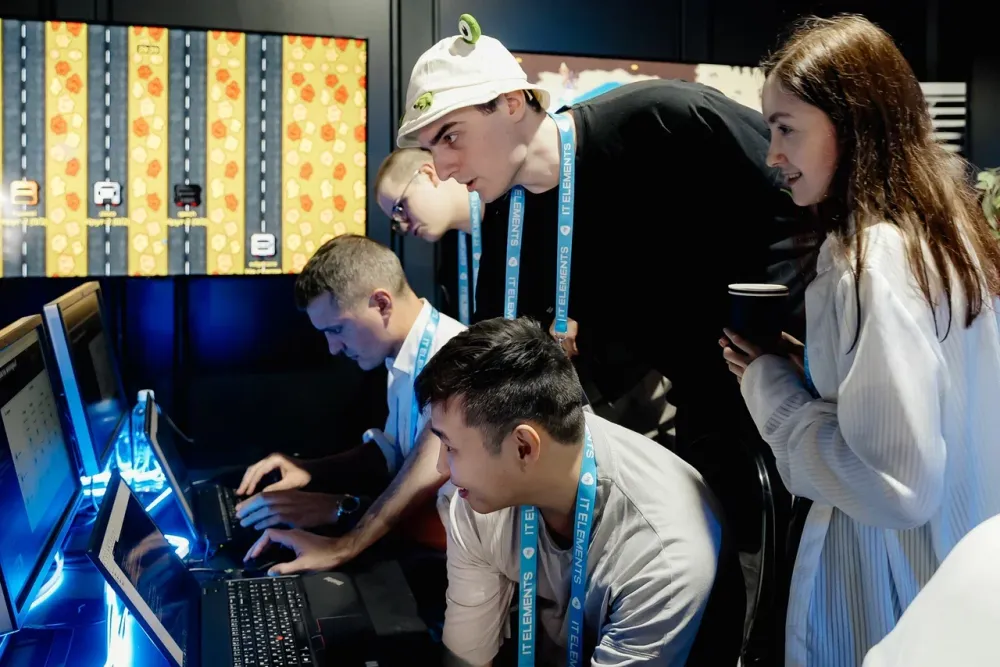
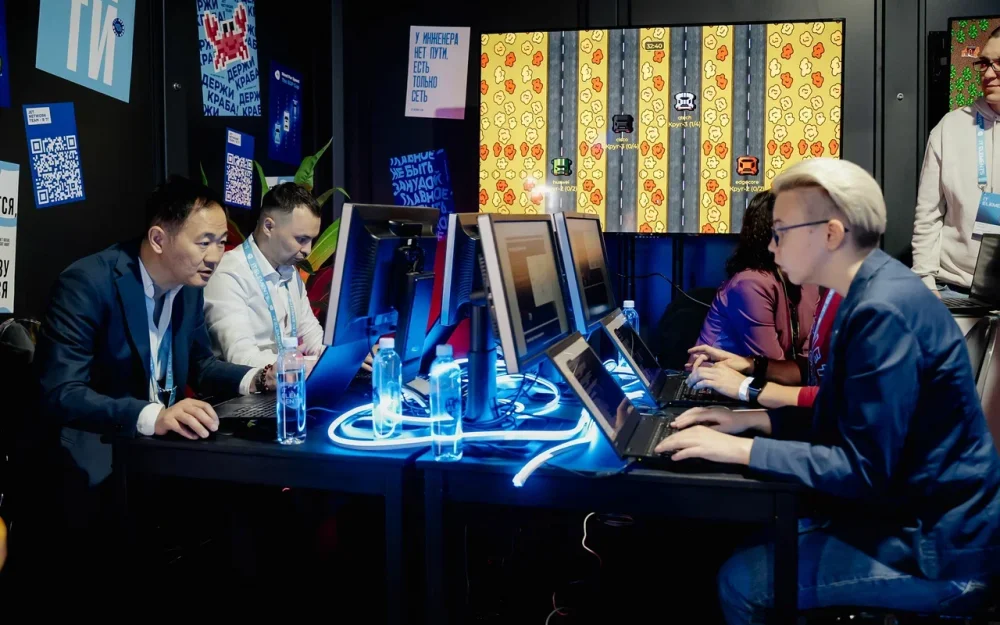
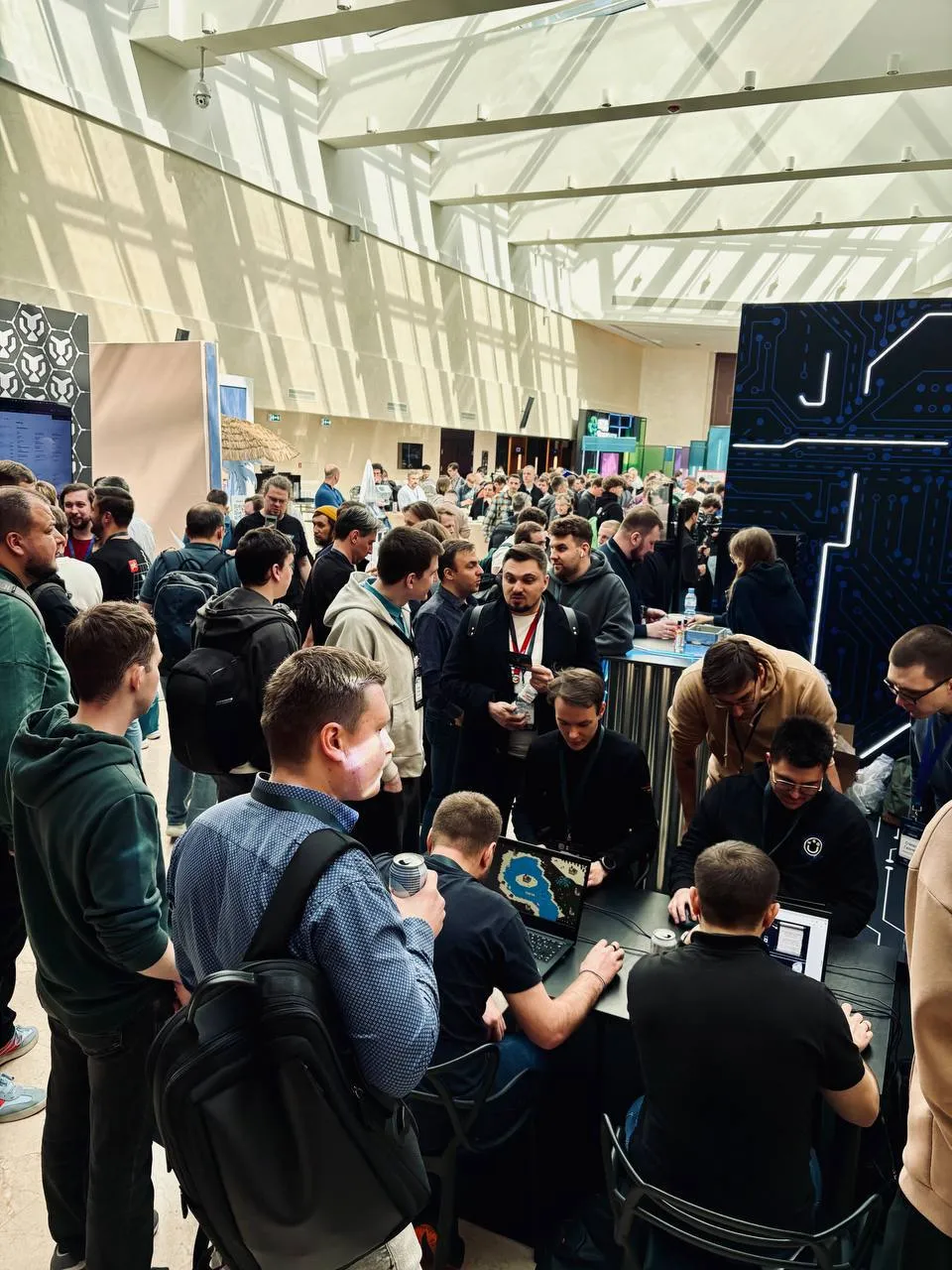
At IT conferences, behind the gaming table, we managed to bring together not only seasoned engineers, experts, and architects, but also those with little experience in configuring network equipment. The veterans recalled which commands to enter in the terminal, while newcomers, by instinct, tried to quickly find these commands so as not to be left behind.
Players were given one hour to capture the castles, but later we reduced the time to 40 minutes: there were always too many willing participants.
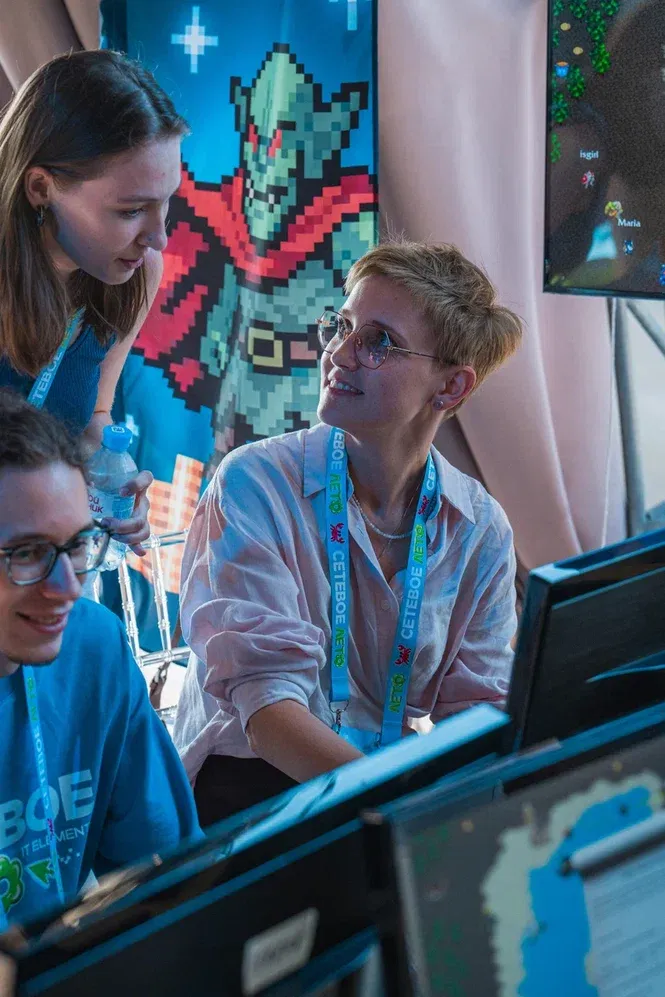
At the same time, capturing castles is designed in such a way that sometimes you need to be more attentive than knowledgeable about a large number of settings. About 15% of players ran a second time out of personal interest: they wanted to capture all the castles.
Here are the participants' opinions:
Alexey, a presales engineer:
Awesome idea to gamify the process of training and testing a network engineer! The participant independently chooses the difficulty of each connectable castle and checks their skills in a game format, selecting a suitable level for themselves and constantly increasing it, while also maintaining "in their hands" the skills of detecting and troubleshooting faults in the network infrastructure, gearing up for more complex and "highly paid" castle-tasks.
After several medium-level castles that surrendered under the pressure of console spells, I dared to besiege the most difficult, central castle, and I spent the rest of the game in futile attempts to drag it into my network. At the same time, all participants play for different sides of the network conflict and capture castles in real-time on a single map-server, meaning each player tries to pull as many node-castles as possible into their network and deprive other players of the opportunity to do so, which adds a competitive element to the process.
Whose network will be the most expensive by the end of the match? How many tasks and of what complexity will be solved by each participant? All that's left is to add achievements — and here's a ready-made lab for certifying employees!
Sergey, a data transmission system design engineer and cup holder:
I liked this the most at the Elements. There wasn't much space, but the activity was cool.
Liked:
- Troubleshooting problems in a gaming style
- Competitive element
- Original idea
Disliked:
- All tasks were about routing and IP connectivity. I would have liked more diverse tasks, but it's understandable that it's harder to implement since the game's concept is built exactly on routing and IP connectivity.
Played a round with colleagues from a previous job and a couple of participants from the audience. And got the trophy😊
Nikita, Senior Network Engineer:
Last autumn I was at IT Elements, and here's what I want to tell.
Huge thanks to the organizers for the interactivity!
The essence of the game was awesome: you had to capture castles and earn coins for it. But the most interesting part — the capture mechanic was built on real network equipment configuration. Everything was done seriously: from simple tasks on switches to a real challenge like configuring VXLAN and other interesting protocols. The game made the brain creak.
Separate plus for the fact that the tasks were not "just for checkmarks" but were actually related to the IT topic. I literally dropped out of reality for 40 minutes. This is the best way to stretch your neck after lectures, level up skills, and at the same time find like-minded people.
Advice to the organizers for next year: make it longer — we didn't get enough!
What's next and how to participate
Now we are upgrading old games, modernizing NFS, and coming up with something new.
If you want to try your hand at capturing castles, racing on switches, and other games — come to our Network Summer 2026! 🦀


Write comment