- Security
- A
How Microsoft "Fixes" Windows 11: Flowers After Beatings
Recently, Microsoft announced a seven-point plan to fix Windows 11, which the tech press received as an act of redemption. Windows President Pavan Davuluri admitted in January 2026 that "Windows 11 went off the rails" and stated that Microsoft is shifting into "swarming mode": developers will be moved from implementing new features to addressing existing issues.
When I saw this headline, I immediately thought it resembled being in an abusive relationship. Your partner hits you, then comes back with flowers, saying they’ve changed. And everyone around you says, "See, they’ve gotten better." But the bruises haven’t gone away, and they only apologize for the hits that people noticed.
I want to go over everything that Microsoft has done to Windows 11 over the past four years because understanding how to approach the announcement of "improvements" can only be done in the context of all the damage; meanwhile, we realize that the worst parts haven’t even made it into the fix plan.
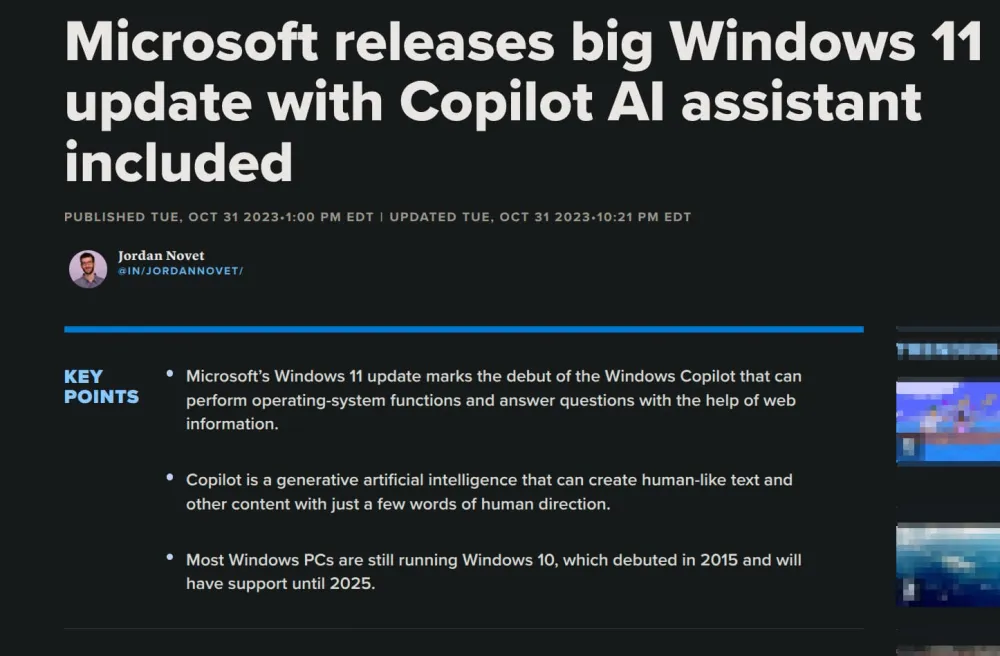
The Copilot feature attack began on September 23, 2023, when Microsoft shoved its chatbot into Windows 11 even before the formal release of 23H2. Its icon appeared between the Start menu and the taskbar, could not be moved or deleted through regular settings, and it intercepted the Win+C hotkey. Over the next two years, the metastases of Copilot buttons spread to Snipping Tool, Photos, Notepad, Widgets, File Explorer’s context menus, Start menu, and system Settings. Microsoft even planned to force-install the Microsoft 365 Copilot app on "compatible PCs" in the Start menu. The new plan promises to remove all of this. The company wants us to praise it for taking its hand out of our pocket.
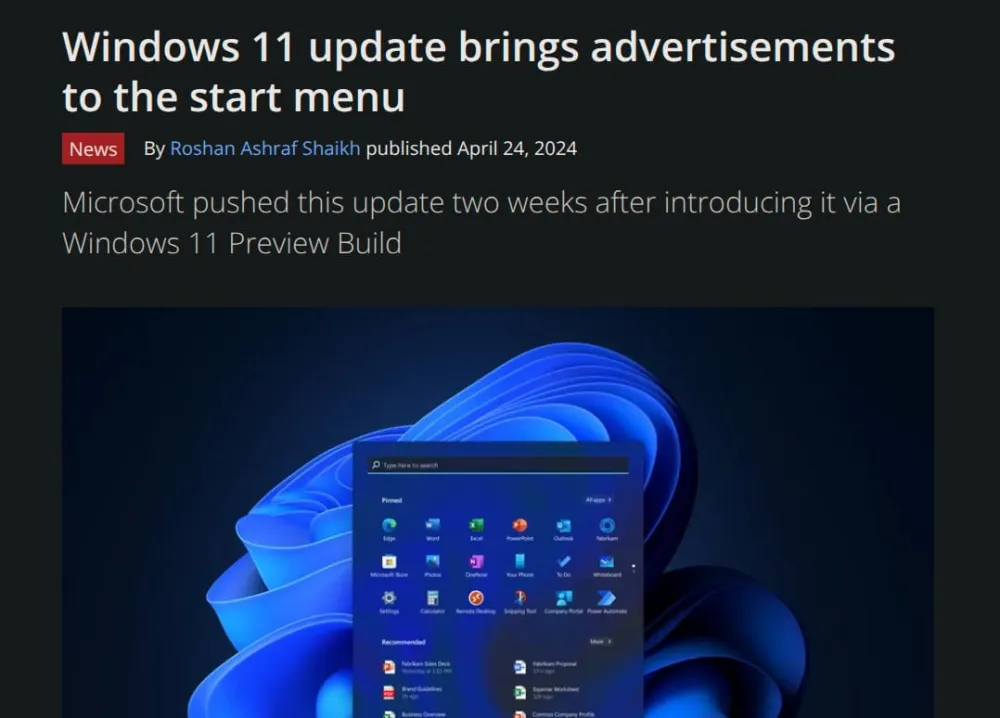
April 24, 2024, Microsoft released update KB5036980, which injected advertisements into the "Recommended" section of the Windows 11 Start menu. It displayed apps marked as "Promoted" such as the Opera browser and some unwanted password manager. The Start menu was just one of the surfaces affected: ads were added to the lock screen, Game Pass subscriptions were promoted on the Settings page, OneDrive was pushed inside File Explorer, and notifications with tips became almost blatant product recommendations. They promise that the "fix" will have "less advertising." Less. For an operating system you paid $139 for, there should be exactly zero ads, and the fact that the reduction of ads is meant to impress someone shows just how low Microsoft has set the bar.
Risks arise when it comes to privacy. When Windows 11 was released in October 2021, the Home edition required a Microsoft account during installation. Until October 2025, Microsoft systematically sought out and destroyed all bypass methods for creating a local account, including the oobe\bypassnro command, the BypassNRO registry key, the ms-cxh:localonly trick, and even the old method using fake email addresses. Amanda Langowski from Microsoft clearly stated: the company “removes all known mechanisms for creating a local account in Windows Setup”.

Because of the Microsoft account, user identification becomes tied to the operating system from the first startup. Their actions, use of apps, browsing with Edge, working with files via OneDrive — all of this is recorded in the Microsoft-controlled profile. And this particular violation is not included in the seven-point fix plan.
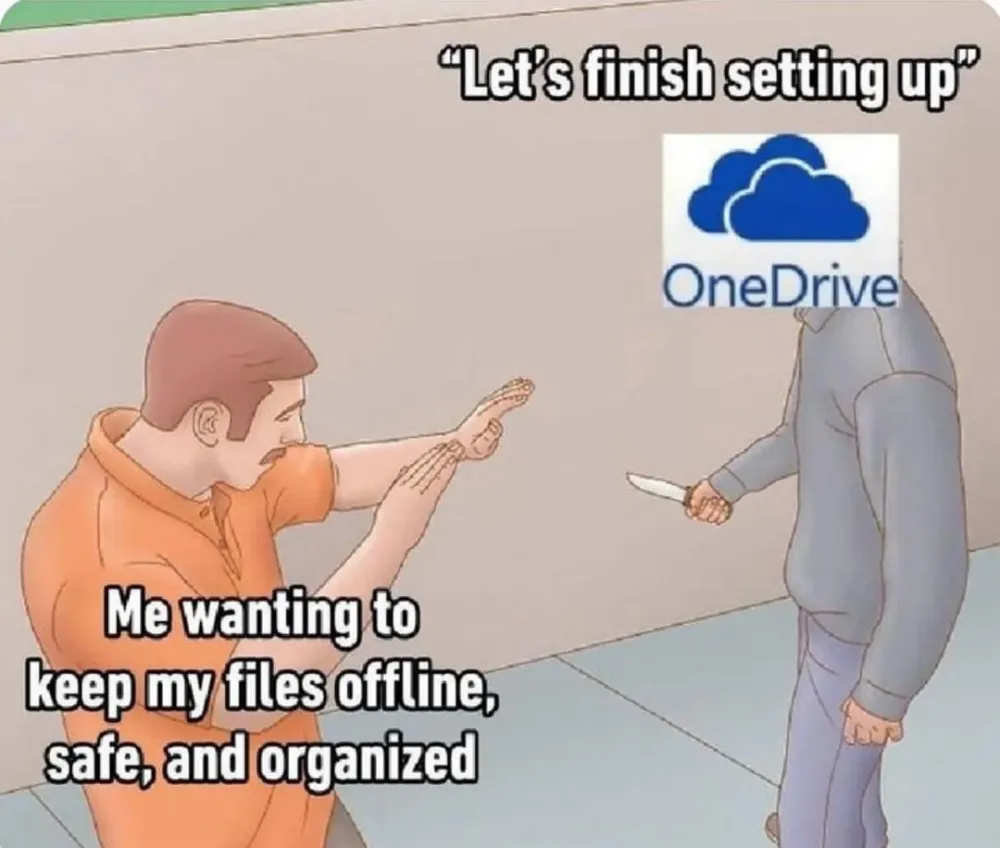
The same thing happened with OneDrive. In 2024, Microsoft quietly changed the Windows 11 setup process, causing folder backup to OneDrive to be enabled automatically, without user consent; it synchronizes Desktop, Documents, Pictures, Music, and Videos with Microsoft’s cloud. When users discovered this and tried to turn it off, their files were deleted from the local machine because OneDrive moved them, transferring ownership of personal files without consent. Jason Parge wrote a viral post about how OneDrive self-activated, moved his files, and then started deleting them when their size exceeded the free 5GB storage. Microsoft has not responded to this. And there are no fixes for it.
It is also worth mentioning Windows Recall. This AI feature, announced in May 2024, takes screenshots of the entire screen every few seconds and provides the ability to search through this information. Security researcher Kevin Beaumont demonstrated that the entire Recall database was stored in the AppData folder in unencrypted form, from where it could be extracted by malicious software. Bank details, passport data, passwords — all were stored in an unprotected SQLite database.
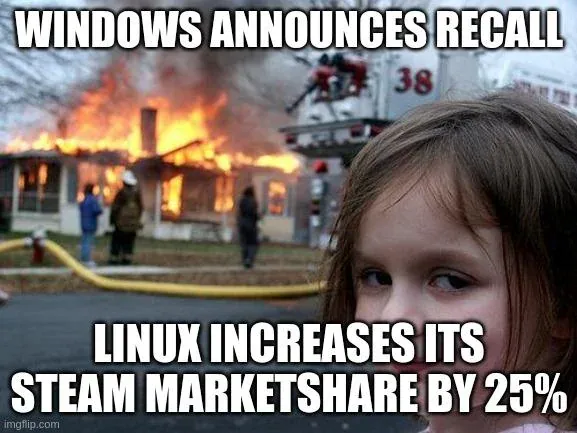
The situation was intervened by the UK's Information Commissioner’s Office. Microsoft postponed the feature, made it optional, added encryption, and quietly re-released it for Windows Insider users in November 2024. The company created a tracking feature, released it in a broken state, got caught, and called the patch a "response to feedback."
But the aggressive actions started long before Windows 11. In 2015 and 2016, Microsoft ran the GWX campaign (Get Windows 10) — full-screen intrusive dialog boxes urging Windows 7 and 8 users to upgrade to Windows 10. In May 2016, the company changed the behavior of the red X button: for decades, pressing it meant "close" or "cancel", but now it triggered the scheduling of an upgrade to Windows 10. Microsoft's security recommendations advised users to close suspicious dialog boxes using the X button, and the company turned this familiar behavior against its own users. A woman named Terry Goldstein sued after the forced upgrade turned her travel agency’s computer into a "brick", and she won $10,000. Microsoft appealed, then withdrew the appeal and paid compensation. Later, the company admitted that they had "gone too far".
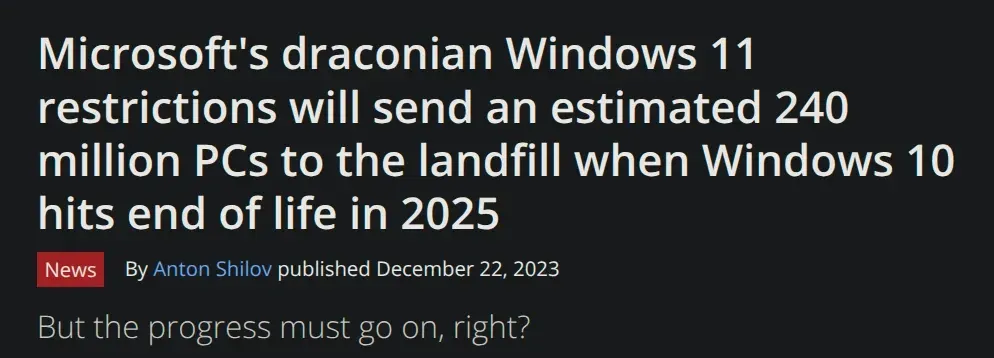
Right now, Microsoft is preparing to forcibly send 240 million PCs to the landfill. The life cycle of Windows 10 will end on October 14, 2025, and Windows 11 requires TPM 2.0, certain CPU generations, UEFI Secure Boot; its hardware requirements exclude about 20% of PCs worldwide. These are fully functional machines, deemed "obsolete" due to arbitrary software limitations. If you want to receive security patches in Windows 10, Microsoft will charge you an annual fee of $30 for patches to an operating system you've already purchased a license for. Enterprise customers pay $61 per device in the first year, $122 in the second year, and $244 for the third: each year the price doubles.
Edge is a disaster on its own. Mozilla commissioned an independent report, "Over the Edge," which documented dark patterns, including shaming users for their actions (if they don’t use Edge, pop-ups remind them that "buying this way is foolish"), inserting disguised ads on Google.com and the Chrome Web Store, as well as browser settings that revert users back to Edge without notification. Some Windows web links still forcibly open in Edge regardless of the default browser chosen. Despite all these manipulations, Edge holds only 5.35% of the global browser market. Even with full leverage from the operating system monopoly and forcing users to use the browser, the company cannot make users love it.
Telemetry also raises concerns. In Windows 11 Home and Pro, it is impossible to completely disable telemetry. If you set the AllowTelemetry value to 0 in the registry of any Windows version except Enterprise, the value quietly resets to 1. True telemetry can only be disabled in Enterprise and Education editions. The operating system you paid for sends data about you to Microsoft, and the ability to turn off this feature in consumer versions turns out to be a lie. There is also no fix for this problem.
What they broke | When | "Fixed" | Difference |
|---|---|---|---|
Taskbar position (top/side) | October 2021 | March 2026 | 4.5 years |
Taskbar dragging | October 2021 | September 2022 | 11 months |
Forced placement of Copilot on the taskbar | September 2023 | March 2026 | 2.5 years |
Adding ads to Start menu | April 2024 | March 2026 | 2 years |
AI buttons in every app | 2024 | March 2026 | 2 years |
Forced restart during updates | October 2021 | March 2026 | 4.5 years |
Local account lockdown | 2021-2025 | Never | - |
Telemetry in Home/Pro | October 2021 | Never | - |
Bloatware installation | Since 2015 | Never | - |
Automatic OneDrive sync | 2024 | Never | - |
And I haven't even mentioned the fact that the EU fined Microsoft over 2.2 billion euros in several antitrust rulings. This included a fine of 561 million euros for violating the default browser selection process: a Windows 7 update quietly hid the selection screen for 14 months, affecting 15 million users. This was the first case where the EU fined a company for “breaching a promise.” One can also recall the NSAKEY scandal from 1999: a second cryptographic key named NSAKEY was discovered embedded in Windows NT (note: NSA stands for the National Security Agency). Or August 2024, when a Microsoft update “bricked” Linux systems with dual-boot for Ubuntu, Mint, and other distributions; it took nine months to fully resolve the issue.
Here, the bottom four rows are important. Privacy-hostile changes, forced use of Microsoft accounts, telemetry that lies about being disabled, hijacked OneDrive files, pre-installed junk—none of this is in the fix plan. Microsoft’s “buzzing” is related to the most noticeable UI annoyances, those that make bad headlines in the press. Data collection, vendor lock-in, forced accounts—all of this remains because that’s the business model for profit.
For four years, Microsoft intentionally degraded the operating system that people paid $139 and up for, and now it announces the "fix" of the damage it caused, as though it’s a gift. The “fix” is that it takes its boot off the user's neck and expects applause. Ads shouldn’t have appeared in the OS, Copilot buttons shouldn’t have been forced in, and the taskbar should have remained untouchable. And what the company decided to keep—telemetry, forced accounts, data collection—that’s the real product, because the product has become you.





Write comment