- Hardware
- A
Five May 2026 Single-Board Computers: Intel N300, RISC-V with AI and Unreleased Raspberry Pi 6
Most manufacturers' single-board computers have long ceased to be just a Raspberry Pi alternative. And over the past few months, boards with 10-gigabit networking, support for multiple NVMe drives, up to 16 GB of LPDDR5 memory, and new RISC-V processors that are gradually moving out of the experimental development category have appeared.
This time we will look at several completely different new releases: from the ODROID-H5+ with four M.2 slots and an Intel N300 processor, to the compact 65 × 32 mm Orange Pi Zero 3W. We will also cover the Raspberry Pi 6 separately — the board itself is not yet available, but the first details are starting to emerge. Let's go!
ODROID-H5+ — single-board computer with Intel N300, four M.2 slots, and 10 GbE networking
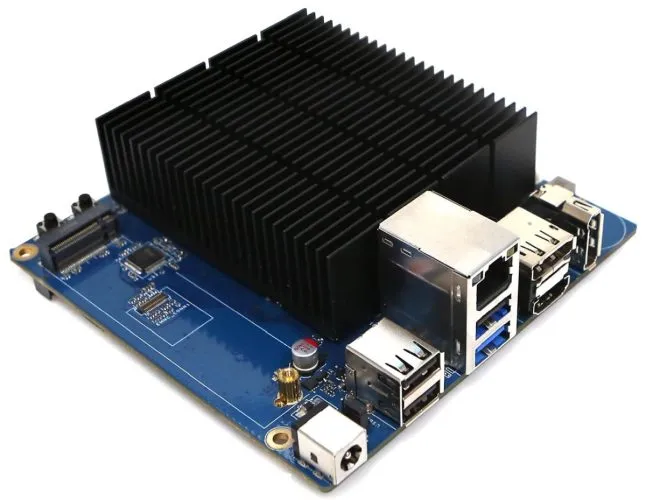
The ODROID-H5+ is hard to call a typical single-board computer. In terms of size and design it really resembles an SBC, but in capabilities it is already closer to a compact server board or a small NAS. It is equipped with a 10-core Intel® Core® i3-N300, has 10 GbE networking, and four M.2 slots for storage drives right out of the box. Against the backdrop of most ARM boards, this feature set looks quite unusual.
The board is built on x86 architecture and supports up to 48 GB of DDR5 memory. The manufacturer is clearly targeting data storage, virtualization, and home server use cases. In addition to four M.2 slots for SSDs, two network interfaces are included, including a 10-gigabit Marvell AQtion controller. At the same time, GPIO pins, HDMI, and a set of familiar interfaces are retained, so the system can be used not only as a server, but also as a regular compact computer.
Specifications:
processor: Intel® Core® i3-N300 (8 E-cores, up to 3.8 GHz),
graphics: Intel UHD Graphics (32 EU),
RAM: up to 48 GB DDR5 SO-DIMM,
storage: 4× M.2 2280 PCIe 3.0 x1,
video: HDMI 2.0, DisplayPort 1.4,
networking: 10 GbE (Marvell AQtion AQC113), 2.5 GbE (Realtek RTL8125BG),
USB: 4× USB 3.2 Gen1, 2× USB 2.0,
audio: 3.5 mm,
interfaces: GPIO, UART,
power: 19 V DC,
dimensions: 120 × 120 mm.
As of May 2026, the ODROID-H5+ is already available for purchase. The base board costs around $225 without memory or storage. That's not cheap, but it's worth it.
Milk-V Jupiter2 — RISC-V mini PC with SpacemiT K3 processor
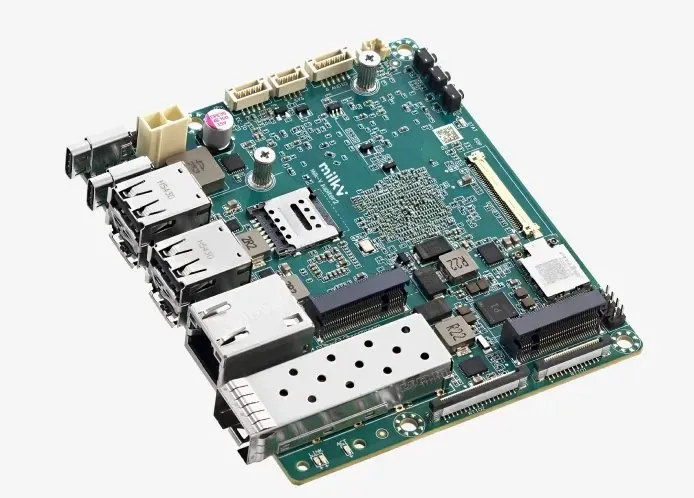
The Milk-V Jupiter2 has become one of the most unusual RISC-V computers showcased in 2026. Unlike most similar systems that typically use relatively simple chips for experiments and embedded devices, it is equipped with a new SpacemiT K3 processor with eight compute cores and fairly powerful integrated graphics. This is a RISC-V device.
The processor is built on a 6nm manufacturing process with Imagination BXE-4-32 graphics and support for modern APIs such as Vulkan 1.3 and OpenGL ES 3.2. Hardware video processing up to 8K and an integrated NPU with up to 3 TOPS of performance are also announced. In terms of specifications, it is already noticeably closer to full-fledged desktop systems than many previous RISC-V boards. At the same time, the computer comes with a standard set of modern interfaces, including USB4, two 2.5 GbE network ports, and support for up to 64 GB of DDR5 memory.
Specifications:
processor: SpacemiT K3 (8× RISC-V X60, up to 2.0 GHz),
graphics: Imagination BXE-4-32 GPU,
AI accelerator: up to 3 TOPS,
RAM: up to 64 GB DDR5,
storage: M.2 NVMe SSD,
video: HDMI 2.1, DisplayPort 1.4, USB-C (DisplayPort Alt Mode),
networking: 2× 2.5 GbE, Wi-Fi 6, Bluetooth 5.2,
ports: USB4, USB 3.2 Gen2, USB 2.0, 3.5 mm audio,
video processing: encoding and decoding up to 8K,
form factor: compact desktop mini PC.
As of May 2026, the Milk-V Jupiter2 has already been officially unveiled, but sales have not yet started. The exact price has not been announced yet. According to Milk-V, first shipments are expected in the second half of 2026.
Banana Pi BPI-SM10 and K3 Pico-ITX — RISC-V systems with an AI accelerator of up to 60 TOPS
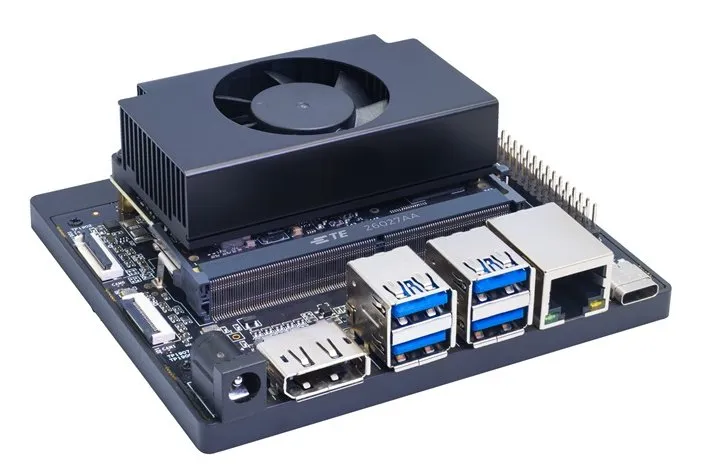
RISC-V is gradually moving out of the category of experimental enthusiast boards, and Banana Pi's new developments clearly demonstrate this. The company has introduced two systems based on the new SpacemiT K3 processor at once: the compact BPI-SM10 kit with a compute module and carrier board, as well as the K3 Pico-ITX — a more familiar mini-PC format board. The key feature of both models is a built-in AI accelerator with performance of up to 60 TOPS, which is still quite unusual for RISC-V devices.
At its core is the eight-core SpacemiT K3 processor with support for the RVA23 standard. The manufacturer claims the ability to locally run large language models with up to 30 billion parameters. In addition to the AI block, the chip features modern graphics with support for Vulkan and OpenGL ES, fast LPDDR5 memory, and PCIe 4.0 interfaces. Against the backdrop of many previous RISC-V boards, this already looks less like an experimental platform and more like an attempt to build a full-fledged computer for local data processing and working with neural networks.
Specifications of the BPI-SM10:
processor: SpacemiT K3 (8× RISC-V X100, up to 2.4 GHz),
AI accelerator: up to 60 TOPS,
RAM: up to 32 GB LPDDR5-6400,
storage: M.2 PCIe 4.0 x4 + M.2 PCIe 4.0 x2,
network: Gigabit Ethernet,
ports: USB-C, 4× USB 3.2 Gen2, DisplayPort 1.2,
interfaces: 2× MIPI CSI, 40-pin GPIO,
power supply: DC input,
dimensions: 103 × 90.5 × 35 mm.
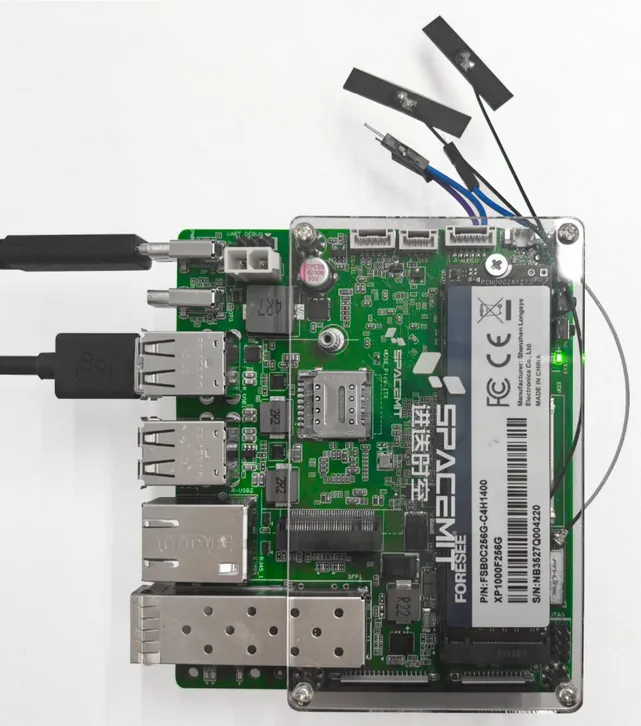
Specifications of the K3 Pico-ITX:
processor: SpacemiT K3,
AI accelerator: up to 60 TOPS,
form factor: Pico-ITX (2.5″ × 2.5″),
network: 10 GbE,
video: eDP,
interfaces: front panel, RTC, PCIe expansion,
platform: RISC-V RVA23.
As of May 2026, Banana Pi has shown both systems and started sharing details about the platform. Exact pricing has not been announced yet, but the BPI-SM10 uses almost the same design as the Radxa C200 Orin Dev Kit, which costs around $499, so these devices are unlikely to be cheap.
Orange Pi Zero 3W — tiny single-board computer with LPDDR5, PCIe 3.0 and up to 16 GB of memory
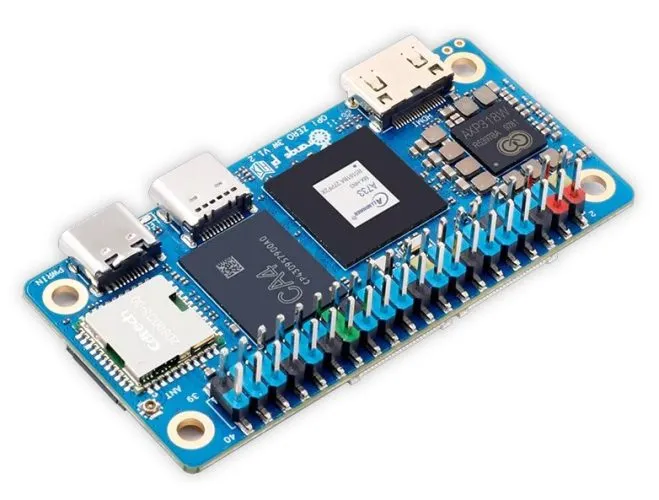
The board, measuring only 65 × 32 mm, is equipped with an Allwinner A733 processor, support for up to 16 GB of LPDDR5 memory, and a PCIe 3.0 interface. For a device of this size, this is already a fairly unusual set of features.
Inside is an eight-core chip with two high-performance Cortex-A76 cores and six Cortex-A55 cores, as well as an integrated NPU with up to 3 TOPS of performance. It supports Wi-Fi 6, two cameras via MIPI CSI, and simultaneous output to two displays. For expansion, a PCIe 3.0 x1 interface is provided via an FPC connector, to which additional devices such as storage drives or network adapters can be connected. Compared to most compact SBCs of this size, this board is noticeably more powerful than the typical Zero models.
Specifications:
Processor: Allwinner A733 (2× Cortex-A76 + 6× Cortex-A55, up to 2.0 GHz),
Graphics: Imagination BXM-4-64 MC1,
AI accelerator: up to 3 TOPS,
RAM: 1 to 16 GB LPDDR5-4800,
Storage: microSD, eMMC, UFS 3.0 (up to 128 GB),
Video: mini HDMI 2.0, USB-C (DisplayPort Alt Mode), MIPI DSI,
Cameras: 2× MIPI CSI,
Networking: Wi-Fi 6, Bluetooth 5.4,
Ports: USB 3.1 Type-C OTG, USB 2.0 Type-C (power),
Interfaces: PCIe 3.0 x1 (FPC), 40-pin GPIO,
Power: USB-C 5 V / 3 A,
Dimensions: 65 × 32 mm,
Weight: approximately 14 g.
As of May 2026, the Orange Pi Zero 3W is already on sale. Base versions are priced at around $25, while configurations with larger memory and built-in storage can cost over $100.
Raspberry Pi 6: It will be released, but you'll have to wait longer than many expected
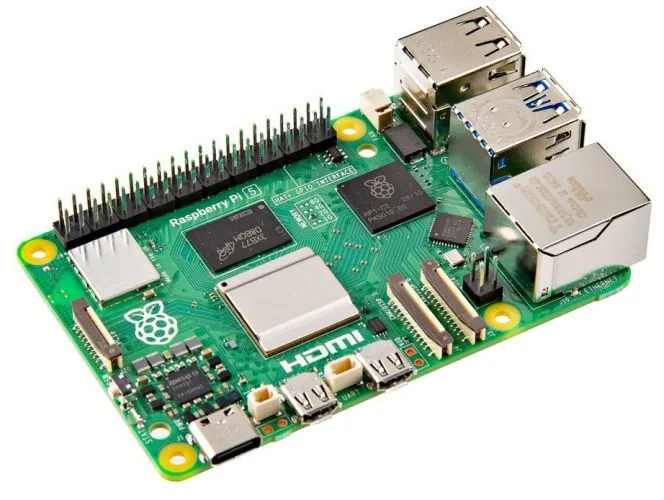
It looks like the Raspberry Pi 5 will remain the company's flagship single-board computer for the next couple of years. In the spring of 2026, Raspberry Pi representatives spoke quite directly about the next generation of the board for the first time, making it clear that the "Raspberry Pi" won't be released anytime soon. If many previously expected it to launch in 2026 or 2027, the timeline has now shifted noticeably.
The most important thing here is not even the delay, but the company's approach to the project. According to Eben Upton, the Raspberry Pi 6 is not being designed as a radically new system with a different form factor or set of interfaces. Rather, it is about evolving the current platform: faster processors, increased memory bandwidth, and improved input/output interfaces. At the same time, the new board may not even have a built-in NPU for local AI processing, which many competitors are currently actively adding to their products.
The situation on the memory market also plays an additional role. In 2026, Raspberry Pi has already raised prices on existing models several times due to rising DRAM costs, and the company itself openly states that the memory market remains unstable. Against this backdrop, the Raspberry Pi 5 will apparently have to remain the flagship board for noticeably longer than usual.
As of May 2026, the Raspberry Pi 6 has not been officially announced. According to company leadership, its release is not expected before the beginning of 2028. Technical specifications have not been disclosed yet, but it is already known that the board will retain the familiar form factor and general architecture of current models.
![From Virtual Hands to AI for Survivalists: Curious Open Agent OSes [and One Hardware Project]](https://cdn.tekkix.com/imgs/2026/05/habrcom/big/ce0b1057616faed51cd8b9f3b2b9.webp)

Write comment