- AI
- A
From Vibe Coding to Agentic Engineering: What Has Changed in AI Development in 1 Year
At first, we were promised that we could just talk to AI, and it would write code. Now it turns out that this is not enough: those who design systems, set boundaries for agents, and catch their mistakes before they reach the working version of the service used by real people are the ones winning.
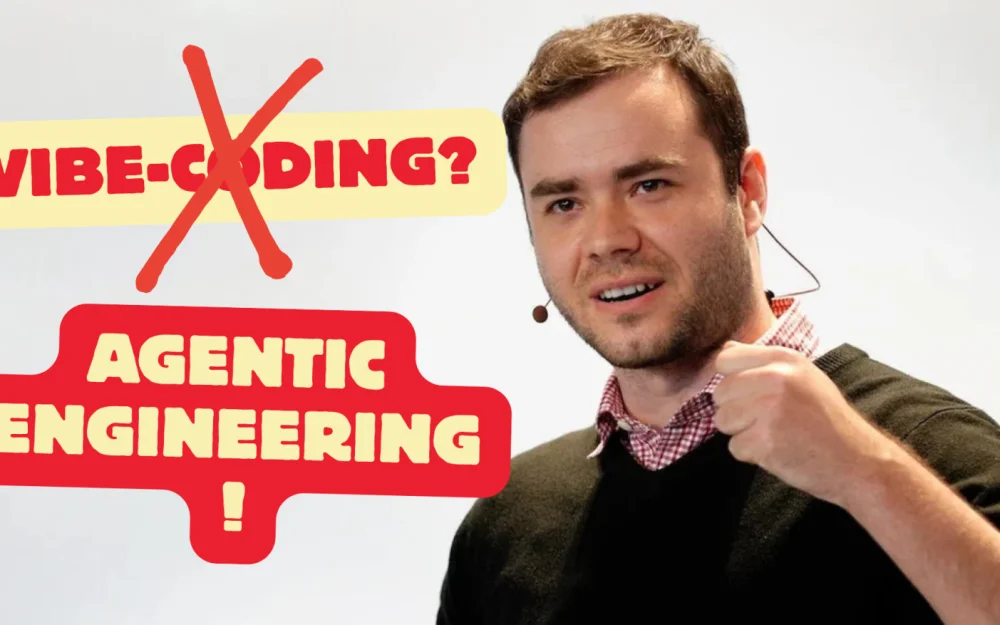
One year ago, Andrey Karpathy, one of the founders of OpenAI and former head of AI at Tesla, threw the term "vibe coding" into Twitter (now X). He described a new development method: you throw out "vibe-based", or rather, intuitive prompts, and the AI generates code. It was fun, quick, and almost worked. The meme exploded across the internet.
Exactly one year later, in February 2026, Karpathy adjusted the course:
"The new norm is that you don't write code 99% of the time. You direct agents who do it, and oversee the process."
Thus, vibe coding was replaced by agentic engineering.
And in early March, he added:
"It's hard to convey how much programming has changed due to AI in the last 2 months – not gradually, but with a sharp leap."
This is not just a name change. This is a structural shift that changes everything. I broke down what happened over the past months, why vibe coding turned out to be a dangerous illusion, and what developers need to do now to avoid being left behind.
Why Vibe Coding Failed: The Harsh Numbers
The euphoria of vibe coding passed quickly. It turned out to be a direct path to technical debt and bugs. Studies published in late 2025 and early 2026 painted a discouraging picture, and I gathered it together in a table for your convenience:
Research (with reference) | Key takeaway |
Developers using AI tools worked 19% slower, although they felt they were 20% faster. | |
Code written with AI contained 41% more bugs. | |
AI-generated code produced 30% more static analysis warnings. | |
Only 2.6% of experienced developers "completely trust" AI code, while 20% "categorically do not trust" it. |
The problem was not the AI itself, but the workflow. There was no structure, verification, or control with vibe coding. Essentially, you were copy-pasting code from a very confident stranger who sometimes hallucinated.
Agentic Engineering: The New Standard
Agentic engineering is not just about prompting better. It is a transition from the role of a performer to the role of an architect and technical director. You no longer write code; you manage a team of AI agents who write it:
Vibe Coding (2025) | Agentic Engineering (2026) |
|---|---|
Person writes the prompt | Person defines the goal and writes the specification |
AI suggests code | AI-agent team plans, writes, tests, debugs |
Person fixes and inserts | Person reviews and approves the result |
One developer, one AI, one chat | One director, AI development team, complete workflow |
In the past few months, a qualitative leap has occurred. Tools like Cursor and Replit Agent have learned not only to suggest code snippets, but to create, test, and deploy entire applications. In February 2026, Cursor released Cloud Agents – fully autonomous AI agents on isolated virtual machines, which write code, record demos, and prepare pull requests by themselves. This is agentic engineering in action.
Practitioner and mentor Xin Hu, who taught teams of designers vibe-coding, described the evolution of tools as a 5-level maturity model: from text fields (level 1) through IDE plugins and low-code platforms to IDE agents like Cursor and Kiro (level 4) and CLI agents (level 5). He noted that designers who started with low-code platforms voluntarily transitioned to IDE agents once they mastered the basic concepts of development. Low-code hit a ceiling with custom design systems, complex logic, and system integration.
What does this mean for your career?
This is the part that is hard to hear. Skills that were valued for years are rapidly losing their worth.
What is becoming less valuable:
Writing boilerplate code
Translating specifications into code (the key task of a junior)
Memorizing syntax and APIs
Manual debugging of simple errors
What is becoming 10 times more valuable:
System Architecture. Agents write code, but do not design systems. The ability to see the big picture is a new premium skill.
Writing specifications. The most valuable skill in 2026 is not coding, but writing clear, unambiguous specifications that AI agents can execute.
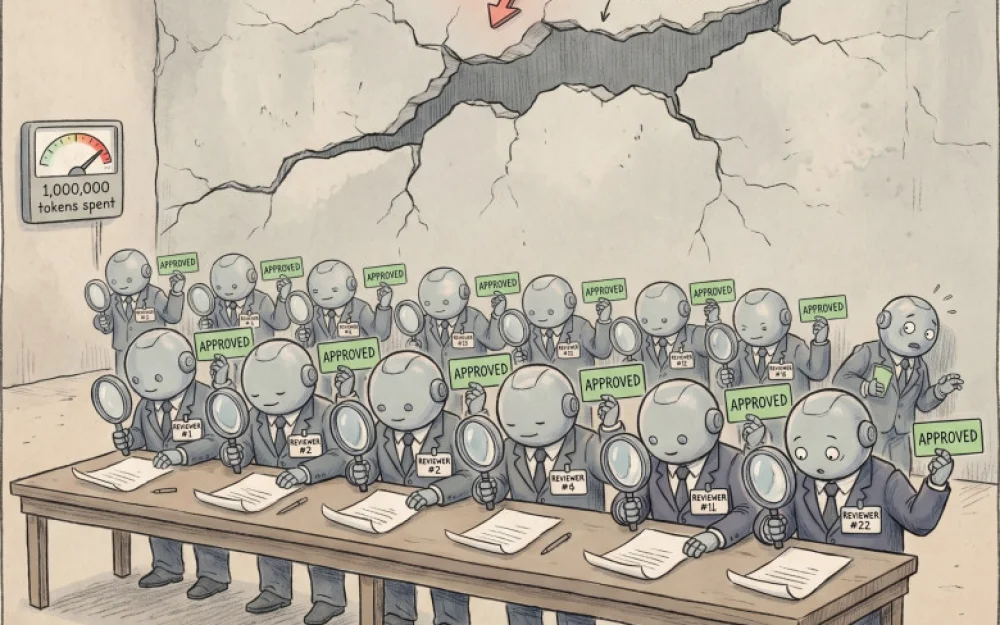
Review and Critical Thinking. Someone needs to check that the agents don’t cause trouble. This requires a deep understanding of what good code is, not how to write it.
Agent Orchestration. The ability to set up and coordinate the work of several AI agents.
Context Engineering. Providing agents with the right documentation, constraints, and examples. This replaces prompt engineering.
If you're interested, I wrote about Which AI services will sell best in 2026, there I cover 7 key skills, and I highlighted 5 specific in-demand niches.
The Junior Crisis? Or Is It Not That Simple?
The data is relentless. Harvard's research showed a sharp decline in junior hiring at companies implementing AI. Between the end of 2022 and mid-2025, employment in entry-level positions in AI-dependent areas like software development fell by about 20%. But where some jobs have disappeared, others have appeared: there is another trend: IBM and Cognizant, on the contrary, have significantly increased hiring of newcomers. They are betting on juniors who immediately learn to work with AI agents, and it is expected that they will be more productive than seniors who resist change.
What can be said to newcomers... don't learn to code like in 2020, but learn to orchestrate like in 2026. The entry into the industry is shifting, and now the competitive candidate is not the one who can write a function, but the one who can direct an agent to do a feature and check its work.





Write comment