
- Security
- A
Why the plan to "replace AI developers" is turning into technical debt and a staffing crisis
The plan to "replace AI developers" has failed. Here are the numbers
Preamble
In 2023–2024, managers in corporations were actively sold the idea that large language models would soon replace a lot of developers and significantly increase team productivity.
In practice, the years 2025–2026 show a different picture: most MVPs and pilots do not provide measurable returns, technical debt is growing, vulnerabilities are increasing, and the labor market is entering a “junior death spiral” (although some notable authors disagree with this).
This article will cover trends. What data is currently available on the impact of GenAI tools on development, why “free” AI code turns out to be expensive, and what conclusions companies and engineers themselves can draw from this.
ROI from GenAI: where is the promised productivity?
*ROI - return on investment
One of the key theses of the hype in 2023–2024: GenAI will radically increase development efficiency, meaning companies will be able to spend less on people. By the end of 2025, reports show a much more sober picture.
In a review by the MIT Nandanda Center titled “The Gen AI Divide,” it is stated that 95% of corporate GenAI pilots did not yield a single dollar of measurable ROI.
According to Forrester and BCG, only 5–15% of top managers in large companies report a noticeable increase in business margins due to GenAI initiatives.
Individual pilots at the office task level do indeed save time - for example, in a British Google pilot, employees saved an average of 122 hours a year on routine administrative operations using GenAI. But this is far from the promises of “-50% from the development team.”
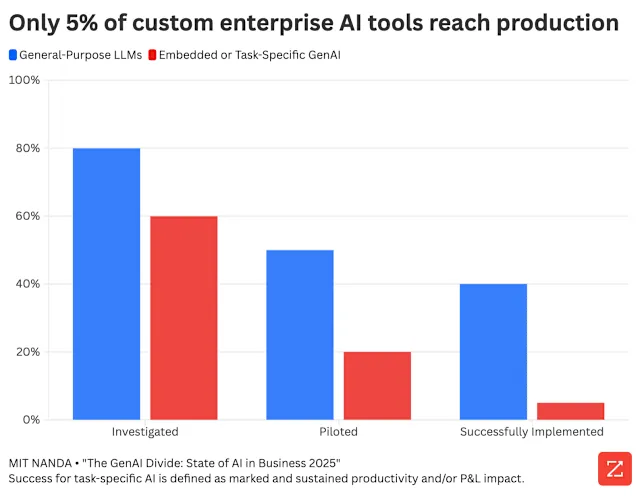
Local accelerated work on simple tasks (boilerplate, documentation, etc.) on one hand, fails to create consistent and measurable business value on the other.
“Vibe-coding” and the growth of technical debt: from task acceleration to “slop layer”
Even where GenAI helps to close tasks faster, another problem arises — the quality and structure of the code.
Features of AI-generated Code
Frequently cited research from Stanford Digital Economy Lab and Git Code Clear shows several persistent properties of AI-generated code:
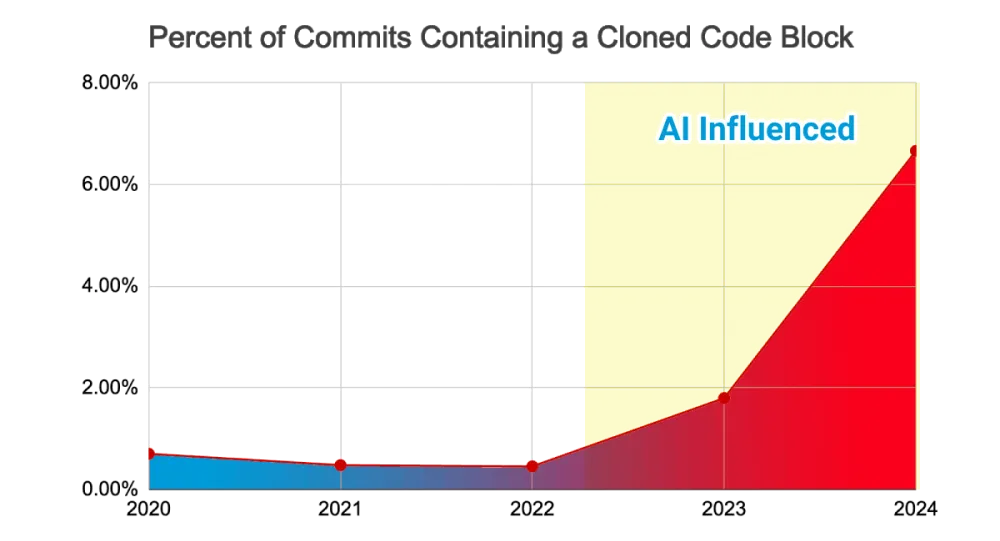
The code is simpler in structure and less diverse.
There is a 4-fold increase in “code cloning”: the model tends to copy and slightly modify already seen blocks instead of identifying abstractions and reusable components.
The maintainability and modifiability of such solutions sharply decrease, especially over a horizon of >1 year.
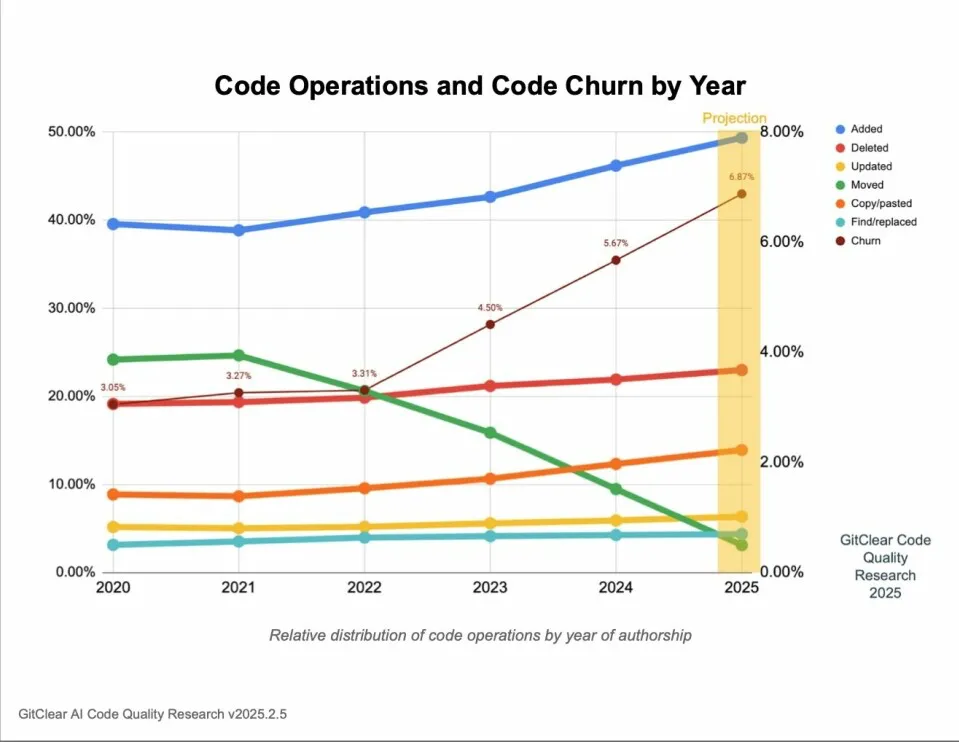
As a result, a so-called slop layer forms — a layer of code that “somehow works,” but no one understands why exactly, and cannot safely change it without regressions.
Technical Debt in Numbers
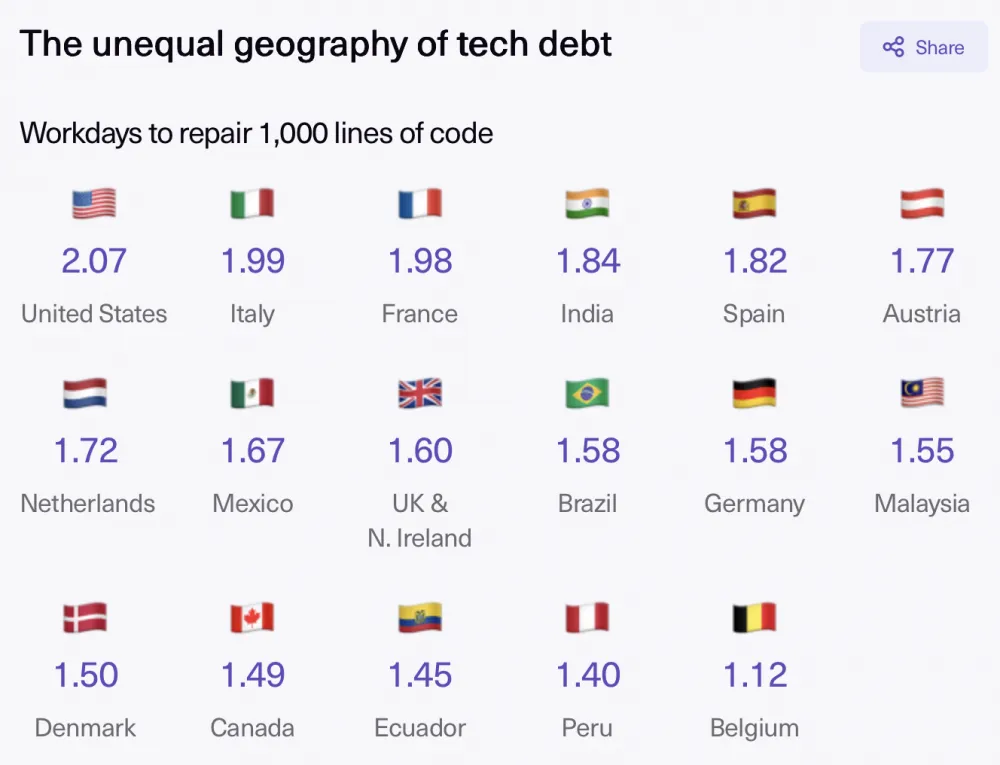
According to analysis by CAST Software (approximately 10 billion lines of code - and I generally recommend reading it - it's very dramatic), to address the accumulated global technical debt in the current codebase will require 61 billion person-days of work. Clearly, this is not "quick" technical debt, but systemic debt of decades, on which GenAI adds another layer.
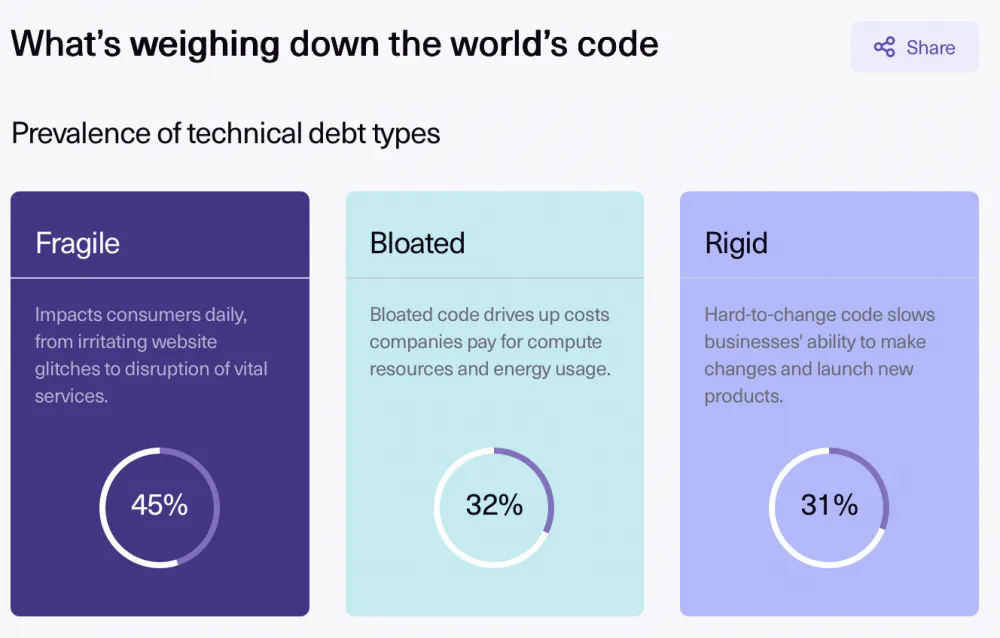
At the same time, local acceleration is indeed recorded: experiments show that AI, on average, allows a junior to solve a simple task about 35% faster. However, the final product ends up being worse maintained, which means — more expensive in the long run.
InfoSec: Veracode and OWASP Top 10
At the security level, the picture is also not bright.
The report Veracode GenAI 2025 shows that:
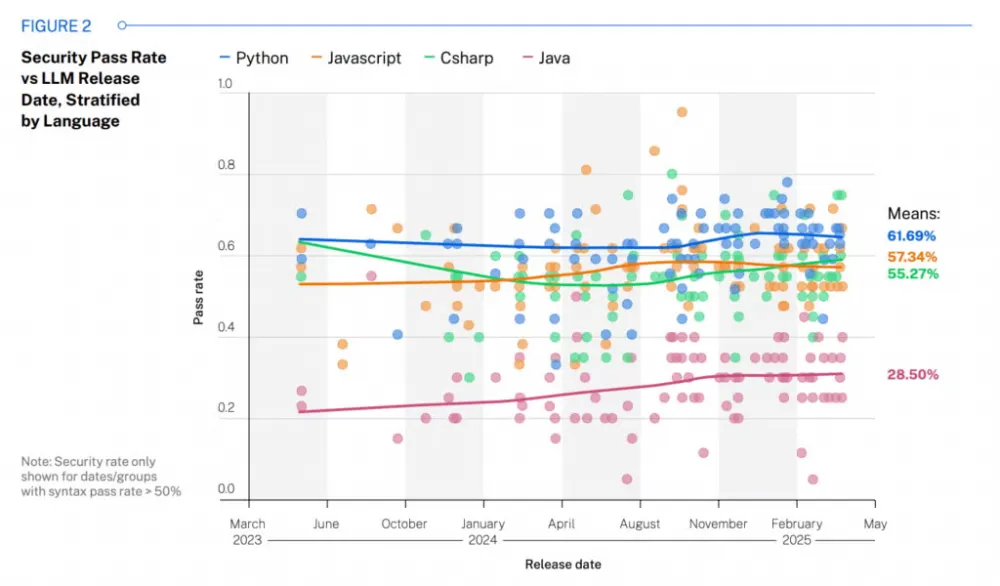
45% of the code generated by GenAI tools contains vulnerabilities from OWASP Top 10.
In the Java ecosystem, the failure rate of security checks has exceeded 72% — meaning nearly three-quarters of the code being reviewed does not pass security gates.
Additionally, another type of hidden debt is accumulating: senior engineers are forced to "babysit" AI, spending time on reviewing and correcting hallucinations. Several reviews report that experienced developers spend up to 11 hours a week checking AI-generated code and, on average, work ~19% slower than without such tools due to the additional verification.
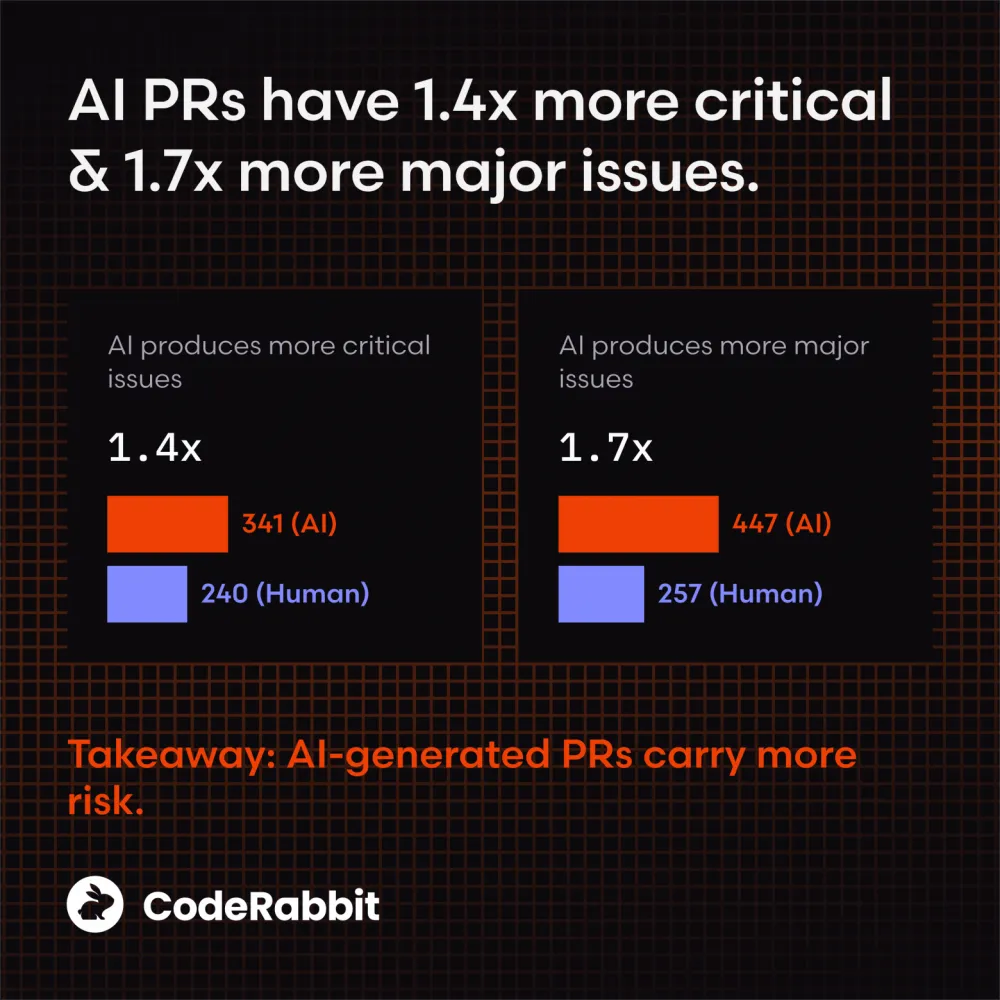
Specific code quality metrics (according to CodeRabbit and others) show that a pull request created with GenAI contains an average of 10.8 comments compared to 6.4 for a PR written by a human without AI assistance. Thus, speed in a short sprint translates into an increase in defects and overload in code review subsequently.
Labor Market: “Junior Death Spiral” and Impact on Salaries
The side effect of attempts to “replace juniors with AI” leads to a structural gap in the talent pipeline.
Junior Death Spiral
According to data cited in reviews by MIT and Stanford:
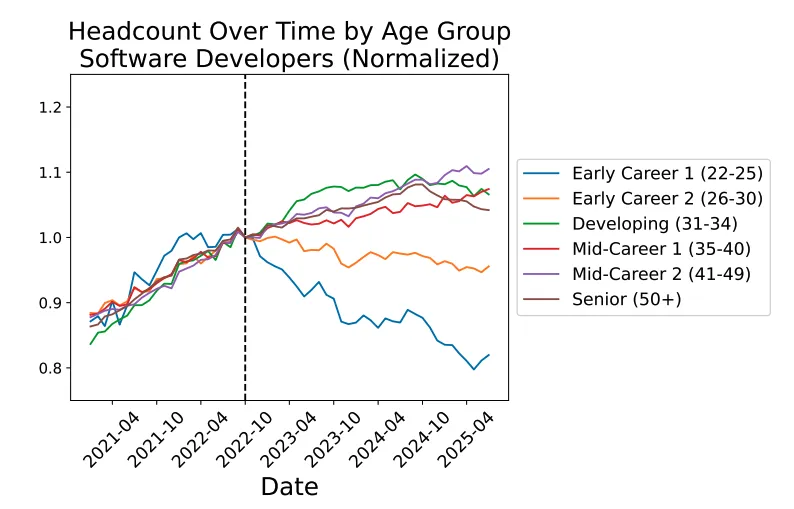
Hiring for entry-level positions in IT has dropped by about 50% from 2023 to 2025. There was a post on Habr by Andrey about "Juniors - everything"!
In what we might call “roles susceptible to AI replacement,” the employment of junior specialists has significantly decreased. In contrast, the employment of workers over 35 has increased.
Companies still need experienced engineers, but at the same time, they are “sawing off the branch they are sitting on”: if there are no juniors, then seniors won’t appear within the company in 5–7 years.
An additional problem: “learning” tasks are disappearing. Previously, juniors honed their skills on boilerplate code, but now this work is delegated to AI assistants, while juniors are expected to solve architectural problems without sufficient background.
Salary and Negotiation Position
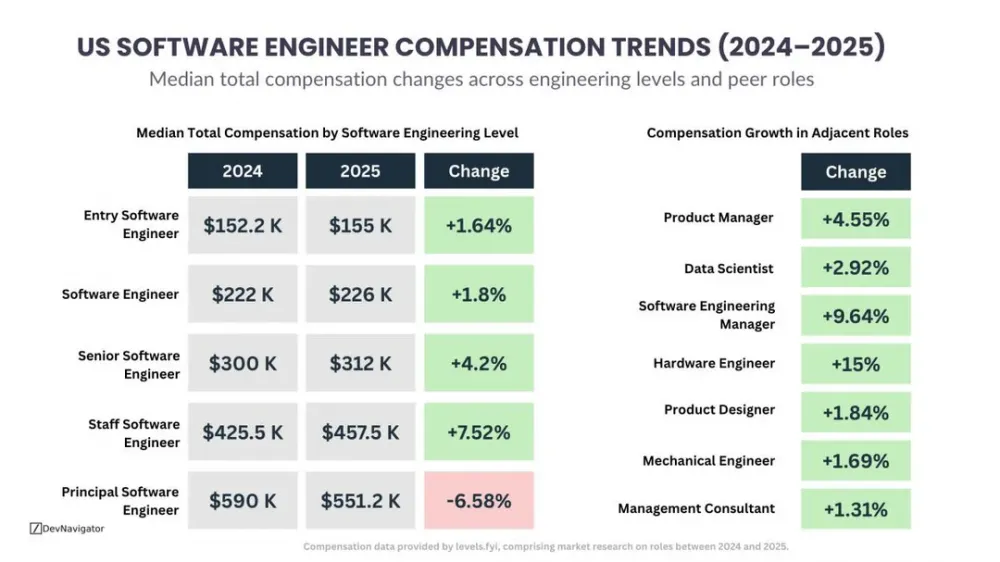
In the markets (USA, UK, etc.), analytics shows:
The median salaries for regular developer roles dropped by about 9% year-on-year in some markets (according to job listings and reports like ITJobsWatch).
At the same time, the number of employees in the industry as a whole is not decreasing as sharply: many companies are transitioning to a “low-hire, low-fire” mode — hiring few, also being cautious with layoffs, taking advantage of the surplus of candidates after the waves of layoffs from 2022-2024.
Companies are actively using the argument “AI does 40% of the work” in salary negotiations: the argument “we can’t pay like we did in 2022 because AI takes on part of the workload” has become a standard response for “pushing” candidates towards lower requests. This creates constant psychological pressure on specialists.
Scandals and Accidents: from AI-washing* to Production Accidents
*when AI is used as a cover
The story of replacing humans with AI is exacerbated by the fact that some high-profile cases turned out to be either marketing strategies or blatant AI-washing.

The case of the startup Builder.ai, which attracted $1.5 billion, made headlines in 2025. The fully autonomous AI development in their case consisted of hundreds of engineers in the Indian office manually performing a significant portion of the work.
In 2025, a widely discussed case occurred when Google Antigravity mistakenly performed a recursive deletion in production of 2 TB (because it misinterpreted the flag).
AI has no accountability, and any authority for “independent actions” in production must rely on strict technical and organizational barriers (including that the engineer using assistants is fully responsible for the outcome).
What to Do About It: Approaches for Companies and Developers
The key takeaway from current data is that the problem lies in the organizational models of its use.
For companies, it is important now
Shift the focus from "replacing people" to empowering architects.
High returns come where GenAI is embedded in the work of experienced engineers, rather than substituting them.
Introduce explicit quality policies for AI code.
Mandatory security scans (considering Veracode data), limits on auto-merge AI-PRs, refactoring rules directly in agents.md.
Preserve and reinvent the junior path.
We need “training” tracks: features with soft SLAs, sandboxes, internal pet projects where juniors write and break code themselves, and AI acts as a mentor.
Honestly assess ROI.
No one in their reports claims that AI is a dead-end. If 95% of pilots do not yield a return on investment: the problem lies in how we measure effects and what hypotheses underpin this.
What is relevant for developers now
Enhance skills in architecture and reviewing AI code.
AI generates “raw material.” The value shifts towards those who can create good architecture and turn raw code into maintainable systems.
Treat AI as a junior colleague.
In fact, AI now resembles a frequently mistaken junior. Routine tasks can be delegated to it, but critical aspects will still need to be checked.
Personally monitor quality and speed metrics.
If you find yourself spending 10+ hours a week correcting hallucinations, it may be worth reconsidering the specific use case of the assistant.
And where are we now, in February 2026?
Based on available data, it can be said that GenAI has not destroyed development, but shattered (it seems to me, still in the process of shattering in Russia) the illusion that “development is just a set of prompts and everyone can be cut” (at least for managers).
Companies that are currently restructuring processes around strong “protein” architects, strict quality practices, and meaningful AI integration are likely to win. But only when the hype settles down and the market learns to distinguish “AI-washing” from real value.








Write comment