- AI
- A
The Future of Robotics in 2026: Trends Already Changing the Market
Robotics has already moved beyond a narrow industrial niche. According to IFR, the value of annual industrial robot installations reached a record $16.7 billion. In 2024, 542,076 industrial robots were installed worldwide, and the active fleet grew to 4,663,698 units. At the same time, sales of professional service robots approached 200,000 units. The fastest growth was seen in logistics, cleaning, and healthcare.
In Russia, this topic has also ceased to be theoretical. According to the Ministry of Industry and Trade and Rosstat, by the end of 2024, the fleet of industrial robots in the country reached 20,864 units, and the robotization density in the manufacturing industry increased from 19 to 29 robots per 10,000 employees. The goal for 2030 is to enter the top 25 countries in terms of robotization density. The ministry also reported that domestic production of industrial robotics in 2024 increased 4.5 times — to 7.6 billion rubles.
The coming years will be defined not by general discussions about "robots of the future," but by several specific shifts. These include AI that begins to control the physical actions of robots, a transition to more universal systems, tactile sensors and soft grips, digital twins — virtual models of equipment or production lines — as well as new requirements for safety, cybersecurity, and accountability. In this article, we will break down the main points in order.
AI Moves from the Digital Realm to the Physical World
The main shift of 2026 is the transition from assistant algorithms to systems in which AI perceives the scene, plans actions, and quickly alters the robot's behavior. IFR identifies AI and autonomy as the main trend of the year. They distinguish between generative and agent-based AI — an approach where the system constructs a chain of actions and modifies it during operation.
This shift is already visible in the tools of major developers. Google DeepMind introduced Gemini Robotics — a model that works with images, text, and robotic actions simultaneously. It understands natural language and can adapt if the situation changes abruptly. NVIDIA released Isaac GR00T N1 — an open foundational model for humanoid robots — and immediately linked it with simulation and the generation of synthetic data. Synthetic data are created in a virtual environment and used for training real systems.
The increase in autonomy is not equivalent to universal "common sense." The developers themselves emphasize that low-level safety contours are still needed above AI: limitations on effort, stability, and trajectory. Otherwise, the robot may look impressive in a demonstration but fail to operate alongside humans.
The market demands not only speed but also versatility
Demand is shifting from narrowly specialized robotic cells to systems that can be quickly reconfigured for another product, route, or operation. This is evident in the structure of the global market. In 2024, electronics production became the largest customer for industrial robots: 128,899 installations compared to 126,088 in the automotive industry. Metalworking and machine engineering also grew — to 88,777 installations. Robotics is increasingly moving beyond the classic automotive assembly line.
IFR describes another important trend — the convergence of information systems and production equipment. A robot is no longer sufficient to repeat the same trajectory. It must exchange data with planning systems, consider the state of the line, inventory levels, task queues, and maintenance signals. The better this exchange, the fewer manual adjustments are needed, and the greater the actual flexibility of production.
Another sign of a mature market is the shift to renting and subscribing to robotic systems instead of the mandatory purchase of the entire complex. According to IFR, the fleet of such solutions grew by 31% in 2024, while in logistics it increased by 42%. For businesses, this represents a significant shift. Increasingly, robotization begins not with a large-scale project over years but with a pilot project with clear economics.
Humanoid robots are emerging from laboratories, but the market is still testing them
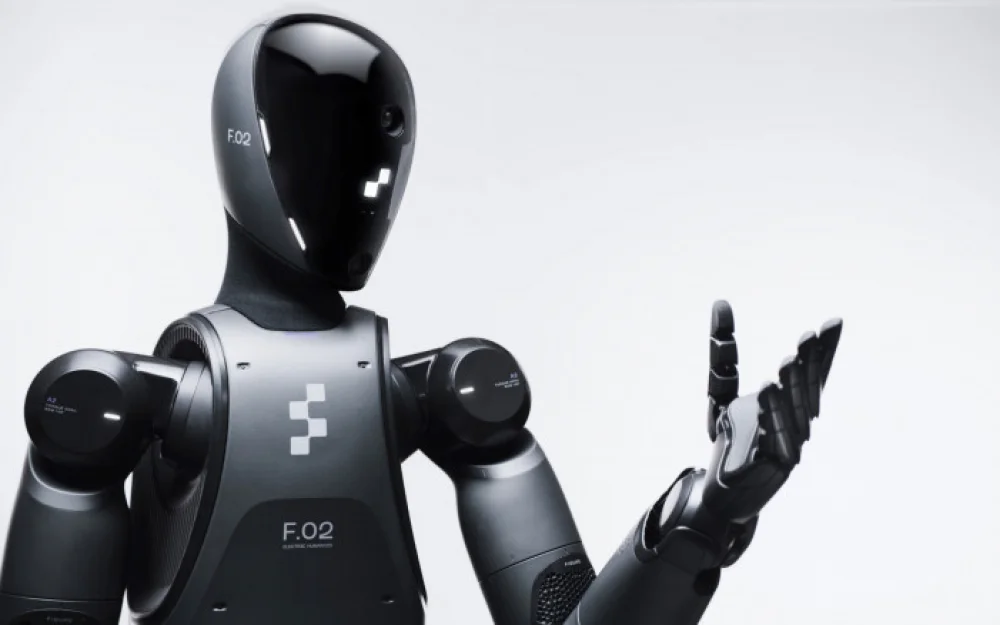
One of the most notable themes of the last year and a half is humanoid robots, that is, machines with human-like form. IFR has included them among the key trends for 2026 but made an important caveat: such systems still need to prove their reliability, energy efficiency, acceptable maintenance costs, and compliance with safety standards. This is especially important because they are being introduced into spaces that were originally designed for humans — in warehouses, assembly areas, and intra-shop logistics.
Pilot projects are already underway. Mercedes-Benz and Apptronik have announced that they are testing the humanoid robot Apollo at production sites. Agility Robotics reported that its humanoid Digit has moved over 100,000 containers at the GXO site in commercial operation. While this is not a mass market yet, it is not just a showcase either. The South Korean giant Hyundai quietly acquired Boston Dynamics, and certainly not to delight us with videos of flashy robots.
But it is still too early to overestimate humanoids. In most tasks in the coming years, hybrid schemes will prevail. Autonomous mobile robots will handle the transportation of goods, cobots (robots for collaborative work with humans) will manage local operations, and stationary manipulators will perform fast and precise operations. Humanoids will remain where it is too expensive to adapt the environment for machines. The future of robotics will likely be multi-layered rather than singular.
The next frontier — not just vision, but also "touch"
In past robotics reviews, the topic of sensors was often described too broadly. In 2026, it is more accurate to speak of a specific combination: computer vision, tactile sensors, and soft grippers. Tactile sensors give robots a sense of contact and pressure. This combination helps automate work with uneven, fragile, and poorly standardized objects.
GelSight already has commercial solutions for robotics based on three-dimensional tactile surface analysis. In 2025, Festo launched HPSX — a soft silicone gripper for delicate and non-standard objects, including items that are easy to damage. The practical meaning of such solutions is simple: the more accurately a robot senses an object, the less rigid tooling — special devices designed for specific items — is needed, and the lower the dependence on ideal standardization of each product.
Therefore, such systems will probably grow more noticeably not in abstract "home robotics," but in the food industry, pharmaceuticals, electronic assembly, laboratory operations, and piece-by-piece warehouse fulfillment. There is too much variability in objects for old rigid scenarios.
Digital twins and synthetic data shorten the path from idea to implementation
Another area that many early market reviews lacked is the preparation for robotics in a digital environment. Modern systems are increasingly being trained, debugged, and tested even before installation in the shop or warehouse. The IFR specifically notes that generative AI helps robots master new tasks and create training data through simulation—virtual modeling.
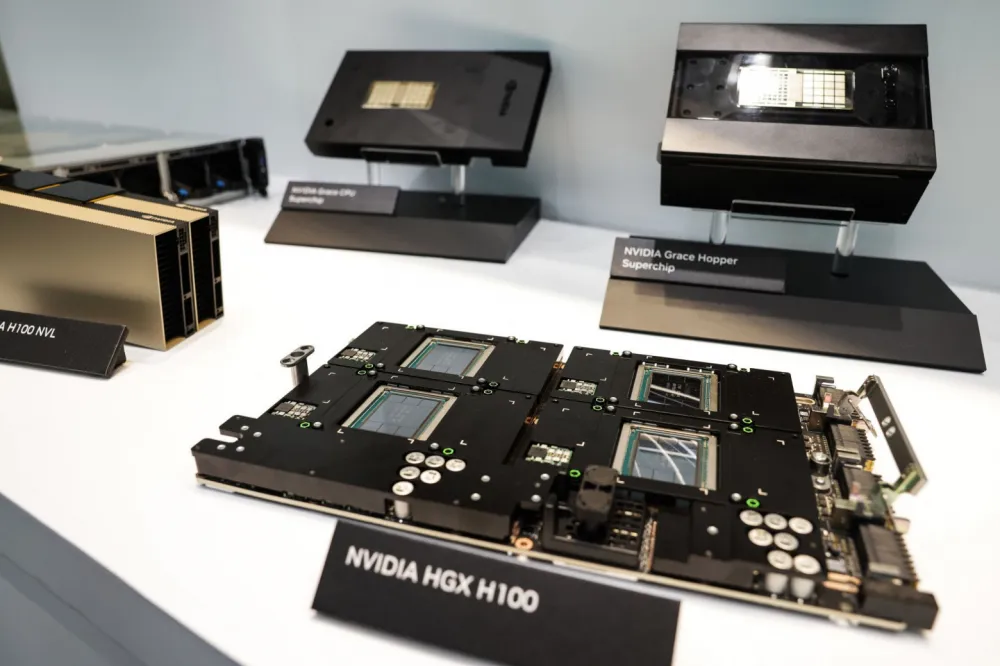
This logic is quickly becoming an industry standard. NVIDIA is building an ecosystem around Omniverse for industrial simulation and physical AI. Physical AI refers to models that help robots act in the real world. ABB is developing RobotStudio Cloud—a cloud environment where robots can be programmed, their operations modeled, and scenarios collaboratively edited, with an AI assistant built into the service. For manufacturers, this provides a cheaper way to test hypotheses, reduces downtime during commissioning—launching and configuring equipment—and enables faster starts for pilot projects.
The digital twin has already become a working tool, not just a presentation image. It is used to validate trajectories, cell layouts, operation sequences, bottlenecks, and even the logic of human-robot interaction. In the coming years, such tools will significantly reduce the cost of implementation and the number of errors at the start of projects.
Where Growth is Already Visible
Logistics and Warehousing
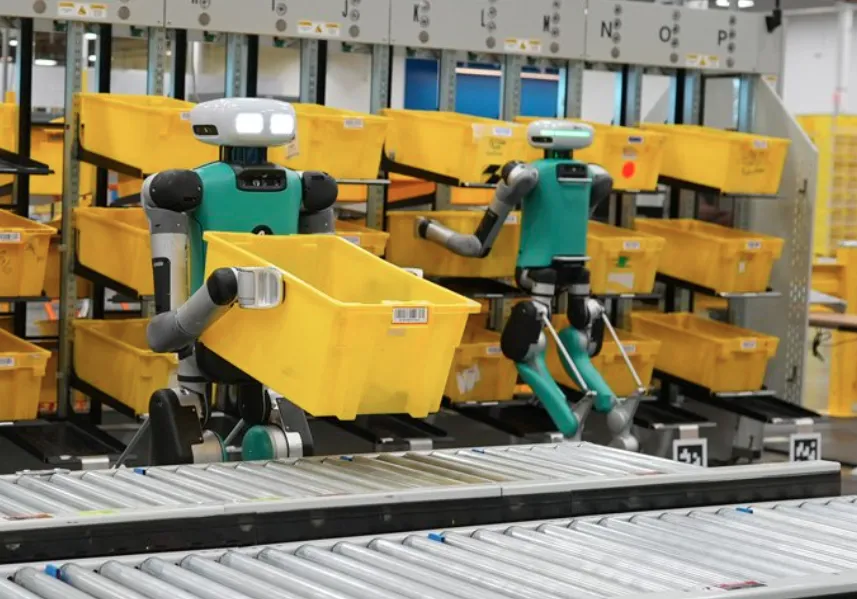
Logistics remains the main driver of service robotics. According to IFR, in 2024, 102.9 thousand professional robots for transportation and logistics were sold worldwide. This accounts for more than half of all professional service robots. Major platforms are increasingly being built not around a single machine but around a coordinated group of systems. In Amazon's new warehouse center in Shreveport, eight different robotic systems are at work, while the Sequoia system accelerates stock placement and storage by up to 75%.
A completely unmanned warehouse remains a rarity for now. A much more realistic model is one where humans are responsible for exceptions, control, and complex decisions, while robots handle monotonous transportation, sorting, feeding, and repetitive manipulations. This kind of scheme now appears not futuristic but economically mature.
Medicine and Laboratories
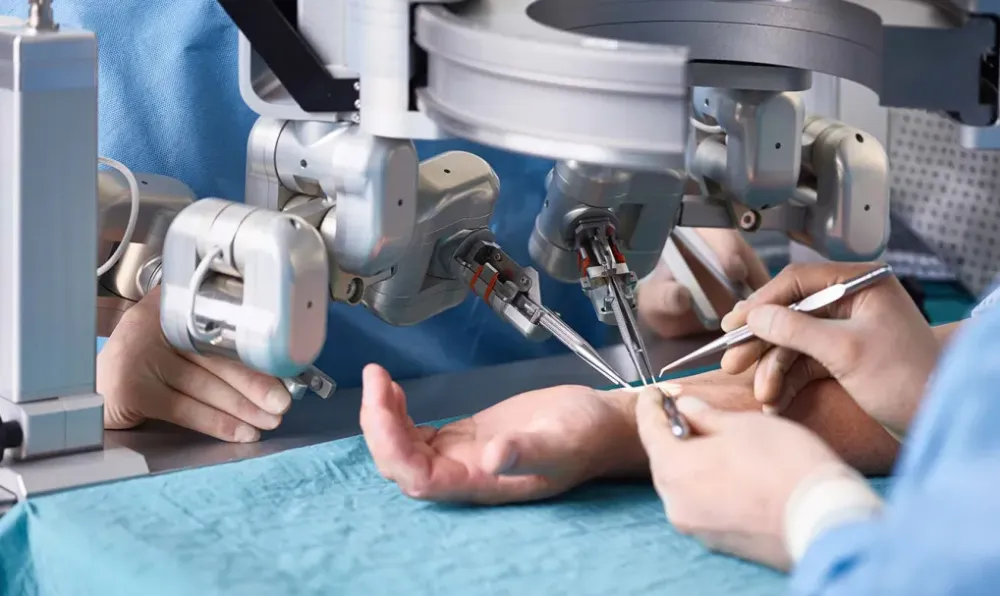
In medicine, the market is no longer limited to surgical systems. IFR has categorized medical robots separately and shown a sharp increase: sales grew by 91% in 2024 — approximately to 16,700 units, rehabilitation and non-invasive therapy increased by 106%, surgery — by 41%, diagnostics and laboratory analysis — by 610%.
In surgery, the accuracy of wording is especially important. This is not about mass operations "from anywhere in the world," but about expanding the fleet of systems, developing minimally invasive techniques — approaches with less tissue trauma — and increasing the number of procedures. Intuitive reported that by the end of 2025, the installed base of da Vinci systems reached 11,106, and the total number of patients helped by da Vinci surgeries exceeded 20 million. More than 3.1 million procedures were performed in 2025 alone.
Agriculture, Ecology, and Inspections
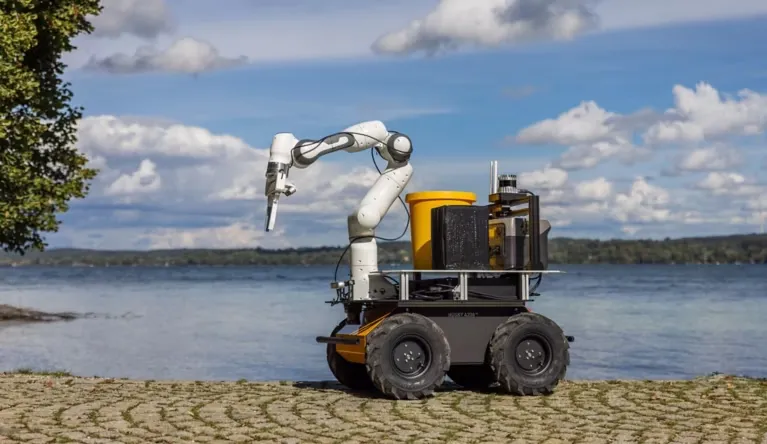
In the agri-sector, robotization is heading where there is a particularly acute shortage of people, high costs of chemicals, and regulatory pressure. Ecorobotix states that the ARA system reduces the use of plant protection agents and fertilizers by up to 95% through targeted application in the soil. At the beginning of 2026, Solinftec reported that it had already deployed over 100 autonomous Solix robots in the USA, and the area of operations grew by 243% in 2025.
In industrial safety and environmental monitoring, demand is shifting not towards humanoids, but towards specialized mobile platforms. Boston Dynamics demonstrates how Spot conducts thermal and acoustic inspections of hazardous equipment. At the Northern Lights site in Norway, the ANYmal robot monitors CO2 concentration and helps reduce the number of staff visits to the unattended site. This is one of the most underestimated trends. Many robots in the coming years will not interact with humans but will collect data where it is inconvenient, costly, or risky for humans to be present.
Safety and Cybersecurity Become Integral Parts of Robotics
The more AI, network connections, and remote updates there are in robots, the harder it becomes to separate mechanics from data security. IFR highlights physical safety, cybersecurity, accountability issues, and the requirement to verify system decisions as key trends for 2026.
For the European market, this is no longer a theory. The European Commission calls the AI Act the first comprehensive law on artificial intelligence and builds regulation based on a risk-oriented model. At the same time, machine manufacturers are preparing to transition to the Machinery Regulation — a new EU regulation on machines and robotic equipment. Equipment that enters the EU market before January 20, 2027, is still subject to the current Machinery Directive. After this date, the key regulation will change. In 2025, the basic industrial safety standards were updated: ANSI/RIA R15.06-2025 was adapted from ISO 10218-1:2025 and ISO 10218-2:2025.
In practice, the market in the coming years will look not only at the agility or effectiveness of robots. More important is another aspect: their behavior must be subject to verification, documentation, safe updates, and integration into company processes without a gray area of responsibility.
Conclusion
In the coming years, there will not be a single universal robot that replaces humans everywhere. A more realistic scenario is that industrial manipulators, autonomous mobile robots, cobots, inspection platforms, medical systems, and individual humanoid solutions will exist in parallel and solve different classes of tasks.
The main takeaway is this: the coming years will belong not to the most spectacular but to the most useful robots. The advantage will go to those systems that safely operate alongside people, quickly re-learn through software updates and simulation, handle non-standard objects carefully, and at the same time prove their economic efficiency.
Robots are no longer "arriving" in industries — they are already becoming established within them. Now the important factor is not the mere fact of their appearance, but which companies will learn to integrate them into processes earlier than others, without unnecessary futurology and with clear practical results.




Write comment