- DIY
- A
He died… and he was never turned on :-(
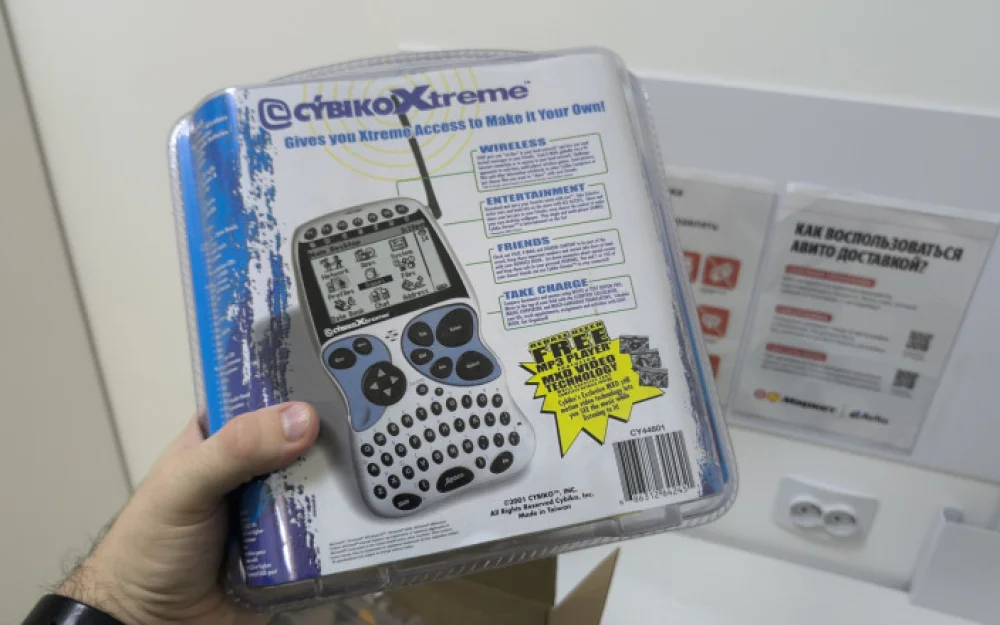
The photo features a unique handheld device developed mostly in Russia for the American market - Cybiko Xtreme by ABBYY founder David Yang. The device was notable for using a mesh network instead of GSM, working at a range of about 150 meters and transforming several blocks into a Facebook-like experience.
The first version of the device was released in 2000, and the refined Xtreme with a built-in battery came out in 2001. Developed mostly in Russia, the device was sold in the USA and even gained some popularity among young people thanks to its full QWERTY keyboard, decent display, snappy Hitachi processor, and very low price.
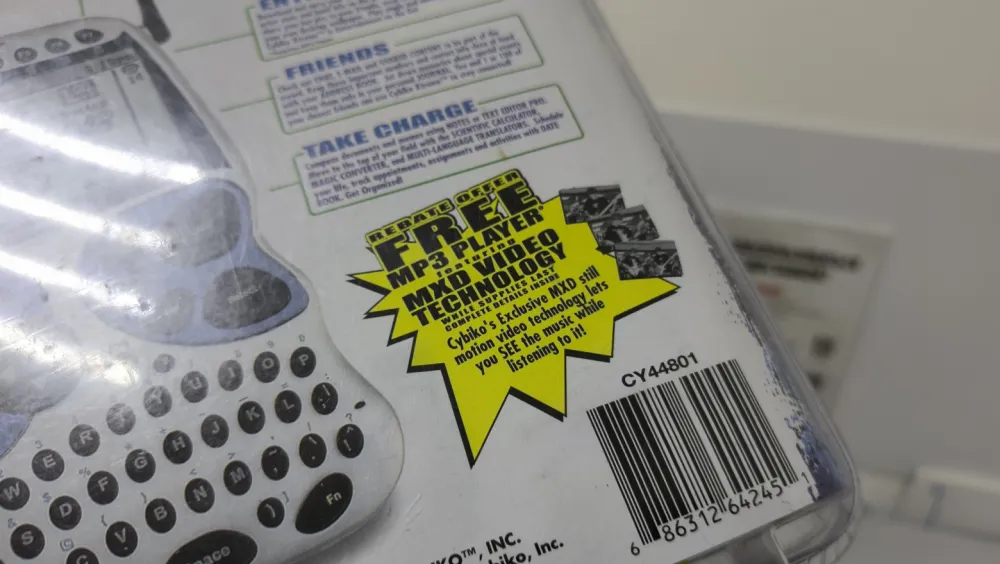
The device could also function as a flash drive (of small capacity) and an MP3 player with a special expansion module. One of Cybiko's features was that the platform was open to programmers, and new applications and games from the company were released every day - absolutely free.
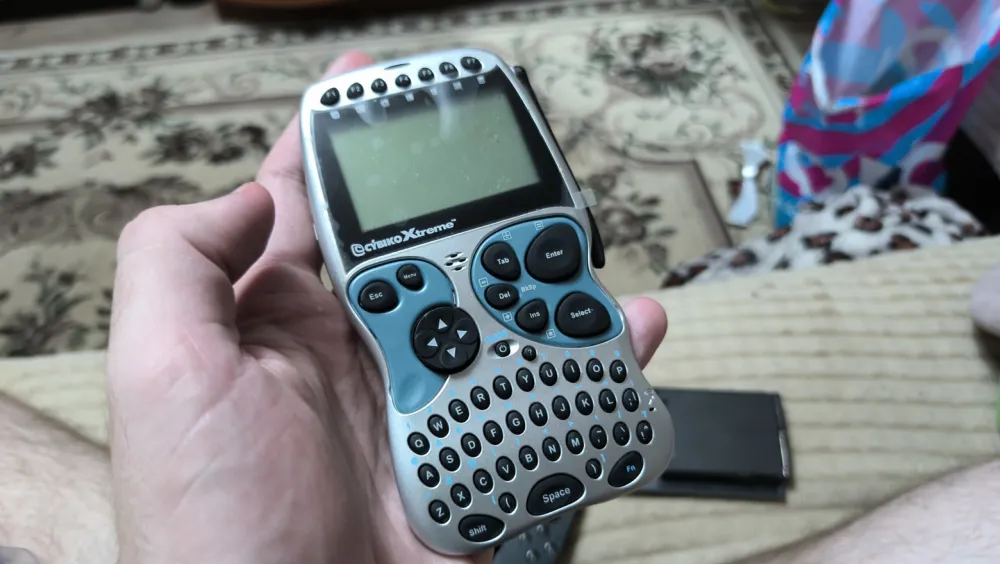
Overall, the device was quite impressive, but a series of tragic events in the USA (9/11 and the dot-com crash) buried the business model of Cybiko along with the company itself, and many units ended up gathering dust in warehouses and garages. Since the device was partially developed in Russia, there are a few of these devices in the country, about 50-100 pieces throughout Russia. Some of them are even unopened...
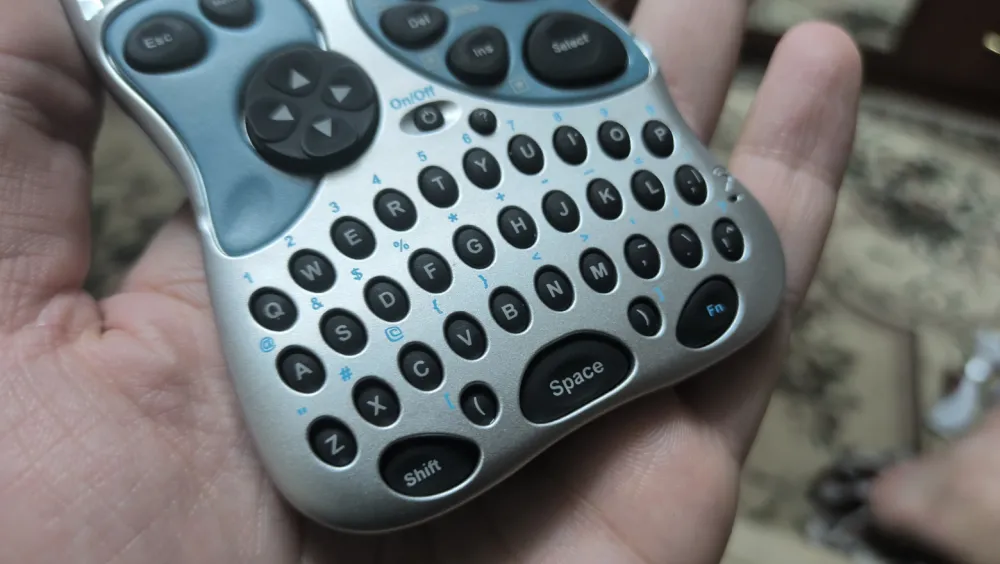
And this is their main issue :( The fact is that the first version of the Cybiko ran on batteries, and accordingly, the main power bus depended on the boosting DC-DC converter MAX1677EEE, which converted 2.5-3V into standard 3.3V/300mA. For some reason, the power scheme was not changed in the Xtreme, and instead of batteries, a nickel-cadmium battery was installed, which lacked proper insulation...
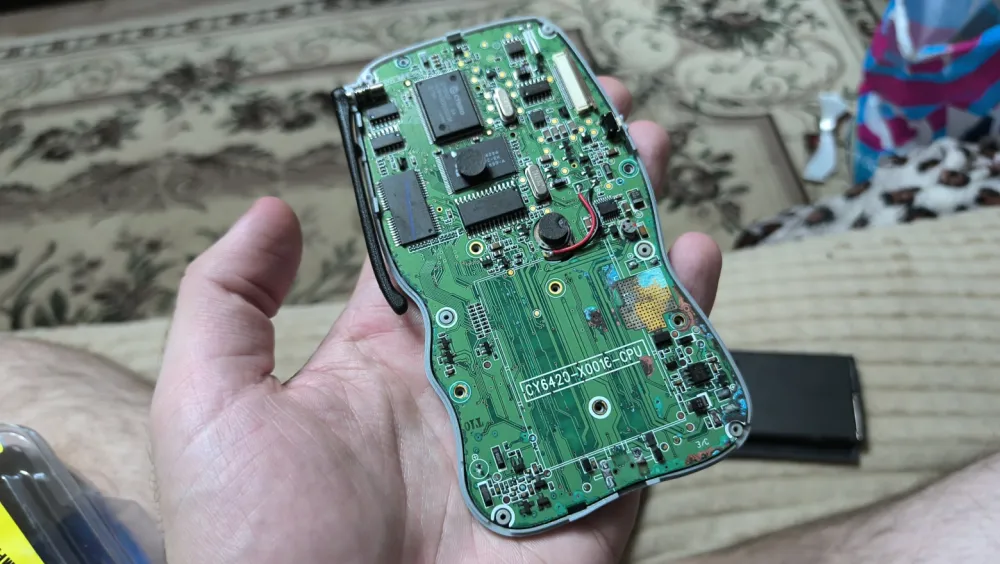
Unlike lithium cells, nickel batteries, like regular alkaline batteries, tend to consume themselves due to prolonged deep discharge, along with damaging the traces and interlayer connections on the device's board. Good lithium batteries can easily last 20+ years (this is not a joke), provided they have a decent BMS without parasitic consumption and are stored under the right conditions. I have new batteries for the Siemens C65 that are 20 years old and they still hold about 30% of their original charge out of 50. Nickel batteries don't even stand a chance of lasting 10 years, and they not only consume themselves but also can damage the device they are used in if it lacks proper insulation.
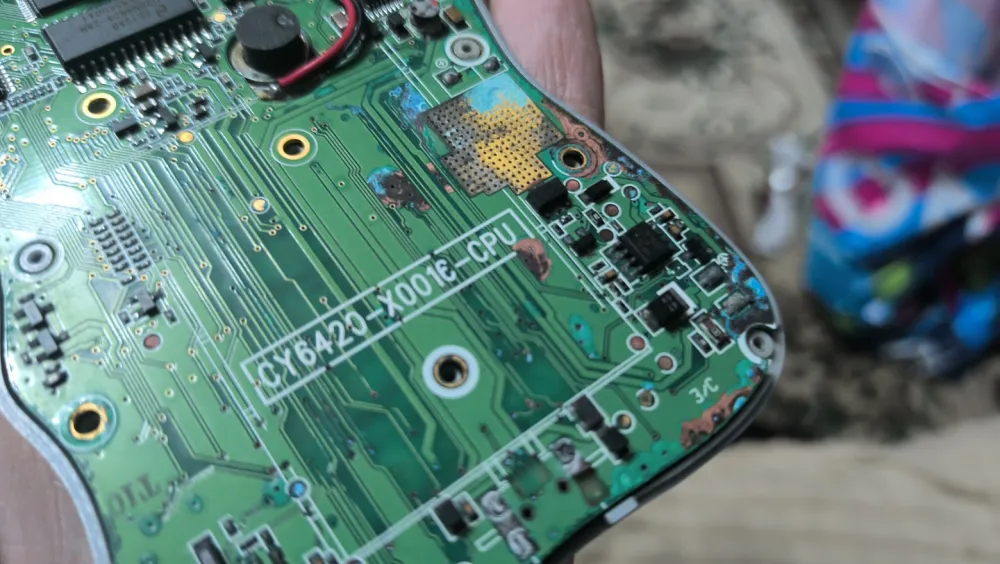
However, it's not all bad here. Mostly, the keyboard buttons got damaged (they can be restored with wire to fix the traces) and the battery charger along with its fuel gauge (the chip that determines the charge level). I can ignore that since I will install a lithium battery here anyway and modify the charger to CC/CV type like the TP4056.
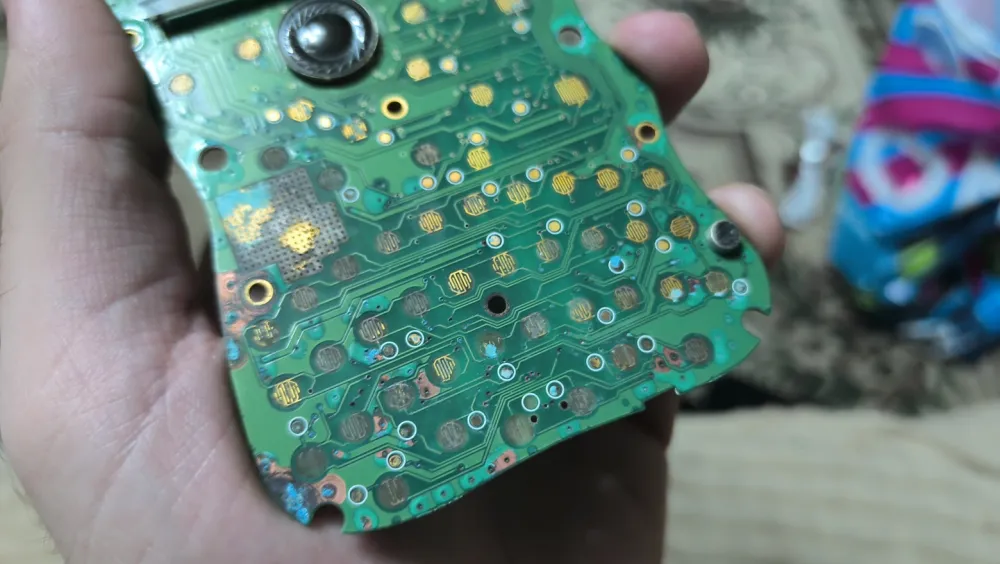
But the fact remains: how many more unsealed Cybicos have consumed themselves due to NiCD batteries? And how many wonderful phones from Nokia, Ericsson, and Psion PDAs have perished because of forgotten batteries?! Just think about it...
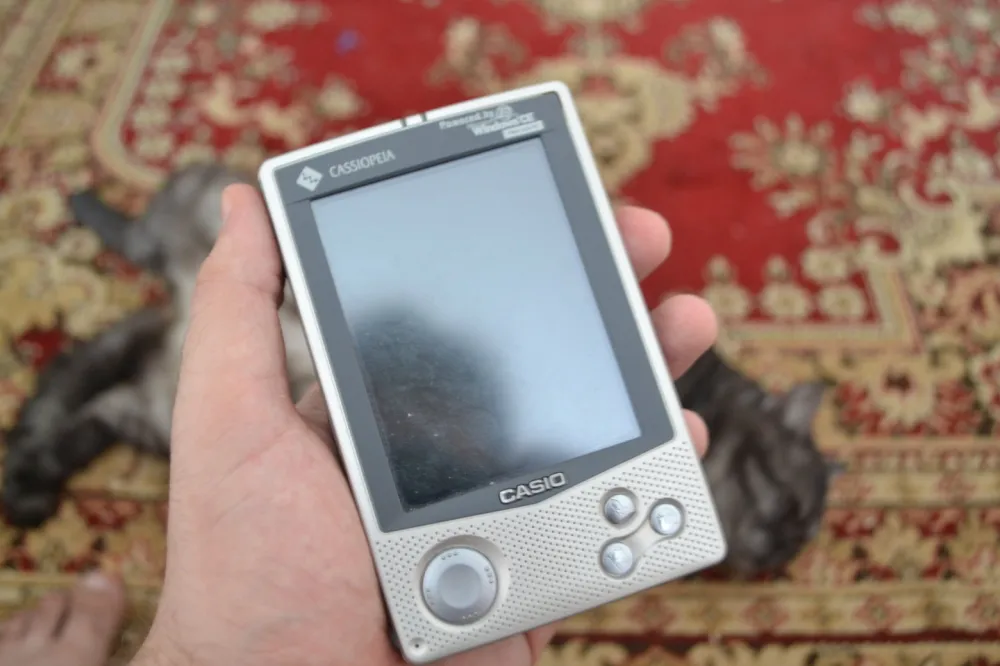
In the photo above - Casio Cassiopeia E-105. After 26 years (!!!!!!!), its battery lasts about 40 minutes of operation. Just think about that. And it had been sitting in deep discharge for at least 10 years. So the quality of the cells themselves and the BMS plays a significant role...
Write comment