- AI
- A
The impact of AI on the labor market: new assessment methods and initial data
This material presents the results of a study on the risks of worker displacement by artificial intelligence. If you are interested in the topic of AI agents and the implementation of neural networks, check out my Telegram channel 'DrugOpensource'. There I publish fresh news and analyses of tools among the first.
Main Findings
• The current use of AI in work constitutes only a small part of what is technically possible.
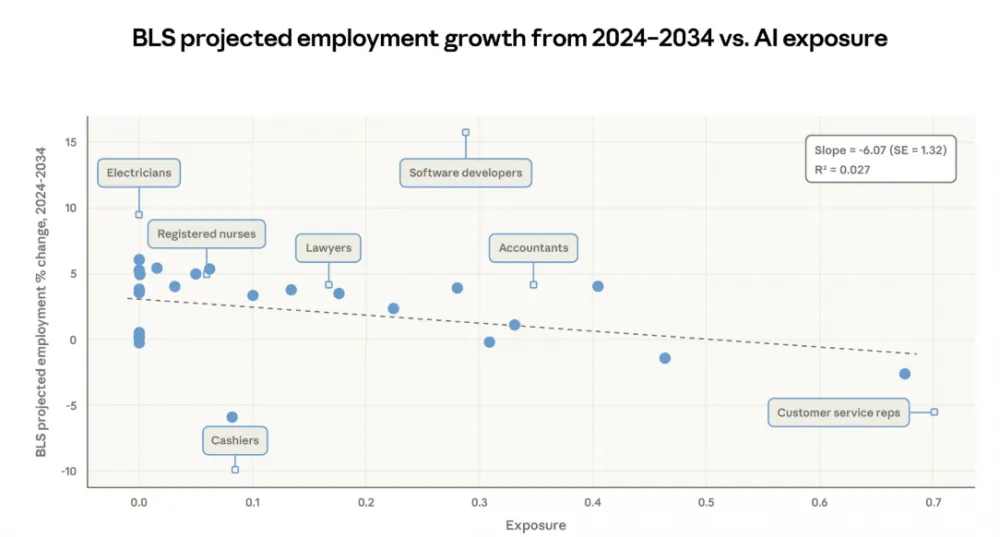
• Professions with a high observable exposure rate, according to BLS forecasts, will grow more slowly until 2034.
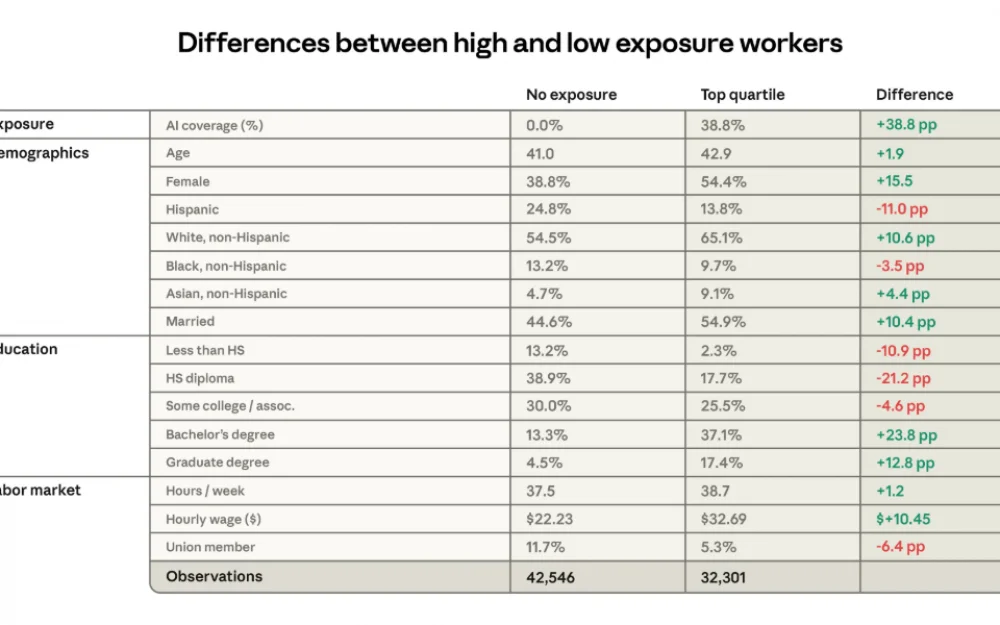
• In professions most susceptible to the influence of AI, women, older individuals, and specialists with a high level of education and pay are more frequently employed.
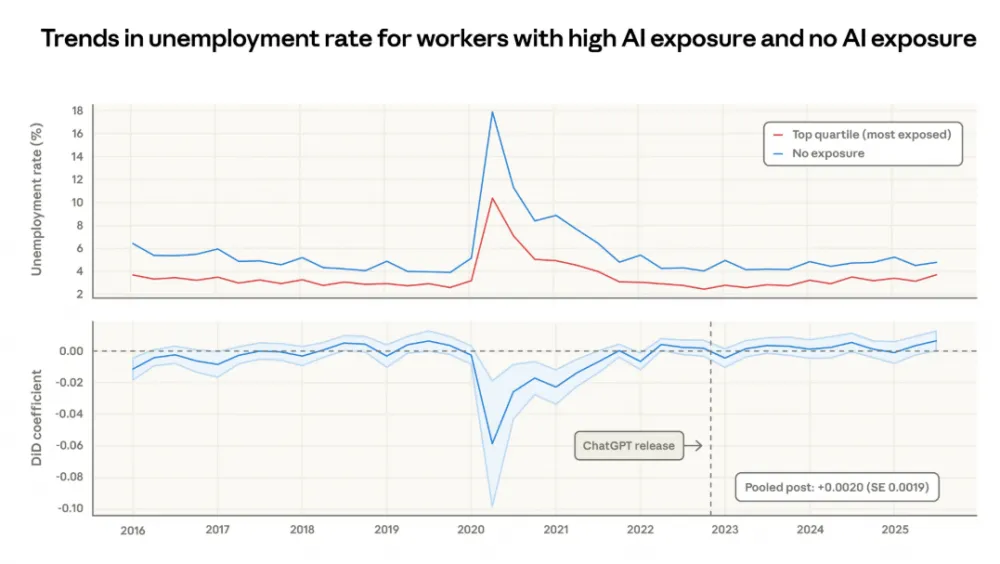
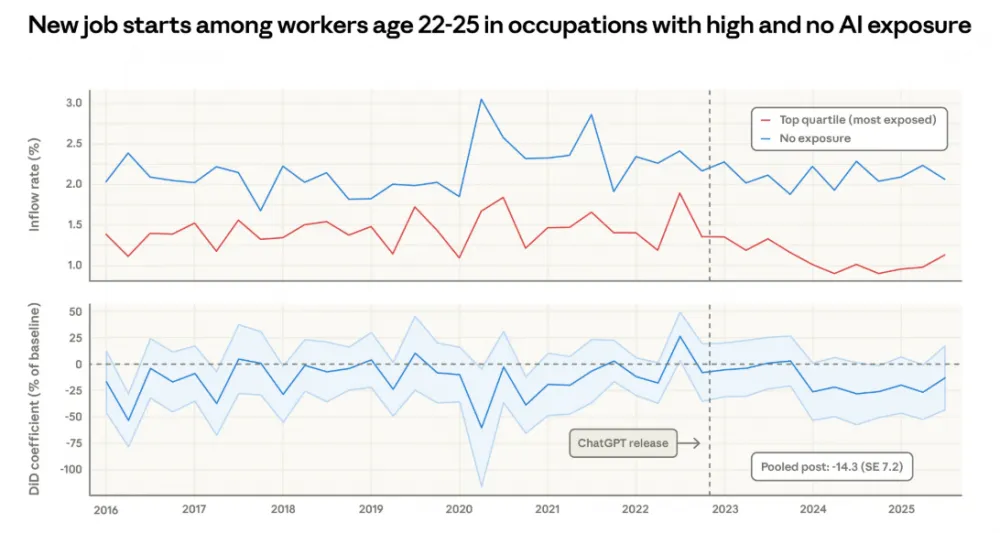
• Since the end of 2022, systemic growth in unemployment among workers in these professions has not been recorded. However, there is data indicating a slowdown in the hiring of young specialists in these fields.
Assessment Methodology
Three data sources were used to calculate the exposure level of professions to AI:
• The O*NET database, which contains task descriptions for 800 professions in the USA.
• Data on AI use from the Anthropic Economic Index.
• Estimates of the theoretical possibility of reducing task completion time using AI based on the study by Eloundou et al., 2023.
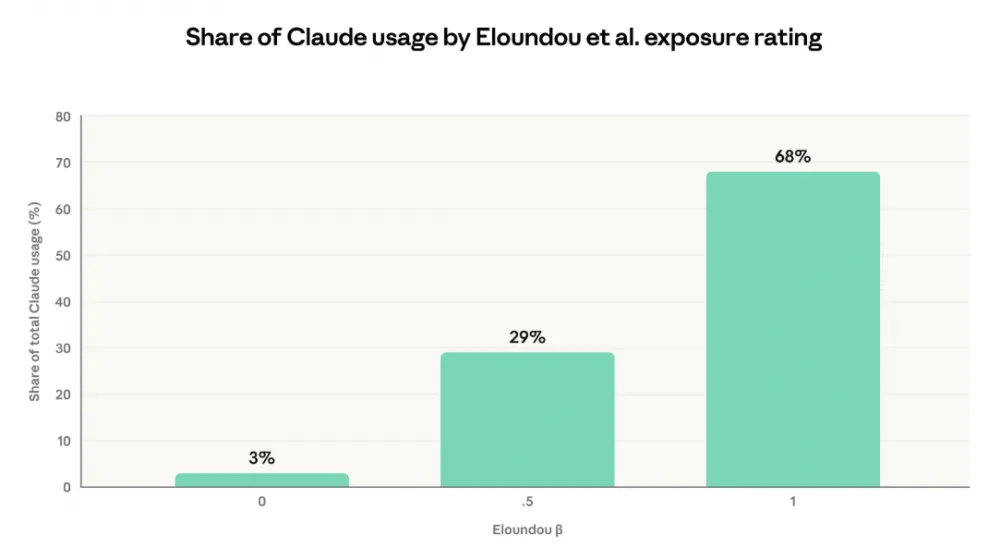
Observable exposure considers tasks that AI can theoretically accelerate and those that are already being automated. In the calculation, automated task execution was considered with full weight, while the auxiliary use of AI was counted with half weight.
Results by Professions
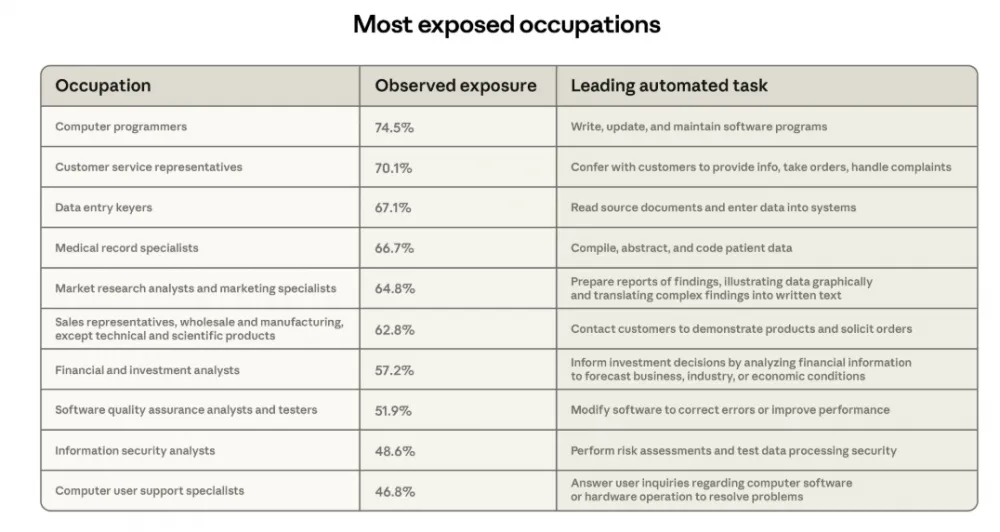
The most susceptible to the influence of AI were
• Programmers, customer service specialists, and data entry operators
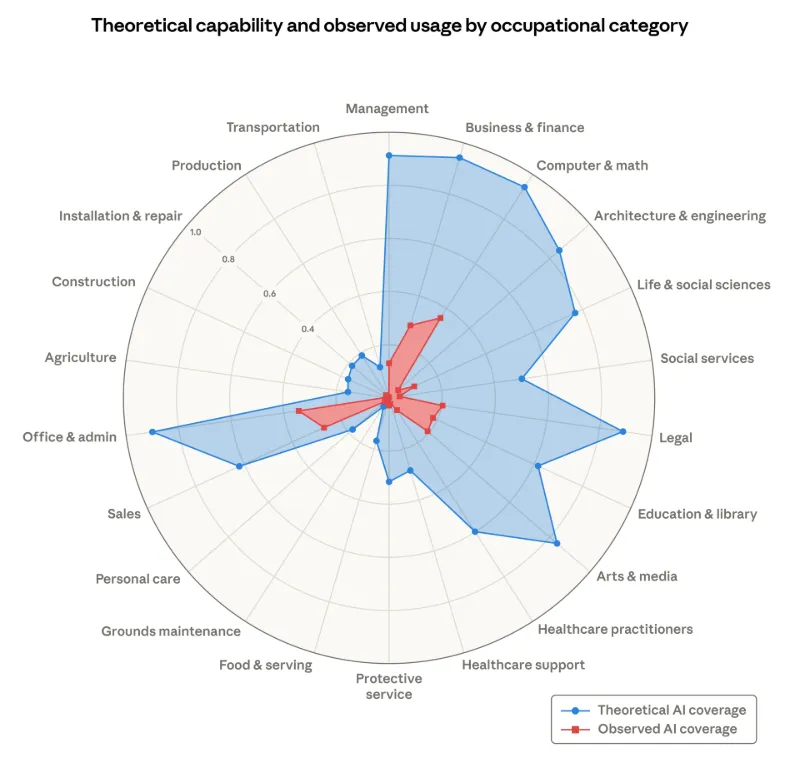
About 30% of workers have a zero coverage rate. These are professions related to physical labor: cooks, mechanics, lifeguards, bartenders.
Impact on Employment and Hiring
The analysis of data from the monthly CPS population survey showed
Unemployment graphs for groups with high and low exposure to AI have remained similar since 2016. A sharp rise in unemployment during the COVID-19 pandemic primarily affected professions with low AI influence, particularly in the personal services sector. After the emergence of ChatGPT, no significant changes in the unemployment rate among digital professionals have been observed.
In the category of workers aged 22–25, there has been a decrease in the frequency of taking new jobs in professions with high exposure to AI. The hiring rate in this group has dropped by about 0.5 percentage points, which is approximately 14% of the 2022 level. For workers over 25, this trend is absent.
Conclusion
So far, AI has not led to a mass increase in unemployment. The main effect is manifested in the changing structure of hiring young specialists. The gap between the theoretical capability of AI to perform tasks and the implementation of technologies in office work remains significant. The study is planned to be updated as new data on the labor market and the use of neural networks become available.




![From Virtual Hands to AI for Survivalists: Curious Open Agent OSes [and One Hardware Project]](https://cdn.tekkix.com/imgs/2026/05/habrcom/big/ce0b1057616faed51cd8b9f3b2b9.webp)


Write comment