- Hardware
- A
Is Our Gold Running Out?
In the previous (and first on Habr) article, I wrote about silver, its applications in industry, electronics, of course in AI, and generally about why the price for it suddenly soared.
This way, I also closed for myself, at least for the near future, the series of posts about silver that I started last fall on my TG channel. I decided it would be logical to do the same for gold. There have also been several posts about it, but I wrote more from an investor's perspective.
The trigger was a post in a news channel that was reposted by everyone who could, here is the text:
Crescat experts claim that for the first time in recorded history, global data shows no discoveries of gold deposits for two consecutive years (2023 - 2024). This has never happened before. And it is not unique to gold. Major discoveries of deposits for most metals have shrunk to single digits, and there are no significant projects in development capable of substantially altering the global supply curve.
Unfortunately, I couldn't access the original source website, as it doesn't allow entry without the forbidden three letters, and I, to the surprise of many acquaintances and colleagues, managed to navigate the dangerous blogging craft without it. Alternative options were enough. The only site I couldn’t access was BBC Learning English. Since I am currently improving my English level, that would have been useful. I managed with YouTube videos in English, and my tutor assigns good tasks and provides quality material. Now, with Telegram, who knows what will happen...
*Alright. The moment of whining is over. I will think about a solution to the issue.
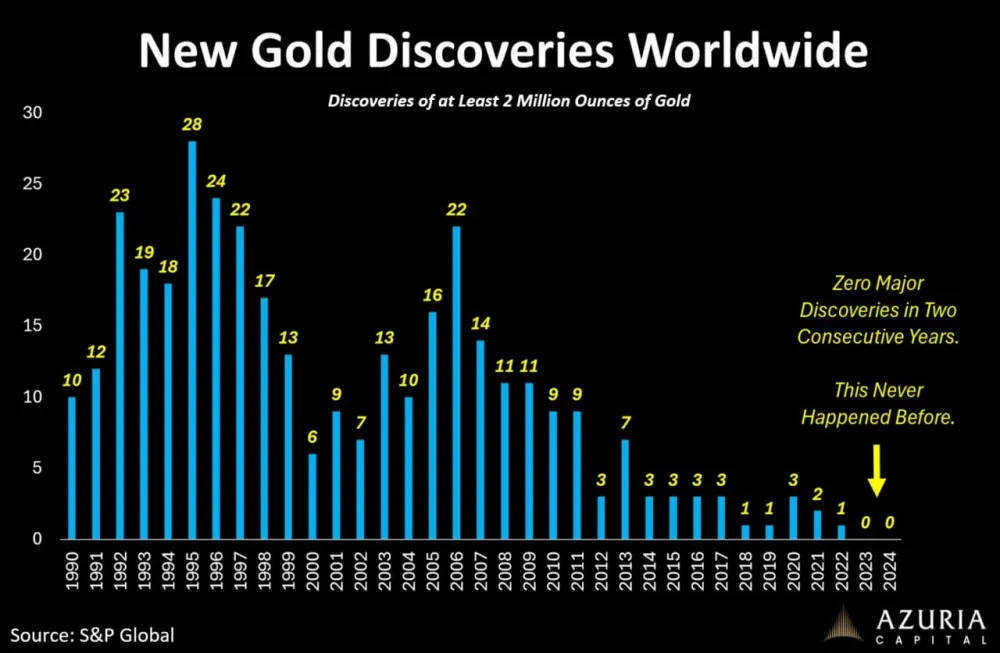
In essence, the news I could dig up was only a graph showing how many large gold deposits (containing at least 2 million ounces) were discovered annually. As can be seen, since 2014, the number of discovered deposits has sharply declined, and has not risen above three per year. In 2023 and 2024, not a single one was discovered.
Is it such a disaster? Should we expect incredible growth and returns in gold, as suggested in the comments on this news? Should we be concerned about new technologies, including the development of AI and the construction of new DATA centers?
I will try to figure it out.
Application in electronics.
According to an article from a site that is a translation of material from “World Gold Council” (WGC) (which I also cannot access without “three letters”), the main industrial consumption of gold comes from electronics.
The physical properties of gold make it an ideal material for use in the electronics industry:
It has high electrical conductivity.
It is corrosion-resistant and does not tarnish unlike other highly conductive metals, such as copper and silver.
It is a soft metal, making it easy to manufacture wire or thin coatings.
For the uninitiated user, the gold plating of electrical contacts is the only part where they can observe the application of this metal. Gold-plated contacts do not oxidize over time, making such connections extremely reliable.
And in general, everyone knows that a USB flash drive with a gold-plated connector transmits information twice as fast, and a gold-plated "jack" in headphones transmits sound as if the author of the composition is playing just for you... At least, that’s what marketers say))
The majority of connections are not visible to the naked eye. Gold is used to create contacts between semiconductors and a thin layer of metal on the device, as well as in wire connections on microchips.
However, the share of gold in electronics is decreasing, and manufacturers are looking for alternatives to "solar metal." This is primarily due to the rising cost of the metal itself. In the production of wire leads, the share of gold has decreased from 77% in 2011 to less than 40% in 2018. The main "competitors" are copper with palladium plating and silver.
Copper has its downsides: susceptibility to corrosion and high hardness (hard wire can damage fragile plates during soldering). However, despite this and the need for significant investment for re-equipment, semiconductor manufacturers are transitioning to cheaper alternatives.
Solar Energy.
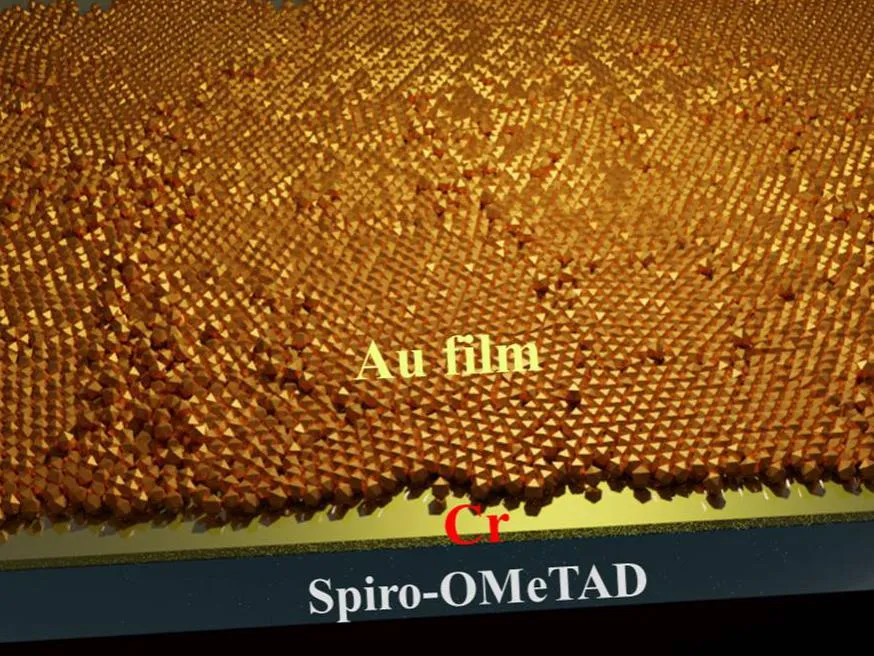
Active developments are underway for solar panels using gold. For example, in 2021, an article was published stating that an international group of scientists created ultra-thin, transparent metallic electrodes for perovskite solar panels, which use a nanoscale layer of gold applied to a chromium base. In combination with a traditional silicon cell, such a device achieved an efficiency of 28.3% compared to 23.3% for a standard silicon battery. The team notes that a 5% increase is a tremendous achievement.
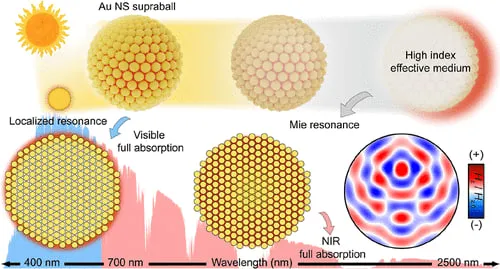
Recently, there was a news report that scientists developed a coating based on gold "supraballs." This coating can absorb nearly the entire spectrum of light waves. During an experiment with a thermoelectric generator, it was found that this coating works nearly twice as efficiently as standard materials and absorbs about 88.8% of solar radiation.
However, the use of gold is apparently too expensive for such purposes, and the increase in efficiency does not justify the rising costs associated with its use. Therefore, other materials, particularly silver, which I wrote about last time, are used much more widely.
Gold in Machinery and Industry
The increasing complexity of modern cars, which are becoming more like computers that can transport you than transportation means with a computer, undoubtedly requires a greater amount of gold.
But, there is an interesting aspect that I haven't heard about:
Gold is also used as a catalyst. I have long known about the use of platinum, palladium, or silver, and how enterprising guys extract these precious metals from automotive catalysts, but I had never heard of gold being used for that.
For fuel cells using hydrogen, gold catalysts are employed, and their only byproduct is water. Gold is well-suited for this task, working effectively even at low temperatures.
This point also includes a gold-based catalyst for enhancing the synthesis of vinyl chloride monomer (VCM), released by Johnson Matthey in 2016. VCM is used in the production of pipes and cable insulation, and typically a mercury catalyst is used for its production. The production of VCM is one of the largest in the world using mercury. The use of a new type of catalyst could significantly reduce the harm to the environment in the process of producing this widely used polymer.
Gold in architecture.
In the 1960s, gold coating began to be applied to windows as a thin layer to enhance the energy efficiency of buildings. For example, each of the 14,000 windows of the Royal Bank Plaza in Toronto (Canada) is coated with a layer of pure gold.

And in Dubai, they want to build an entire "Golden District," where gold will not only be a decorative element of buildings but literally underfoot. Although, I'm not sure if that relates to architecture rather than jewelry making... or just "Arab bling."
Gold in the space industry.
Due to gold's ability to withstand extreme environments and retain its properties, it is widely used in the space industry. Gold is used to create the most important electronic components, solar panels, and protective visors on space suit helmets. This is precisely the industry where even a slight increase in efficiency by a couple of percent matters, and in certain cases, the use of gold is critically important.
Interesting fact:
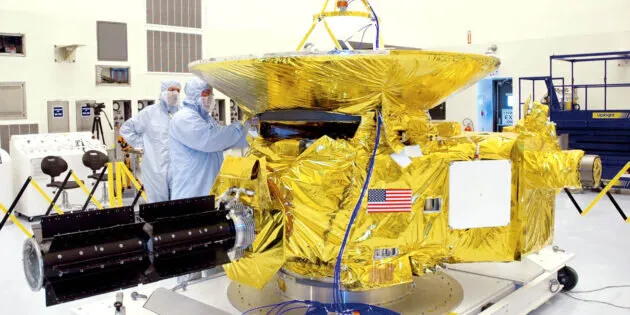
Spacecraft are often wrapped in a "golden blanket" - a special thermal protection screen that prevents complex, technological objects from overheating under the influence of sunlight. And no, it’s not gold, as one might think. A thin sheet of plastic is used for the screen. Most often, it is mylar, a film made from polyethylene terephthalate or kapton based on polyimide. The plastic is coated on top with a thin layer of aluminum, and sometimes - silver spray. Such a blanket can withstand very strong temperature fluctuations - from −260 to 480 °C. By the way, it is the polyimide that gives the material such a bright color.
Gold in investments.
By analogy with silver, I will provide a small summary here of what I have previously written on my channel about gold as an investment tool.
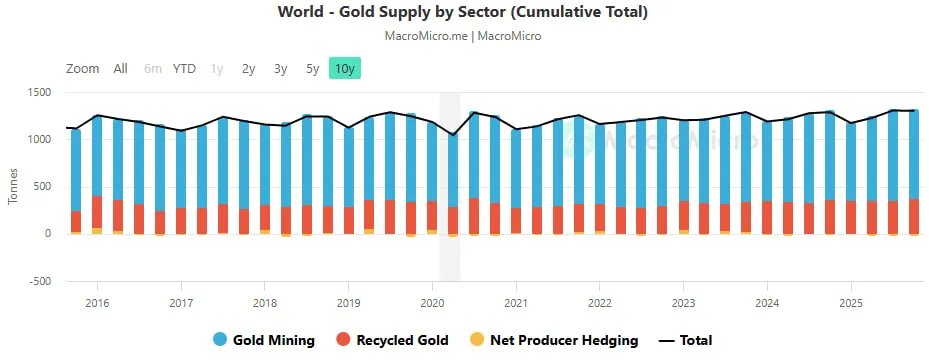
Let's return to the news that prompted me to write this article and see what has been happening with production in recent years. Surprisingly, it turns out that there has been no decline. The proven reserves are quite sufficient to meet the global demand for the metal. There are no imbalances, deviations, and the share of recycling in the total amount has not increased.
However, if we look at the graph reflecting the cost of gold production, we can see that from 2012 to 2022, it remained relatively stable. A small spike in 2013 was followed by a decline and a gradual increase to the peaks of 2013 by early 2022. After that, the cost of producing each ounce steadily rises.
Several factors played a role here:
Companies are forced to pay more attention to environmental and safety issues. Even in such "wild" regions as Africa.
The levels of royalties and mining taxes are rising.
Companies have to process poorer ores. This means that to produce the same amount of gold, physically more work must be done.
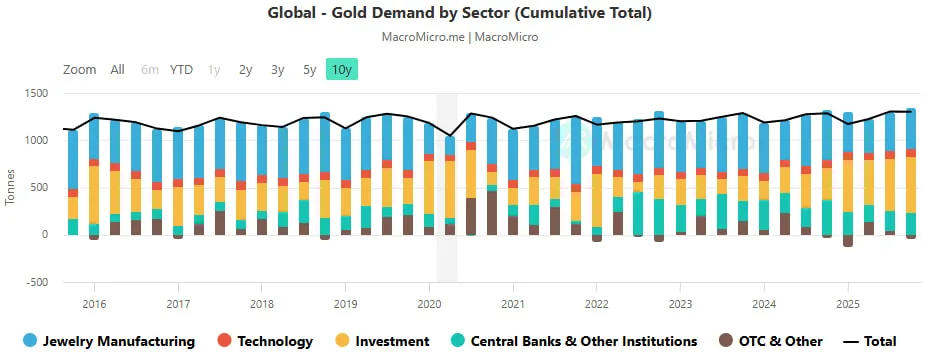
Now let's take a look at gold consumption worldwide. The majority of gold goes to jewelry, investments, and as foreign exchange reserves for central banks and other organizations. In particular, the gold reserves of the company Tether are already comparable to the reserves of countries such as South Korea, Hungary, and Greece.
Essentially, almost all gold is used for producing bars and jewelry, and only a small portion goes to truly important things.
This means that gold holds such value primarily because people have considered this metal a symbol of status for millennia.
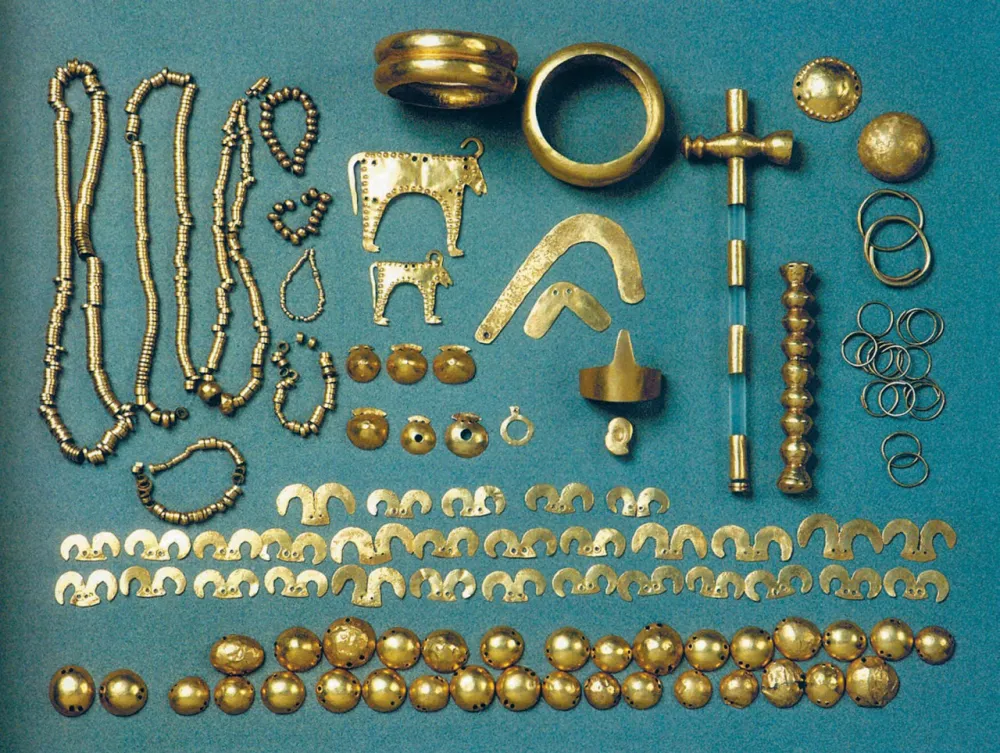
The oldest items are considered to be the gold artifacts found in Varna in 1972. Their age is estimated to be around 8000 years, which is older than findings from Mesopotamia and Ancient Egypt.
Gold has long been associated with status, wealth, and social standing. And due to its resistance to corrosion and its resemblance to the Sun, which was revered by the earliest civilizations, the metal itself has also acquired a certain sacred significance.
Today, gold is a universal medium of exchange recognized worldwide. Even in times when money becomes just paper, you can always exchange gold for something useful. Not always at a favorable rate, but nevertheless.
After the onset of the well-known events in 2022, over $300 billion of Russian assets were frozen. They didn’t burn, disappear, or get stolen. The United States simply decided that they did not like what Russia was doing, and therefore they could take its resources.
And everyone saw this. Many countries kept and still keep their resources in American government debt securities. This also helps the dollar remain the most widely used currency. This entire system relied on trust. If you bought an international asset - it’s yours. After 2022, the world saw that this is not quite the case. If suddenly your country finds itself on the “bad guys list”, then your resources could suddenly become unavailable.
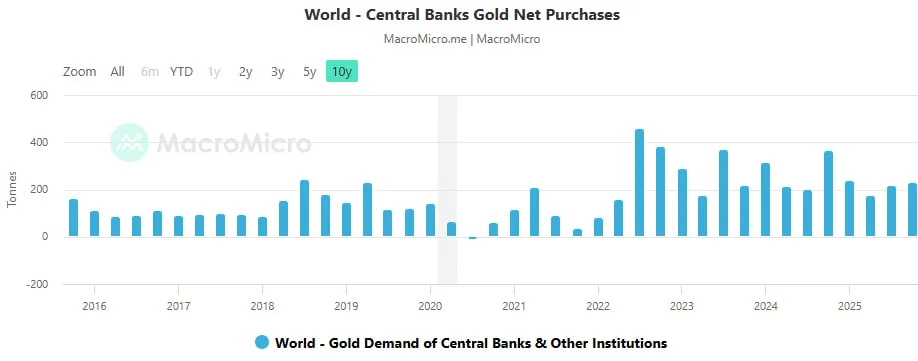
Since 2022, central banks around the world have been actively buying gold to replenish their reserves. This is being done by everyone, from Russia and China to Poland and even Uzbekistan. The world has realized that dependence on the dollar system and storing resources within it is not just some phantom danger. Everyone sees that this is a matter of freedom of choice and sovereignty.
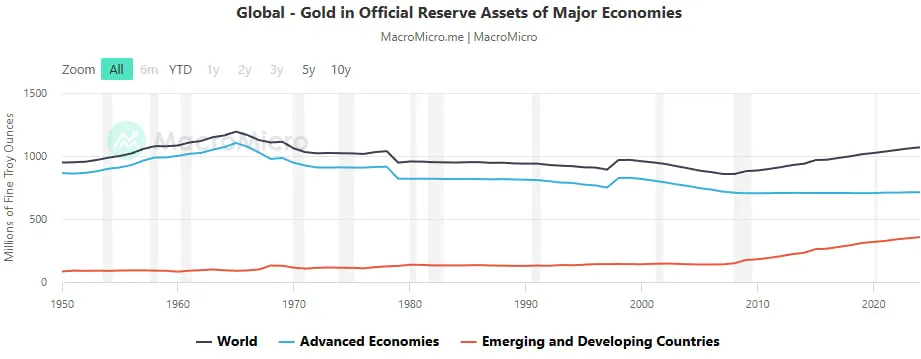
Interesting fact:
In recent years, developing countries have been most actively increasing their gold and foreign exchange reserves, while developed countries have been reducing their accumulation.
As early as 2018, China launched oil contracts in yuan, which could be exchanged for gold in Shanghai or Hong Kong. Not everyone wants to deal with the yuan, as it is not accepted everywhere. However, when it can be converted to gold, such an instrument becomes much more attractive.
China does not disclose its gold and foreign exchange reserves but is actively purchasing gold. Meanwhile, the Chinese government encourages its citizens to buy gold for personal investments. According to various estimates, Chinese citizens hold between 15,000 to 20,000 (!) tons of gold.
In June 2023, the agreement between Saudi Arabia and the USA, made in 1974, which required Saudis to sell all their oil exclusively for dollars, came to an end.
Russia, currently under sanctions, is trading in rubles, yuan, other local currencies, and also in gold.
India, despite being a US ally, is buying oil from Russia for rupees and dirhams.
A huge tekkix for gold trading has opened in the UAE.
Brazil and Argentina are increasingly conducting transactions in their own currencies, not in dollars.
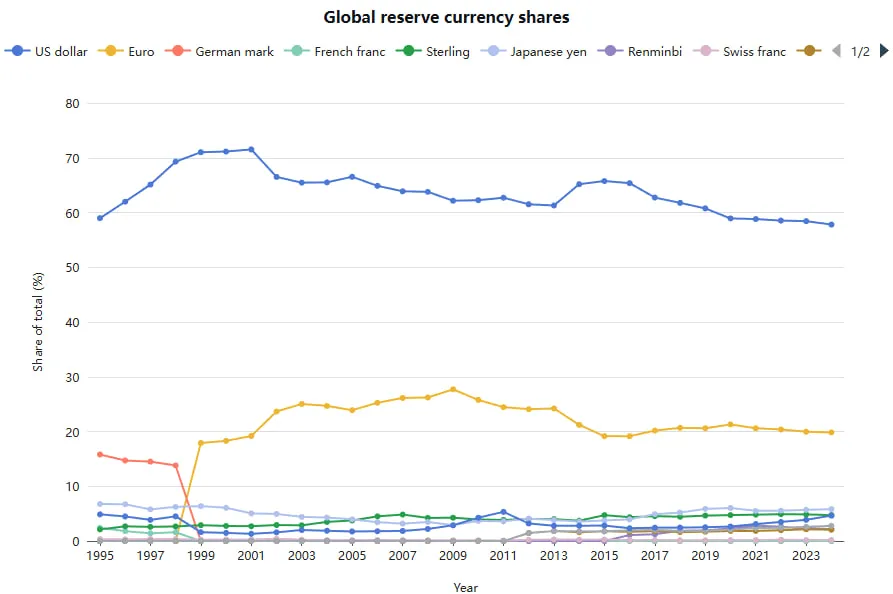
The share of the dollar in international settlements has fallen from 71.5% in 2001 to 57.8%. This is not overly critical, especially since similar levels have been seen before. Nevertheless, this is already not a very good "alarm bell" for the dollar.
And the more countries stockpile gold in their reserves, and the more they shift to transactions in national currencies, the more the "strength of the dollar" will decline.
The main gold quotations are tied to the dollar. This has historically been the case, which is why prices around the world are linked to the value of gold in dollars. At least for now, this is how it is.
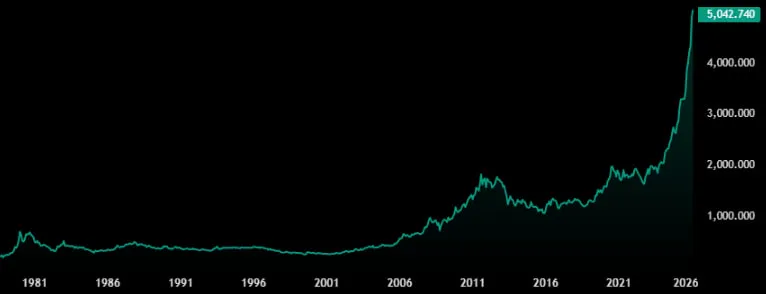
If you look at the gold price chart, the "bubbles" of 1980 and 2012 are clearly visible. Many experts say that the same picture is being drawn now. They have been saying this for over a year, yet gold continues to rise for some reason.
In 1980 and 2012, the situation was somewhat different: the dollar was also weakened then, there was not much faith in it, and investors fled to a safe asset to preserve the purchasing power of their savings.
In 1980, the U.S. government raised interest rates to record highs, thus making dollar instruments incredibly attractive. Finances flowed back from gold into dollars, provoking a collapse in prices.
In 2013, something similar happened. The crazy inflation that people expected after 2012, when the printing press in the U.S. was running at full capacity, never materialized. The interest rate on dollar instruments rose. Capital flowed back into dollar assets.
So what about now?
Now we have a somewhat different situation. The world has changed. Even if relations between Russia and the West normalize, and frozen assets are returned, the precedent itself will not go away. Many nations wishing to pursue their own policies will strive to ensure their sovereignty through gold.
Gold bars that are physically stored in a secure facility cannot be nullified or frozen. They are yours. This is a guarantee that no one can influence you through the financial system.
The U.S. central bank's rate is negative. This means that when investing in dollar assets like American treasuries, you are losing purchasing power. And Trump is trying with all his might to lower the rate even further. Dollar instruments thus appear less attractive compared to gold.
Dedollarization, albeit slowly, continues. There are persistent rumors that China is hiding its reserves for a reason. Allegedly, when China publishes data on the amount of its gold reserves, it will also establish a "golden yuan," meaning it will peg its currency to gold. If this happens, it will overturn the global financial system.
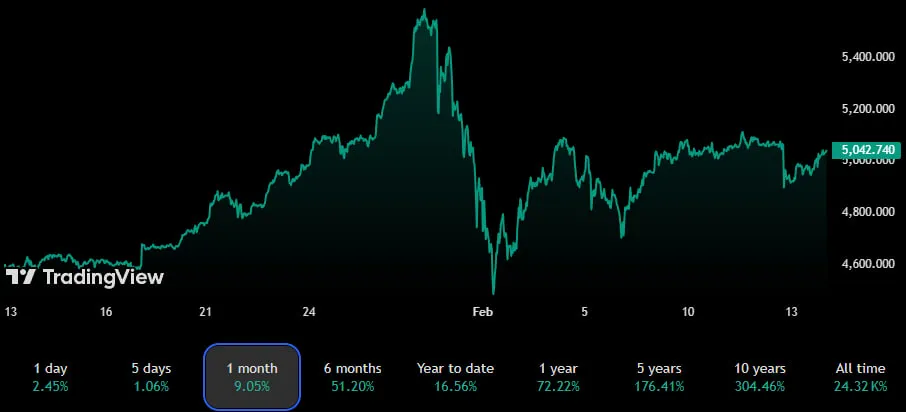
The correction observed at the beginning of the year is an absolutely speculative story: the asset was wildly pumped in a couple of weeks and large capital exited it. The "latecomers" investors once again found themselves at a loss.
However, if we look at the long term, the factors contributing to the price rise now are unlikely to disappear. And if the "Chinese trigger" works, a real "gold rush" will begin. Today's records will be broken more than once.
As I mentioned in the previous article, I am not very fond of speculation. And I have no desire to participate in it. However, if I had capital at least 10 times greater than what I currently have, I would already consider allocating 5-10% to gold or gold + silver. And I would prefer to use instruments that guarantee the right to physical metal, or the physical metal itself directly.
*It is necessary to make a note that this does not constitute Individual Investment Advice.
With that, I will probably close the topic of precious metals for the near future. At least, I will not write more about gold and silver for now. It would be interesting to dig into other metals, but so far nothing really catches my interest enough to delve into the topic. And since I write articles in my free time, the topic must engage me to make me dig "deep."
P.S.
If we think rationally, then on the matter of gold, old man W. Buffett was absolutely right when he said:
An ounce of gold will remain an ounce of gold in 100 years. It produces nothing.
And all this fuss about gold is more like a cult, stretching back from somewhere in the past. In fact, humanity does not need as much metal as it has. It is quite possible that some new asset could replace gold. For example, time, memory, or something else. Something that has real value for everyone.
And gold... gold will remain a beautiful metal with unique properties, which will gain wider use in industry due to its declining investment attractiveness.


![From Virtual Hands to AI for Survivalists: Curious Open Agent OSes [and One Hardware Project]](https://cdn.tekkix.com/imgs/2026/05/habrcom/big/ce0b1057616faed51cd8b9f3b2b9.webp)
Write comment