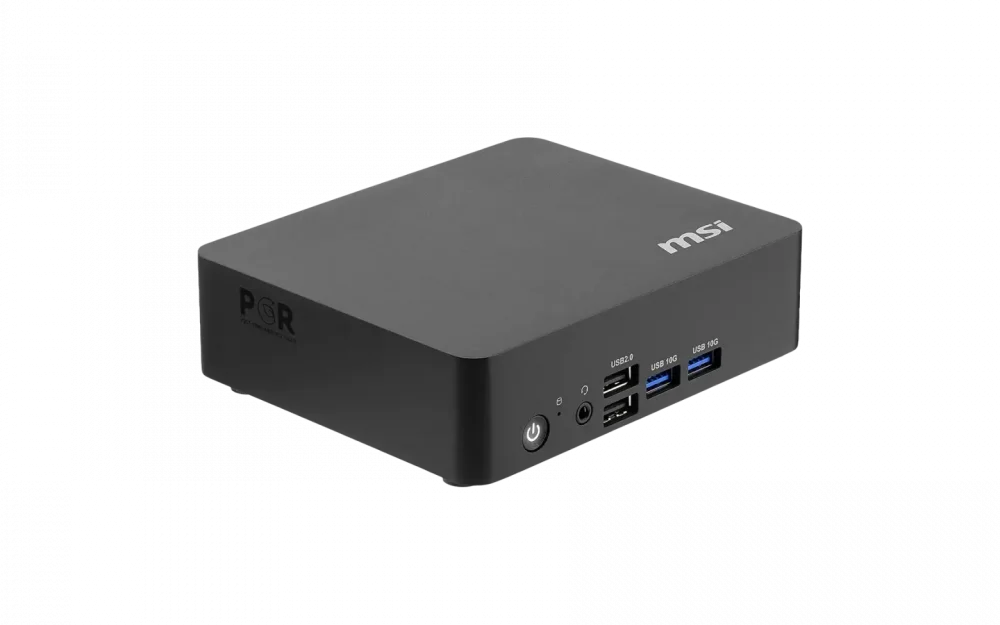
- Hardware
- A
Five mini PCs of mid-spring: from high-performance systems with water cooling to office "hardware"
This selection features several mini PCs that became known in April 2026. Formally, they all belong to the same class of devices—compact desktop computers that can be placed on a desk or mounted behind a monitor. However, in practice, the differences between them are quite significant: from very simple configurations to systems that can already be considered powerful work machines. There are models for hassle-free upgrades, some with water cooling, and others with two storage drives. In general, there is something for every taste.
Dell Pro 5 Micro — business mini-PC with Intel Panther Lake and modular ports
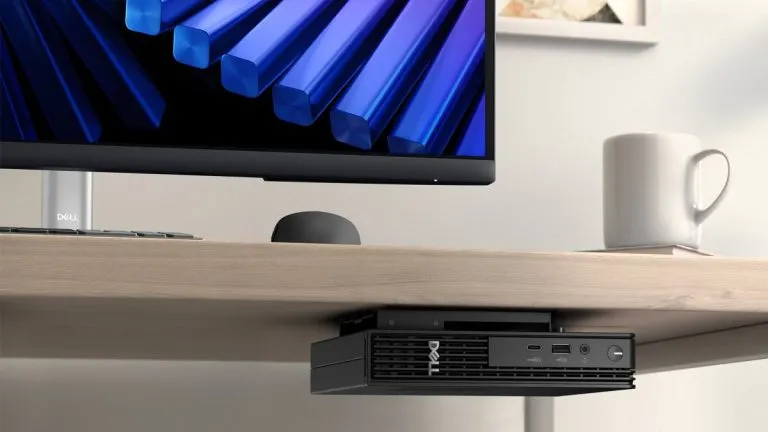
The Dell Pro 5 Micro is a compact desktop PC for the corporate segment that was introduced in March 2026. It is designed for office tasks and work within corporate infrastructure. The focus is on centralized management, vPro support, and predictable system behavior. Unlike mass-market mini-PCs that are more often purchased for home or simple tasks, here the configuration and feature set are initially tailored for employee workstations and IT departments of companies.
The configuration is also somewhat different from the usual. In addition to the standard set of ports, there is a modular slot where an additional interface can be installed — HDMI, DisplayPort, Ethernet, or even outdated connectors like VGA or COM. This is important for businesses that still use specific equipment.
Specifications:
processor: Intel® Core® Ultra 7 366H vPro / Core® Ultra 5 335 vPro;
graphics: integrated Intel;
NPU: up to ~50 TOPS;
RAM: up to 64 GB DDR5 (SODIMM, up to 7200 MT/s);
storage: up to 2× M.2 2280 PCIe 4.0 SSD;
network: Wi-Fi 7, Bluetooth 6.0;
ports: 2× USB-C, 3× USB-A 3.2, 2× USB-A 2.0, HDMI 2.1, DisplayPort 1.4a, Ethernet, audio 3.5 mm;
additional: modular port (HDMI / DP / Ethernet / VGA / COM / PS/2);
power: 90W adapter or USB-C up to 100W;
dimensions: 182 × 178 × 36 mm.
The Dell Pro 5 Micro has been available for sale since March 31, 2026, and by mid-April, it is already available for corporate orders. The price depends on the configuration, with basic versions usually starting at around $700–900, while more powerful options are significantly more expensive.
MSI Cubi NUC AI+ 3MG — compact mini-PC on Panther Lake with a focus on interfaces
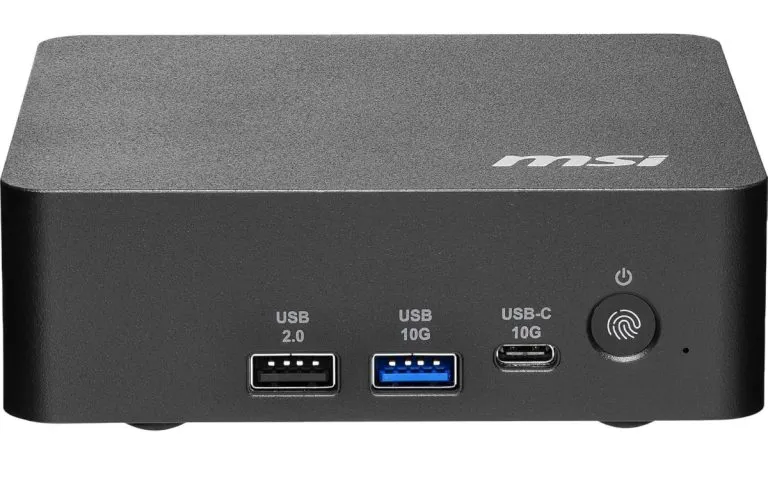
A mini-PC based on Intel Panther Lake processors, it went on sale in April 2026. The model is designed for versatile tasks — from office work to heavier scenarios with multimedia and local AI functions, but without a focus on gaming. In fact, no one expects that from office systems.
The main feature is the large number of ports and network interfaces for such a compact chassis. There are two Thunderbolt 4 ports, two HDMI 2.1 ports, and two 2.5 Gbit/s Ethernet ports, allowing multiple monitors to be connected and the PC to be used in network scenarios without additional adapters. The lineup features different processors — from Core® Ultra 5 to Core® Ultra 9, depending on the configuration.
All versions include an NPU with performance up to ~50 TOPS, making them suitable for local AI tasks. At the same time, the graphics in all variants are simplified, without the higher versions of Intel Arc, so serious graphical loads should not be expected.
Specifications:
Processor: up to Intel® Core® Ultra 9 386H (Panther Lake), as well as Ultra 7 355 and Ultra 5 322 versions;
Graphics: integrated Intel (4 GPU cores);
NPU: up to ~50 TOPS;
RAM: up to 96 GB DDR5 (2× SODIMM);
Storage: M.2 2280 PCIe NVMe SSD;
Network: Wi-Fi 7, Bluetooth 5.4, 2× 2.5 GbE LAN;
Ports: 2× Thunderbolt 4, USB-C, USB-A, 2× HDMI 2.1, Ethernet, DC power;
Additional: fingerprint scanner in the power button;
Dimensions: 120 × 115 × 38 mm.
The model was presented at CES 2026 and went on sale in April. The basic barebone versions cost about $689 for the Core® Ultra 7 and $809 for the Core® Ultra 9, while fully configured models with memory, SSD, and Windows reach approximately $1600–1700.
Thermalright HydroNous R1 — mini-PC with water cooling and top Ryzen
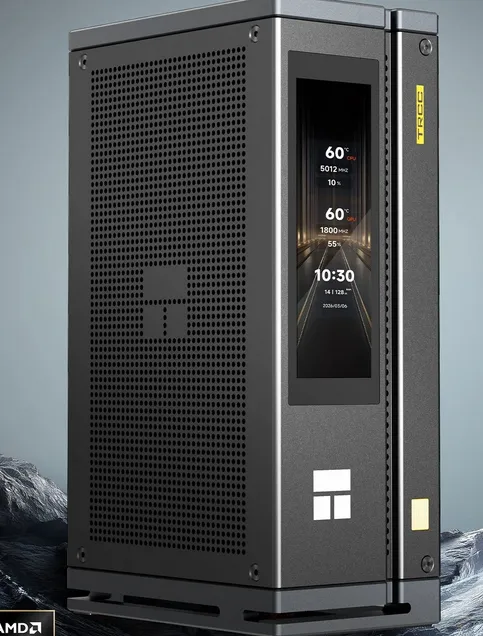
This model is built around the most powerful mobile chip, the AMD RyzenTM AI Max+ 395. Such a processor is already rare for compact systems, but here instead of conventional air cooling, a full liquid cooling system is used.
The main idea is clear: to squeeze the maximum out of the chip without running into overheating. Thanks to the liquid cooling system, the unit can maintain high load for a long time without starting to throttle after a couple of minutes. This is an unusual approach for mini-PCs — typically, such machines are either power-limited or noisy under load, like a tractor, and quite significantly so.
Overall, this is an excellent work machine: plenty of memory, fast networks, and several slots for SSDs. They even added a small screen on the front panel — more as an additional feature than a necessity. But it looks interesting.
Specifications
processor: AMD RyzenTM AI Max+ 395;
graphics: Radeon 8060S;
RAM: 128 GB LPDDR5x-8000;
storage: 2 TB PCIe 4.0 SSD;
expansion: 3× M.2 2280 PCIe 4.0;
network: Wi-Fi 7, Bluetooth 5.4, 10 GbE + 2.5 GbE;
ports: 2× USB4, 2× USB-A 3.2, HDMI, DisplayPort, microSD, audio;
cooling: liquid;
additional: 4.6″ screen on the case;
dimensions: 234.7 × 83.3 × 133 mm.
The model is already on sale in China, priced at around $3,500 for the current configuration. The system will be released on the international market later.
Gigabyte BRIX GB-BRR7-450 — mini-PC on Ryzen AI 400 with a focus on upgrades
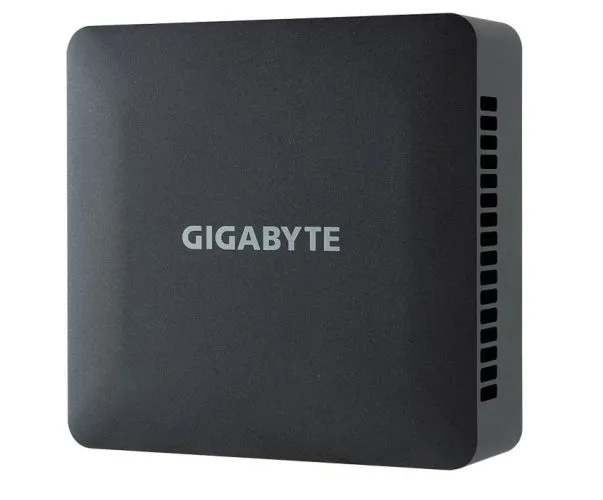
Gigabyte is preparing a new version of the mini-PC BRIX based on the AMD RyzenTM AI 400 (Gorgon Point) processors. The GB-BRR7-450 model remains in the familiar compact format, but inside it features a newer platform focused on performance and support for modern storage devices.
The main thing here is the combination of the new chip and normal upgrade capabilities. Unlike many compact PCs where everything is soldered, here you can install up to 96 GB of RAM and two SSDs, one of which supports PCIe 5.0. For its size, this is rare and makes the system more flexible for various tasks.
There are also no limitations regarding ports: you can connect up to four monitors, there are several USB-C ports, including USB4, and support for power delivery via USB-C. This is convenient if you want to minimize the number of cables and connect everything through one monitor.
Specifications:
processor: AMD RyzenTM AI 400 (Gorgon Point);
graphics: integrated Radeon;
RAM: up to 96 GB DDR5-5600 (SODIMM / CSO-DIMM);
storage: 2× M.2 2280 (PCIe 5.0 + PCIe 4.0);
network: 2.5 GbE LAN, slot for Wi-Fi (M.2 2230);
ports: USB4 Type-C, 2× USB-C 3.2, 3× USB-A 3.2, USB 2.0, 2× HDMI 2.1, audio;
video: up to 4 monitors via HDMI and USB-C (DP Alt Mode);
power: USB-C support (Power Delivery);
dimensions: 119 × 113 × 34 mm.
The model was announced at the end of March 2026 and is currently in preparation for release. Prices and exact sales dates have not yet been announced.
MSI Cubi NUC TWG — mini-PC on Twin Lake with different cooling systems
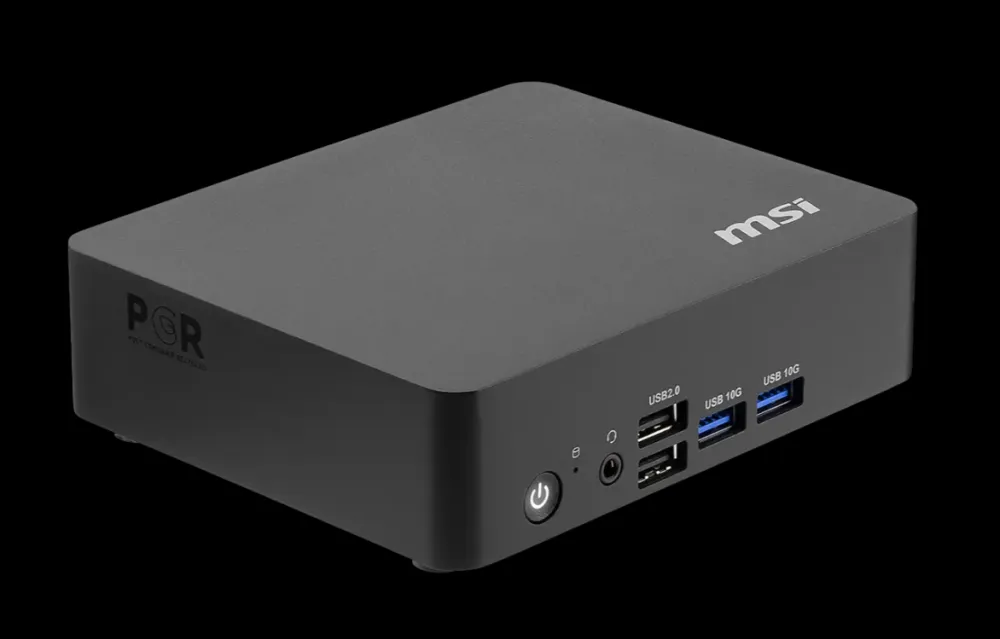
A mini-PC based on Intel Twin Lake processors, designed for simple tasks such as office work, terminals, or media players. The model is interesting because it comes in two variants: with active cooling (regular TWG) and a completely silent fanless version (TWG S).
In terms of components, this is the most basic level: energy-efficient Intel N-series chips, one memory slot, and one SSD. At the same time, the device has a standard set of ports and two Ethernet ports, which is convenient for networking tasks or infrastructure use. Support for three monitors and the ability to mount it behind a monitor also hint at scenarios like office workstations or digital signage.
Specifications:
processor: Intel N150 / Intel N250 (Twin Lake, 4 cores, ~6 W);
graphics: integrated Intel;
RAM: 1× SODIMM DDR5-4800;
storage: 1× M.2 PCIe 3.0 x4;
network: 2.5 GbE + Gigabit Ethernet, Wi-Fi 5 or Wi-Fi 6, Bluetooth 5 / 5.2;
ports: USB-C 3.2, 2× USB-A 3.2, 4× USB-A 2.0, 2× HDMI 2.1, audio;
video: up to 3 monitors;
cooling: active (TWG) or passive (TWG S);
dimensions: 135.6 × 112.6 × 40.1 mm.
The model was shown in April 2026 and has just appeared on MSI's regional websites, without a full launch of sales. Prices have not been announced, but based on previous generations, basic versions can be expected to start at around 150–200 dollars.

![From Virtual Hands to AI for Survivalists: Curious Open Agent OSes [and One Hardware Project]](https://cdn.tekkix.com/imgs/2026/05/habrcom/big/ce0b1057616faed51cd8b9f3b2b9.webp)

Write comment