- AI
- A
90% of AI Startups are Vibe Coding: Insights from Europe’s Largest Tech Conference
Flying to Lisbon for Europe's largest tech conference featuring AI Summit, Fintech Summit, and talks from Google experts and unicorn startups. Get ready to dive into technology and learn about the latest trends.
POV: You're flying to Lisbon for the largest tech conference in Europe. The agenda includes AI Summit, Fintech Summit, and presentations from experts at Google and unicorn startups. You are ready to dive into technology and learn about the latest trends.
Reel: On the main stage, Maria Sharapova talks about life, while a TikToker with a million followers shares how he used ChatGPT — he once asked it to show him how to cut a mango 🥭
Hello, tekkix! My name is Ivan Manzhetov, I am a portfolio manager at the IT company KODE — we specialize in mobile development. In November 2025, I attended the Web Summit in Lisbon for the first time and brought back a few warm contacts that are now turning into projects with budgets of 90k+ euros.
I’m sharing how the modern startup world is organized, why 90% of AI projects use the same technology, and what international conferences offer to those working in IT.
How We Ended Up at the Web Summit
In September, I participated in the alpha testing of a Spanish language learning startup. Unexpectedly, the municipality of Valencia issued passes to testers for the Web Summit as project team members. For me, this was a rare and very cool opportunity, so I agreed.
When it became clear that we were definitely going, I started preparing. I opened the conference website, began studying the agenda — and realized that the scale was impressive. Dozens of tracks, hundreds of speakers, thousands of startups. Without a plan, you would just drown in this flow of information.
Preparation: What Goals I Set
I manage a portfolio of fintech projects, so I was primarily interested in talks about the banking sector and AI in finance. I added talks about security to my plan (you always need to keep an eye on trends in infosec) and about neobanking — I wanted to understand where the industry is heading.
But my main goal was business-oriented — searching for potential clients. I formed a few strategies in my mind:
Strategy 1: Startups on vibe-coding
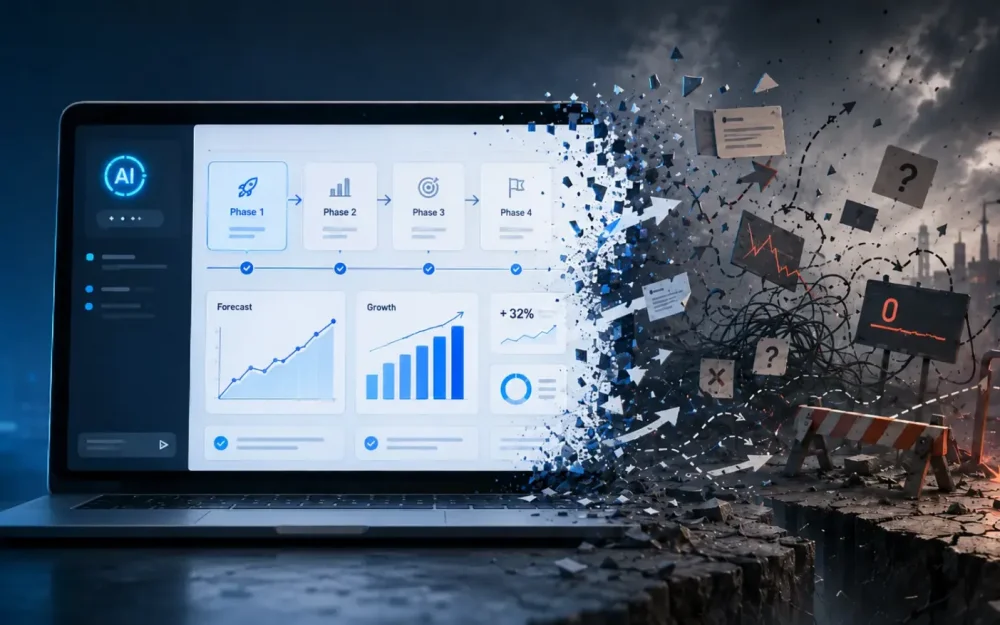
About 80% of startups at conferences are vibe coding. AI generated the code, the team assembled a clickable prototype in Figma. Among these guys are those who cannot bring the project to completion — they need a team that will finalize everything neatly and beautifully so that the product can take off.
Here our value is obvious: we have experience working with both large clients and startups at various stages, plus an understanding of all processes. We can take an AI prototype and turn it into a production-ready product that scales and doesn’t fall apart under load.
Strategy 2: AI products for our clients
We already have clients who might be interested in AI solutions. The plan was to approach startups, discuss their technologies, listen to their issues — and look for solutions that we can offer to our current clients.
Moreover, startup founders often become our clients themselves. We have a large portfolio of projects and technological maturity, so for many of them, we are potential partners. This is also a topic for networking — we discuss technologies while simultaneously understanding whether we can help each other.
Strategy 3: Investors with ideas
If we manage to connect with investors, we should ask if they have their own ideas that need technical implementation. My colleague Anatoly came up with a cool approach: “So, have you found your unicorn?” — people usually laugh and start the conversation.
I also realized that I needed a short pitch about KODE. Investors and startup founders get tired at conferences — young people constantly approach them and tell them something. You literally have a minute to capture their attention: who we are, what we do, how we can be useful.
I prepared, packed my suitcase — and flew to Lisbon.
First impressions: scale and chaos
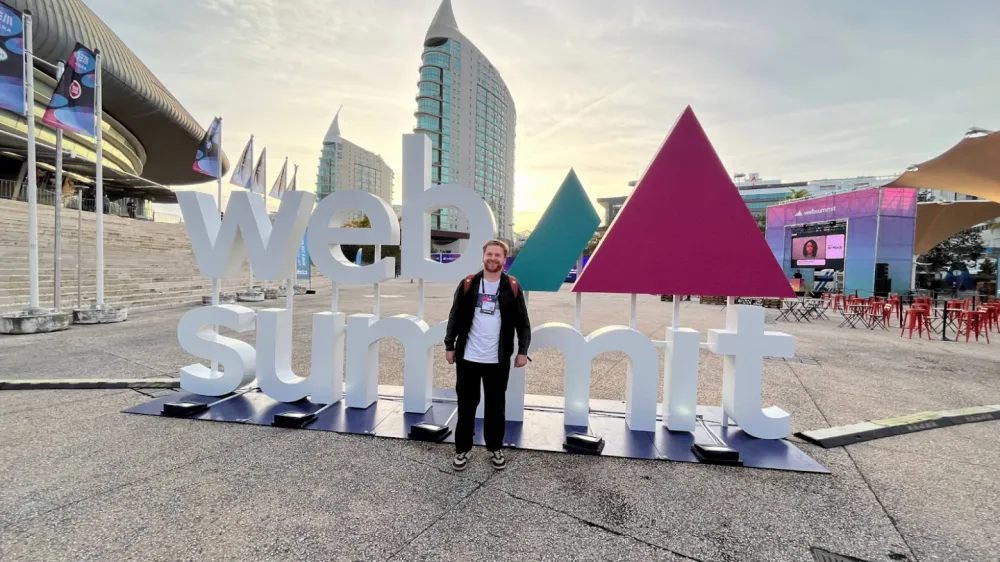
When you first find yourself at the Web Summit, the first thing that catches your eye is the scale. Several huge pavilions, dozens of tracks, four main stages, hundreds of speakers, and around 70,000 participants from different countries. The conference is divided into several zones:
Main stage — there, Maria Sharapova, Hollywood actors, well-known entrepreneurs, even the CEO of Lovable spoke. In fact, it turned out to be interesting just as entertainment — to see a person live. From a professional standpoint, there was little benefit.
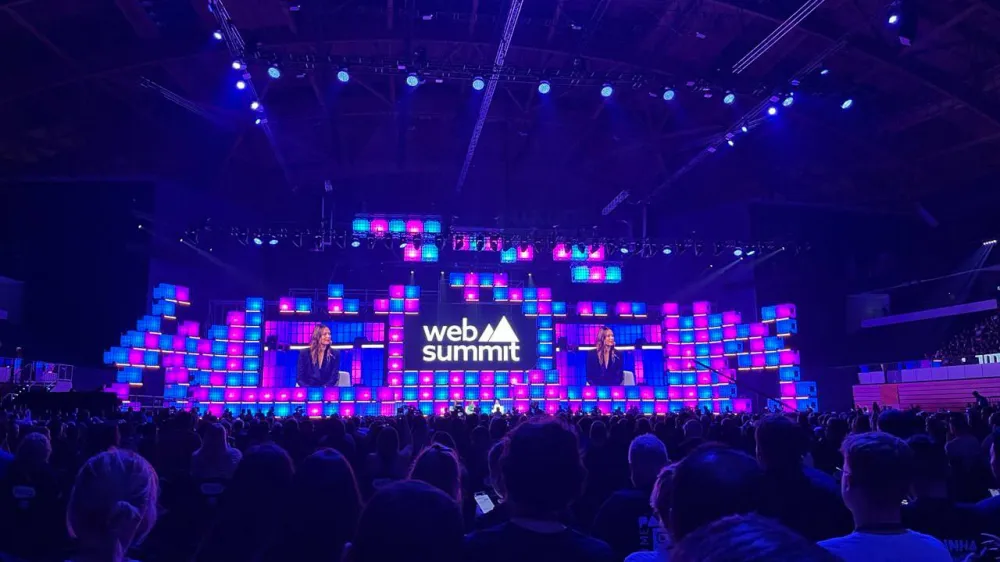
There was a funny moment with a TikToker whose humor is based entirely on grimaces. When he was asked about using AI, he said, "Yeah, it's a cool thing, I used it once—I needed to cut a mango, so I asked ChatGPT."

The room laughed, but it perfectly illustrates the gap between the hype around AI and its actual use.
Thematic tracks—this is where it gets more interesting. I attended several: about UI/UX trends for 2026 from a former Google designer, on the application of AI in medicine, on fintech and neobanking. The speakers were strong, with experience working in large companies—such as the Global Head of Product at Visa, COO of Vercel, and others.
But gradually, it became clear that today the same Perplexity would give you a broader overview of any trends in five minutes. The reports serve more as a self-checking tool—they help you understand where you have knowledge gaps and where to dig deeper.
Startup booths—this is a whole different universe. Thousands of projects at different stages: from a prototype in Figma to finished products with paying customers. There was a separate booth dedicated solely to AI models. You could listen to the latest developments, talk to the founders of AI startups, and watch demos.
Networking area—people are sitting with laptops, discussing projects, pitching ideas, exchanging contacts. The atmosphere is dense—you constantly hear snippets of conversations in English, Spanish, Portuguese, and sometimes in Russian.
In 40 minutes of a report, you get one private picture of the world from one speaker. In the same amount of time in the networking area or at the booths, you can talk to five different startup founders, hear five different approaches to one problem—and piece together your own, more comprehensive picture.
Where the real value lies: hallways and meetups
Honestly, the conversations at the booths gave me more insights than all the reports combined. The AI industry is evolving so quickly that it's more important to keep your finger on the pulse and see hundreds of different approaches than to listen to one expert.
The second discovery was evening meetups—a format that I initially didn't quite understand. These are informal gatherings in bars and clubs throughout Lisbon, with about 20-30 locations at the same time. In the Web Summit app, you can see the schedule of meetups with different themes:
Digital production
Product management
AI in various industries
Voice assistants
Fintech and neobanking
Developer meetups
Startup-investor meetings
You choose a topic that resonates with you, check the bar's address — come in, grab a drink, and start chatting. The atmosphere is relaxed, people are open — everyone understands that they are here not just to check a box, but to find partners, clients, and investors.
We attended meetups for product managers, at the general meetup of the Web Summit (the largest, with around 200-300 people), and at meetings about AI in video production.
Why do meetups work better than daytime programs? During the day, everyone is in business mode — quick, to the point, pitched, and off they go. In the evening, people relax, there's time to talk without rushing, to get to know someone better.
Three key insights about modern development
At Web Summit 2025, there were separate tracks: AI Summit, Fintech Summit, New Energy Summit, Health Summit. Here are the main trends I observed:
1. Vibe coding as the standard for MVP
At conferences, it's clear that vibe coding has become the default method for assembling MVPs. Most startups show either a Figma prototype or a demo built on AI-generated code. This is fine for quickly validating an idea, but it hardly works when the project hits real development. As soon as legacy code, complex integrations, or stability requirements come into play, vibe coding stops scaling.
Even startups that sell the setup of AI models and workflows through prompting for specific tasks do not promise a full transition to AI. At best, we're talking about 30-40% task automation, while everything else still requires proper engineering work.
2. AI wrappers as a consequence of vibe coding
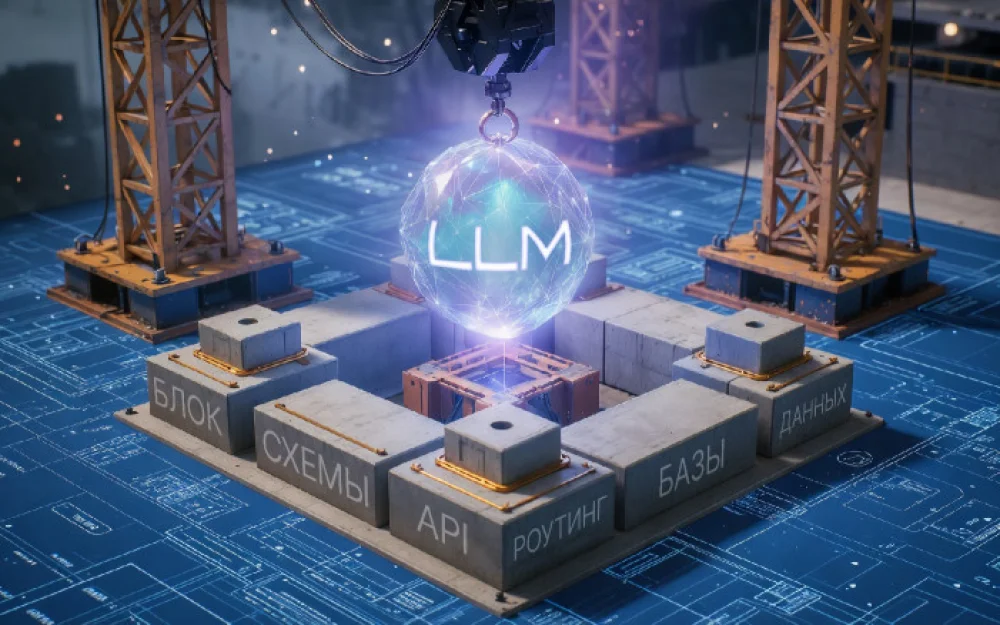
The overwhelming majority of projects are vibe-coded AI wrappers. Over 90% of teams use ready-made LLMs, and in reality, it rarely matters to them what's under the hood: OpenAI, Claude, or their own fine-tuned model.
The "uniqueness" usually comes down to prompts, call chains, and agent logic — essentially, how the AI conducts dialogue and integrates into the user's scenario. This is evident everywhere: in recruiting, mentoring, data analysis. They take some LLM, add their agent with relevant responses — and voilà, you have a startup.
This is not rocket science at all. In a year, it will likely be so commonplace that it will no longer be valued as much — well, we'll see, time will tell.
3. Product thinking is more important than vibe coding itself
When you look at dozens of vibe-coded products in a row, you quickly get the same feeling: there are already thousands of such solutions, and even more variations on the theme. The technological barrier to entry has become too low to be valuable by itself.
The real value of the conference for me turned out to be not in ready-made answers or new tools, but in more practical, albeit unpleasant insights.
Firstly, I saw where teams had gaps in product logic: which user scenarios they were not considering, where technology was solving the wrong problem.
Secondly, I noticed examples of how NOT to present product information. And conversely — how to solve a problem and show the solution in such a way that its value is obvious to everyone in 30 seconds, even if it’s about something entirely technical.
Thirdly, I gathered ideas: what other problems could be solved, the existence of which I hadn't even considered. When you see hundreds of different approaches in a few days, the picture of what’s possible expands.
Specific cases: how networking works
Here are a few of my stories from Web Summit.
Case 1: Producer and cloud video editor
We stumbled upon an evening meetup on digital production — we just walked past a bar, saw the Web Summit sign. Inside were creative folks: some were doing art house through AI, others were just shooting videos.
I met a person who produces unfinished films — essentially, he buys them, develops the idea, and resells them. In the conversation, he mentioned that he has an idea for software: a service for editing videos in the cloud, so you don’t have to download the project locally. Plus integration of AI-generated episodes for ready content.
We discussed how this could be implemented technically. A couple of months after the conference, he came to me on LinkedIn with a technical assignment for a mobile application with API integration. Now it's at the project evaluation stage — potentially a contract worth tens of thousands of euros.
Case 2: Startup with professional communities
There was a guy with a startup app for forming professional communities. We discussed what such communities actually need and what the market demand is. We shared our vision — we also saw projects in this niche and understood what was lacking.
We offered our expertise and explained how we could help technically. The contact remained warm, and we are in touch.
Bonus: Communication with large companies
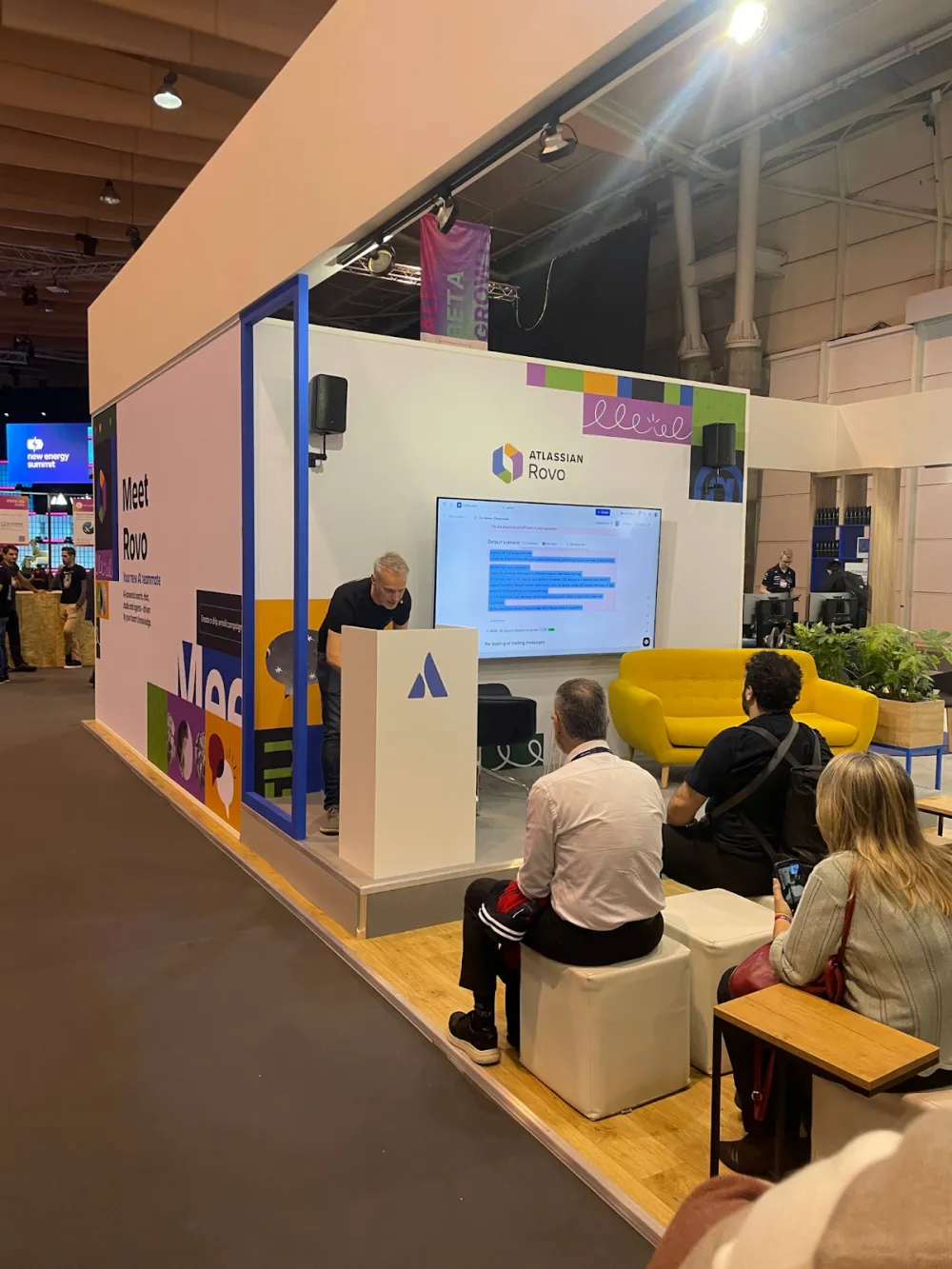
In addition to startups and investors, it was useful to communicate with Atlassian and Jira — product managers and developers. I learned about their plans and approaches to product development.
For example, Atlassian has introduced the ability to customize its AI agent, which can be tailored for performing narrow tasks considering the project's context. I also learned how make.com can help integrate even with those services that do not initially support integration.
Such conversations provide insight into where the industry as a whole is headed and what practices are worth adopting.
Why a developer should attend an international conference
Access to the global ecosystem
The Web Summit 2025 gathered about 70,000 participants from different countries. You meet people from other countries with different approaches, scales, and resources. Specifically, what does this provide:
Partners from other countries. Try to find a contractor or client in Europe through cold LinkedIn — the response rate will be around 1-2%. At the conference, you can talk to 20 potential partners in person in one day. It's a completely different story.
Investors with a global vision. European and American investors look at markets more broadly than local funds. They are willing to invest in projects that can scale internationally.
Understanding competition. You see how startups from other countries solve the same problems you face. Sometimes their approaches differ radically — and this opens up new opportunities.
Without such participation, you risk remaining in a narrow local context, while the pace of the industry is very fast.
Networking as a skill
At the conference, we had 8 hours of intense communication during the day and another 3-4 hours in the evenings at meetups. It is physically exhausting, but this is one of those rare cases where fatigue is a side effect of something truly valuable.
The strategies I discussed in the preparation section worked. Startups gathered around vibe coding tools were genuinely looking for developers who could take the AI-assembled MVP to production. AI products could be discussed not just abstractly, but in the context of specific tasks facing our clients. Investors came not just to "look," but with ideas that lacked technical implementation.
A Short Pitch is Everything
For businesses, it's important to have a short pitch, a description of cases and value formulated in advance. Investors at conferences get tired—young people keep approaching them to tell them something.
The first question from an investor: Is there revenue? If there is no income, it should either be a wow idea or a project backed by technology (for example, articles from major universities, medical research).
If you do not have your own income and you haven't received a cent from users yet—most likely, they will not listen to you any further.
Results: What I Took Away from Web Summit
As a result of the conference, I brought back 3-4 warm contacts, which are now turning into projects with budgets of 90k+ euros each. The deal cycle is long—2-3 months—but the ROI is positive, especially considering that the ticket was free.
In just a few days, you see hundreds of startups and approaches—this gives you a comprehensive picture of where the industry is heading. You start to understand where your knowledge gaps are and where you are already ahead of competitors. Plus, participation in an international conference works for your brand—both for the company and personally. For partners and clients, it's a signal that you are playing in the global market.

Write comment