
- Hardware
- A
Why Server Processors and Memory Are Getting More Expensive and What It Means for IT Infrastructure
Server hardware has long remained a predictable market. Administrators could easily estimate the cost of upgrading a rack or building a data center.
But in the last quarter, everything has gone awry. What you used to order without any extra questions is now noticeably more expensive, and deliveries are stretching out for months. Manufacturers are warning of shortages.
Let's sort this all out.
How production has shifted to AI chips
Accelerators for model training bring chip manufacturers far greater profits than classic server solutions. Companies like NVIDIA place huge orders for graphics processors, which require a special type of memory. This is about high-speed HBM with a multi-layer configuration. Samsung, SK Hynix, and Micron quickly reoriented themselves, as the margins in this segment are significantly higher than those from standard DDR5 modules for servers. Well, business is business.
As a result, investments, new capacities, and developers' priorities have shifted toward HBM. The volumes of standard DRAM for servers are decreasing. Contract prices in the first quarter of 2026 jumped by 55–60%. In some deals, analysts are recording increases of 100% or more. Capacities are booked for months, and relief is expected only closer to the end of the year when new factories reach full capacity. And even then, this is just a forecast for improvement; time will reveal how things will actually turn out.
A similar imbalance occurred during the cryptocurrency boom when graphics cards were going to mining. Remember how prices soared? However, that was a short-lived boom. The current situation looks more stable: the infrastructure for AI is being built for years, it’s not speculative hype. Resources are limited.
The same problem exists with processors
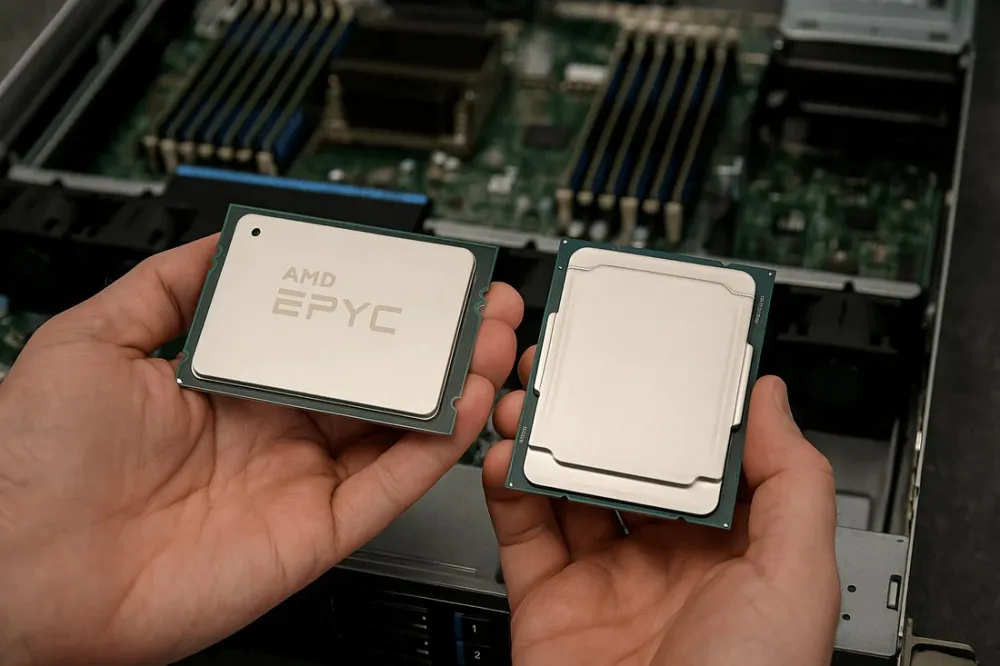
Due to competition for the capabilities of contract factories, the production of regular server CPUs is also lagging behind demand. Intel and AMD warned customers about delays: popular models can take up to six months to be delivered in certain regions. The longest wait is in China, but shortages are growing in other markets as well. Prices for ready-made server platforms have risen by 10–15%, and analysts estimate that this is just the beginning.
The problem is that CPUs have become more complex. Different generations are manufactured using various processes, making it impossible to quickly transfer volumes from one node to another. When a significant portion of TSMC's advanced lines is occupied with AI accelerators, conventional processors inevitably receive less attention. Additionally, there is still a lot of rejection on new processes, which limits production.
As a result, the market, which expected to grow by about 12% due to scheduled infrastructure upgrades by large companies, may face a simple shortage of equipment. This is because Dell, HPE, and Lenovo risk not meeting delivery deadlines even for paid contracts. For businesses, this means shifting deadlines and losing momentum: projects are delayed, and companies that managed to purchase equipment in advance gain a noticeable advantage.
What this means for companies and their IT projects
For most enterprises, rising prices and delivery delays translate into significant challenges. Projects for new data centers or transitioning to hybrid clouds are halted: the necessary servers are unavailable, alternatives are either significantly more expensive or inferior in specifications. As a result, budgets planned last year fall short of current year expenditures.
Medium-sized companies are particularly struggling. They do not have long-term contracts with fixed prices like hyperscalers. Large cloud providers negotiate priority supply in advance, while others make do with what is available. Project timelines are shifting, service launches are being delayed, and competitive advantages are slipping away to those who managed to prepare. Or simply to those who have more money.
In such conditions, companies are increasingly making compromises. Old equipment is used longer than planned, accepting increased risks and rising support costs. In other cases, they choose weaker configurations or cut back on memory, adjusting the software accordingly. As a result, infrastructure efficiency declines, and costs become more challenging to control.
How to Mitigate the Impact of These Trends
Avoiding the consequences entirely is unlikely, but it is possible to soften the blow.
The first step is to plan purchases well in advance. Many companies are already returning to the practice of fixing prices and volumes six months to a year ahead, even if this requires investments in stockpiling.
The second step is diversification. Do not get attached to a vendor or architecture: ARM servers, alternative memory suppliers, and reliable refurbished equipment often turn out to be viable options. For some workloads, it is simpler to shift responsibility to cloud providers who have already resolved hardware issues at their own expense.
The third point is internal optimization. Even without updating hardware, it is often possible to extract more from the existing fleet by re-evaluating virtualization, container operations, or application behavior. Energy efficiency also plays a role: modern server processors usually consume less energy under the same load, thus reducing data center operational costs.
Prepare for multiple scenarios — from prolonged shortages to gradual improvements. And of course, regularly review procurement plans. According to analysts' estimates, a noticeable easing of restrictions may occur closer to 2027 when new production capacities reach full utilization. Until then, flexibility in planning and approaches remains the main advantage.
But when everything will change — it is still unclear. One thing is clear: companies that are ready to plan purchases in advance and quickly adapt their architecture to available equipment feel better.
How do you solve the problem of rising prices for server hardware in your projects?
![From Virtual Hands to AI for Survivalists: Curious Open Agent OSes [and One Hardware Project]](https://cdn.tekkix.com/imgs/2026/05/habrcom/big/ce0b1057616faed51cd8b9f3b2b9.webp)


Write comment