
- Hardware
- A
How an engineer connected a floppy disk drive to a Tesla, and the electric car recognized it
In an era when data flies through the clouds at the speed of light and storage devices hold terabytes, there are stories that take us back to the 90s. Old devices, long deemed obsolete, unexpectedly come to life among the most modern gadgets. Such moments remind us of how deeply the legacy of past decades is hidden in the code and hardware of modern machines.
But let's set nostalgia aside and get to the point. So, one geek decided to check the compatibility limits of Tesla software with old hardware—a floppy disk drive. And it worked. The ancient storage device found common ground with the electric car without any special drivers or hacks. Let’s figure it out.
Connecting a Floppy Disk Drive to an Electric Car
Engineer and software developer Oleg Kutkov took a regular 3.5-inch floppy drive. Yes, the very one that used to be in every home computer. As it turned out, no complex systems or software were needed; as they say, "everything has already been invented before us." The developer connected the old device via a simple USB adapter that emulates a standard USB flash drive. The connection point was the USB port in the car's glove compartment.
And yes, it all worked. No additional setup was required. The car's system immediately recognized the device and connected it as an external storage medium. The drive began to operate just like a flash drive or an external hard disk. The mechanics came to life: the heads read the data, making the characteristic clicks and rustling sounds familiar to anyone who ever inserted floppies into an old Pentium.
Oleg had prepared the storage device in advance. On a single 1.44-megabyte floppy disk lay an mp3 file. The engineer chose a track that became a true internet meme—Rick Astley's "Never Gonna Give You Up." This added an ironic touch to the experiment: a car from the future played music from a medium older than many of its owners.
The only difficulty was that the loading process took a noticeable amount of time. The drive methodically read the data sector by sector. In the cabin, you could hear the magnetic heads moving across the surface of the medium. But in the end, the track started playing, and the sound came through the car's standard audio system. Everything worked stably, without glitches or mounting errors.
Why did it all work? There's nothing surprising about it. The fact is that the Linux kernel, on which the car's operating system is built, still contains support for the floppy subsystem. It is precisely due to this ancient code that Tesla recognized the drive.
The multimedia system in Tesla was originally designed to work with external storage devices. USB flash drives or SSDs are connected to the car, where recordings from the surround cameras and Sentry mode data are written. Therefore, upon detecting any new device, the built-in scripts automatically mount it as a media storage. When the engineer connected the drive with a 3.5-inch floppy disk, the system treated it just like an ordinary external storage device.
However, in practice, a limitation quickly emerged: the 1.44 MB capacity physically does not allow for saving video recordings from the cameras. Attempting to format the media in exFAT also yielded no results—the system did not accept that format. Nevertheless, for basic tasks like playing music, the capabilities turned out to be sufficient: the car had no problem reading an MP3 file from the floppy disk.
Where else are floppies used
Aviation remains one of the most conservative users of such storage devices. Many Boeing 747s, of which about 400 are left in the world, require navigation database updates every 28 days. An engineer enters the cockpit, inserts 10-12 floppy disks one by one, and uploads fresh maps of airports, runways, and routes. The aircraft's system, developed back in the late '80s, does not provide for other options. Replacing all the avionics would cost millions, so the old method remains the most practical.
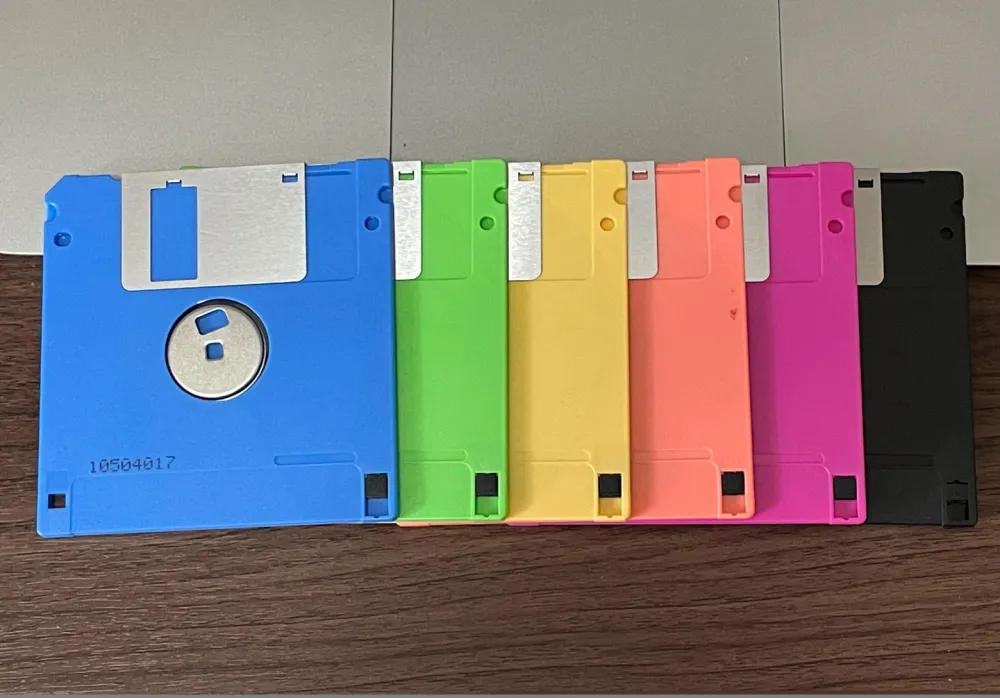
Medical equipment is also reluctant to part with the past. Some CT scanners and ultrasound machines from the late 90s still use floppy disks for storing configuration files and logs. Replacing such equipment costs a fortune, and manufacturers have long ceased support. Therefore, in hospitals around the world, you can sometimes see a technician inserting a medium into the slot of an old diagnostic machine.
Government structures are gradually getting rid of archaic media, but the process is slow. In Japan, only in 2024 were the requirements for the use of magnetic media removed from legislation in a thousand regulatory acts. Before that, officials were required to accept documents specifically on floppy disks. In San Francisco, the metro plans to abandon 5.25-inch drives only by the mid-2030s. Over 200 million dollars are allocated for upgrading the train control system.
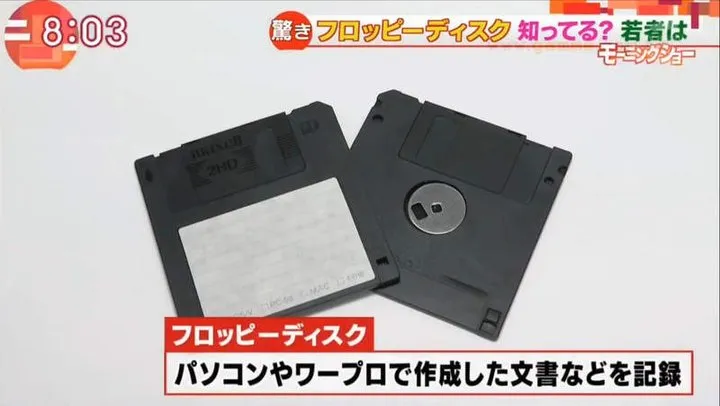
The American nuclear forces used eight-inch floppy disks in their strategic command system until 2019. Then they were replaced with SSDs. The German fleet held similar 8-inch devices on Brandenburg-class frigates until recently. They are now implementing emulation to finally close this chapter.
Even in everyday industries, unexpected examples can be found. Industrial embroidery machines and some CNC machines still load programs directly from floppies. In one American prison in New Jersey, inmates are allowed to keep up to 20 floppy disks for legal documents. Flash drives are prohibited, and data has to be transferred through a library computer. New clean floppy disks are still sold in specialized stores — demand is supported precisely by such niche applications.
The Linux community has also not forgotten about old hardware. In 2025, developers updated the drivers for the floppy subsystem. This means that even in the latest distributions, support remains. No one knows when someone will next need to connect an ancient storage device, but the code continues to live. Such stories show how inert complex systems can be. Once an embedded driver or certified interface is established, it can remain for decades.
And then there comes the opportunity to plug a floppy drive into the glove compartment of a Tesla and hear how the mechanics of the '80s come to life alongside the electric motor of the 21st century. By the way, it would be interesting to read your stories — surely many have experiences of how old hardware suddenly came back to life. Share in the comments what you managed to "resurrect" and under what circumstances it was actually needed.
![From Virtual Hands to AI for Survivalists: Curious Open Agent OSes [and One Hardware Project]](https://cdn.tekkix.com/imgs/2026/05/habrcom/big/ce0b1057616faed51cd8b9f3b2b9.webp)





Write comment