
- AI
- A
Fintech-2026: Why Banks Stopped "Drawing Buttons" and Focused on Refactoring the Foundation
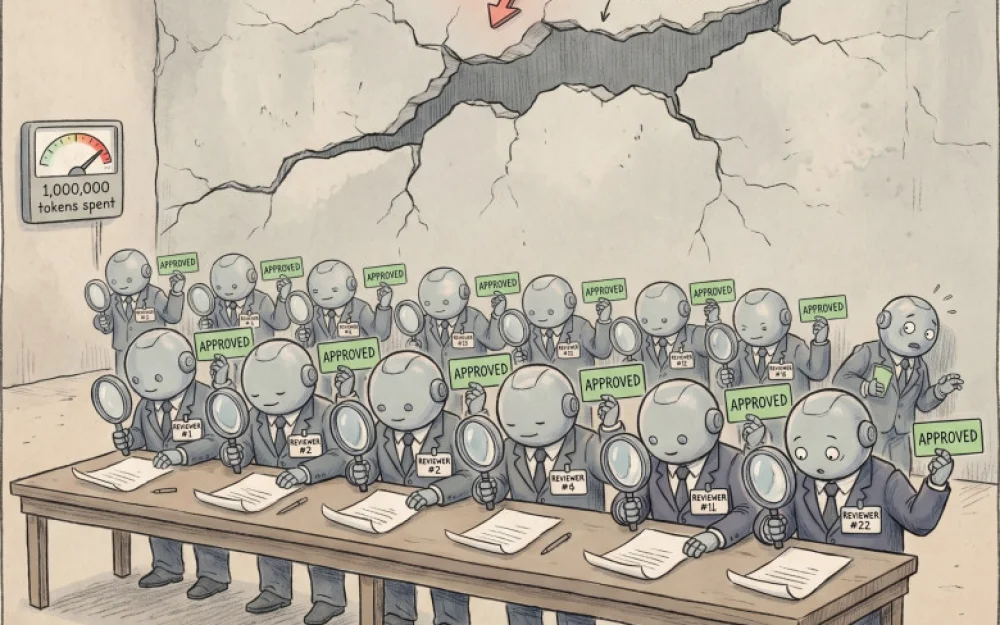
For a long time, bank digitization resembled facade construction: beautiful mobile apps, chatbots, and UX research. But by 2026, the industry hit a ceiling: the frontend is perfect, while the backend struggles with data volumes and legacy processes.
The article is based on the material by Yulia Ilina, director of the department for working with the financial sector and international business at Arenadata.
For a long time, the digitization of banks resembled building a façade: beautiful mobile applications, chatbots, and UX research. But by 2026, the industry hit a ceiling: the frontend is perfect, while the backend is overwhelmed by data volumes and legacy processes.
Today, the focus has shifted inward. We will analyze five technological trends that are transforming banks from "services with pictures" into high-performance low-latency platforms, where data and its connectivity are paramount.
1. ISO 20022: Transition from "strings" to typed objects
ISO 20022 is not just a new message format. It replaces unstructured transactional strings (Legacy MT) with a rich object data model (MX).
What is the technical challenge:
Real-time validation: strict XML/JSON schemas require enormous database resources to check integrity in real-time under peak loads.
Data enrichment: each message now carries context (identifiers, purposes, metadata), significantly increasing the volume of stored data.
Tracing: the ability to trace payments through unique identifiers across all microservices.
The main risk of 2026: "Formal implementation." If the database cannot handle performance while working with complex schemas, the bank gets a standard but loses speed in TPS (Transactions Per Second).
2. Graph models: fighting fraud through relationship topology
The classic SQL approach of "check the transaction amount" no longer works. Fraudsters are building networks. To counter them, banks are transitioning to graph analysis (Graph Analytics).
How it works in architecture: Instead of isolated tables, we build a graph of connections: person — device — account — card — phone — event.
Anti-fraud: identifying not typical operations, but suspicious cycles or "stars" in the network topology.
AML: searching for chains of "splitting" payments that previously were hidden behind dozens of SQL queries with
JOIN.
For the IT team, this means a transition to hybrid databases (HTAP) or the integration of specialized graph databases (like Neo4j or meme graphs) into the overall data governance framework.
3. Synthetic Data: A Sandbox Without Risk of Leaks
According to the World Economic Forum 2025, synthetic data has become a salvation for ML engineers. No more waiting six months for production extracts and going through 10 rounds of compliance.
Technology Stack: Using GANs (generative adversarial networks) or differential privacy to create datasets that:
Preserve Distributions: correlations between income, age, and spending remain realistic.
Are Anonymous by Default: there are no personal data physically.
Augment the Sample: you can generate 1,000,000 rare fraud cases, of which only five existed in reality, for better model training.
4. Open Finance: API as a Product
OpenAPI will evolve into Open Finance in 2026. It’s no longer just about “providing a statement to a third-party application,” but about seamless data exchange between banks, insurers, and investment platforms.
Engineering Tasks:
Standardization: migration to protocols agreed upon by the FinTech Association.
Consent Management: a complex system for managing customer consents. The customer should be able to see (and revoke) access to their data for a specific service at any time.
Security: Zero Trust architecture when interacting with external counterparties.
5. Generative AI: Transition to Deterministic Solutions
By 2026, the hype around “smart chatbots” has passed. Now GenAI is being integrated into critical processes (onboarding, compliance, initial scoring).
System Maturity Criteria:
RAG (Retrieval-Augmented Generation): the model does not hallucinate but relies on a closed knowledge base of the bank.
Explainable AI (XAI): the ability to trace — the system must “explain” on what basis it rejected a document according to regulatory points.
Model Monitoring: constant control of the “drift” in model quality.
Conclusion: Database as the Heart of Strategy
Digitalization-2026 is a battle for the foundation. The database management system is no longer a "black box" for storing data but becomes an active participant in business logic. The teams that can ensure consistency, high availability, and data connectivity while maintaining flexibility for AI implementation will win.
The choice of a database management system is now not a technical holy war, but a matter of business survival.




Write comment